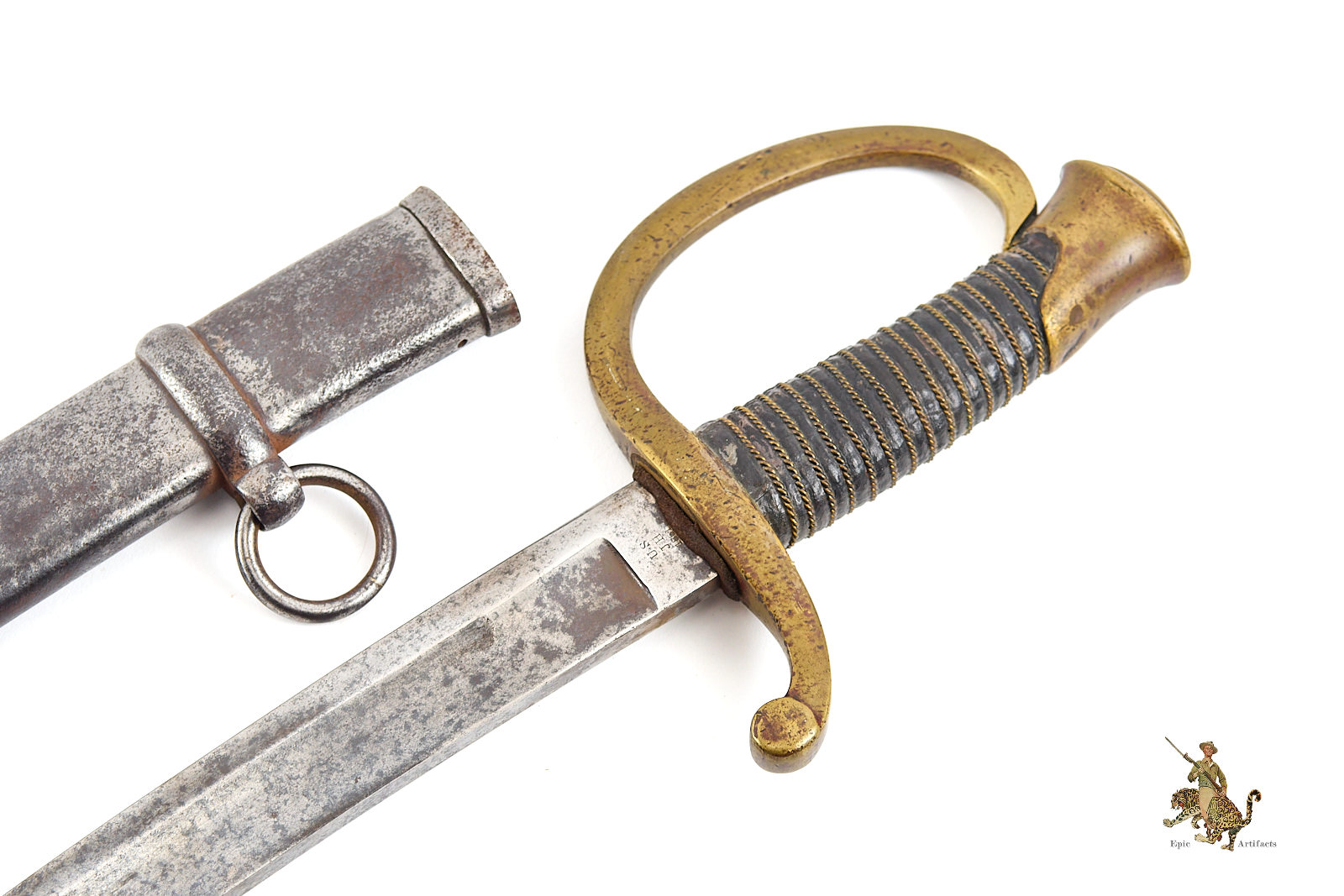
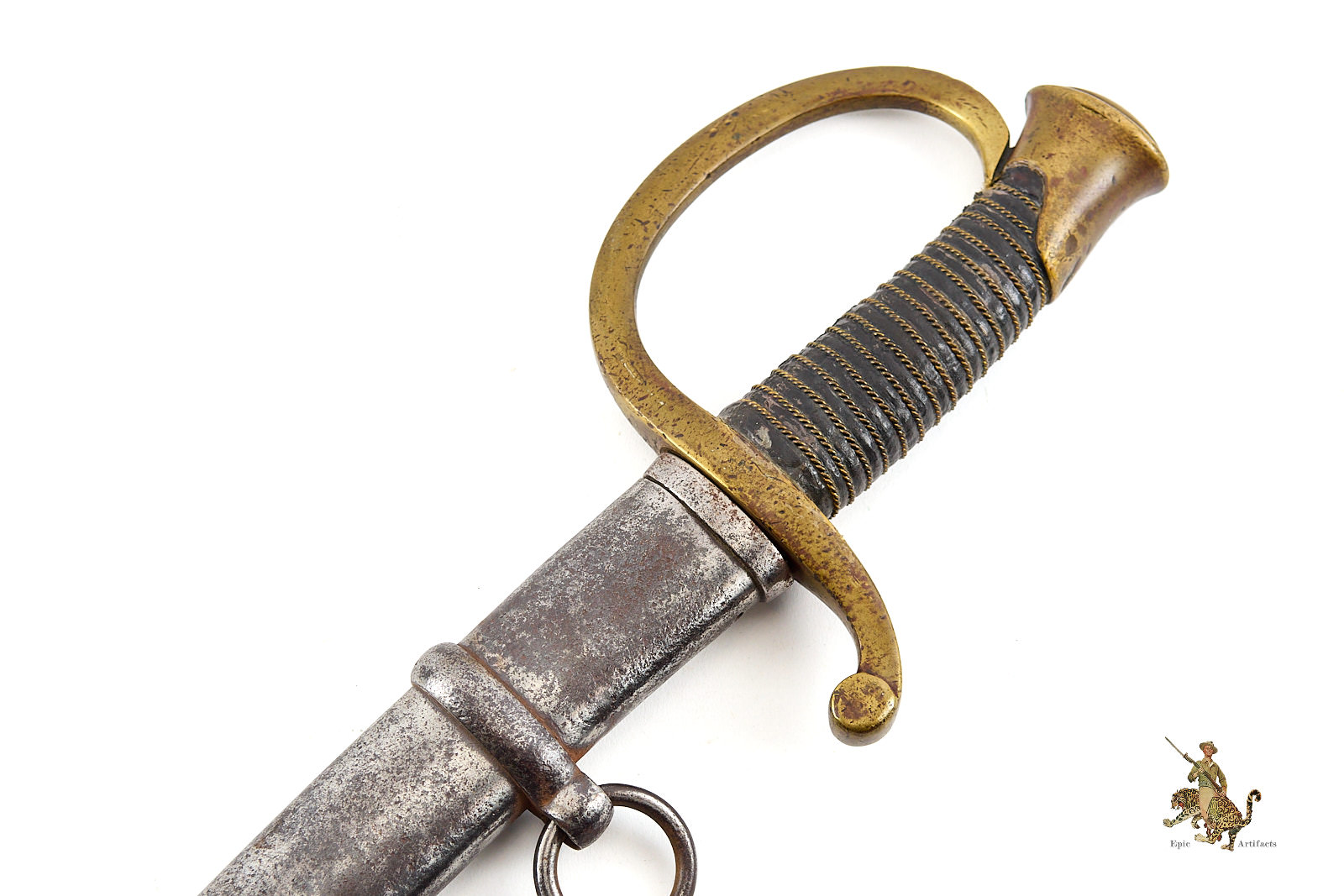
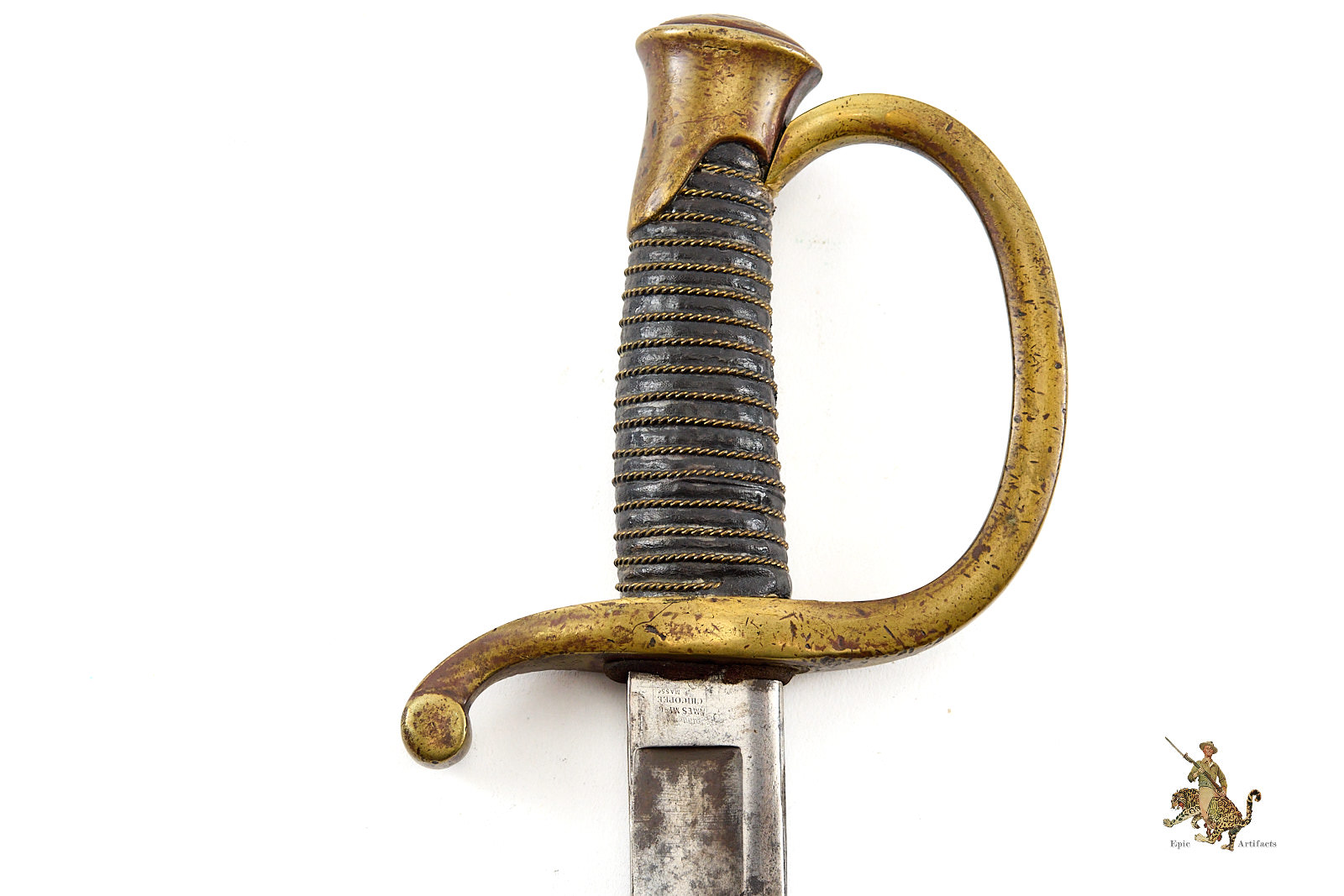
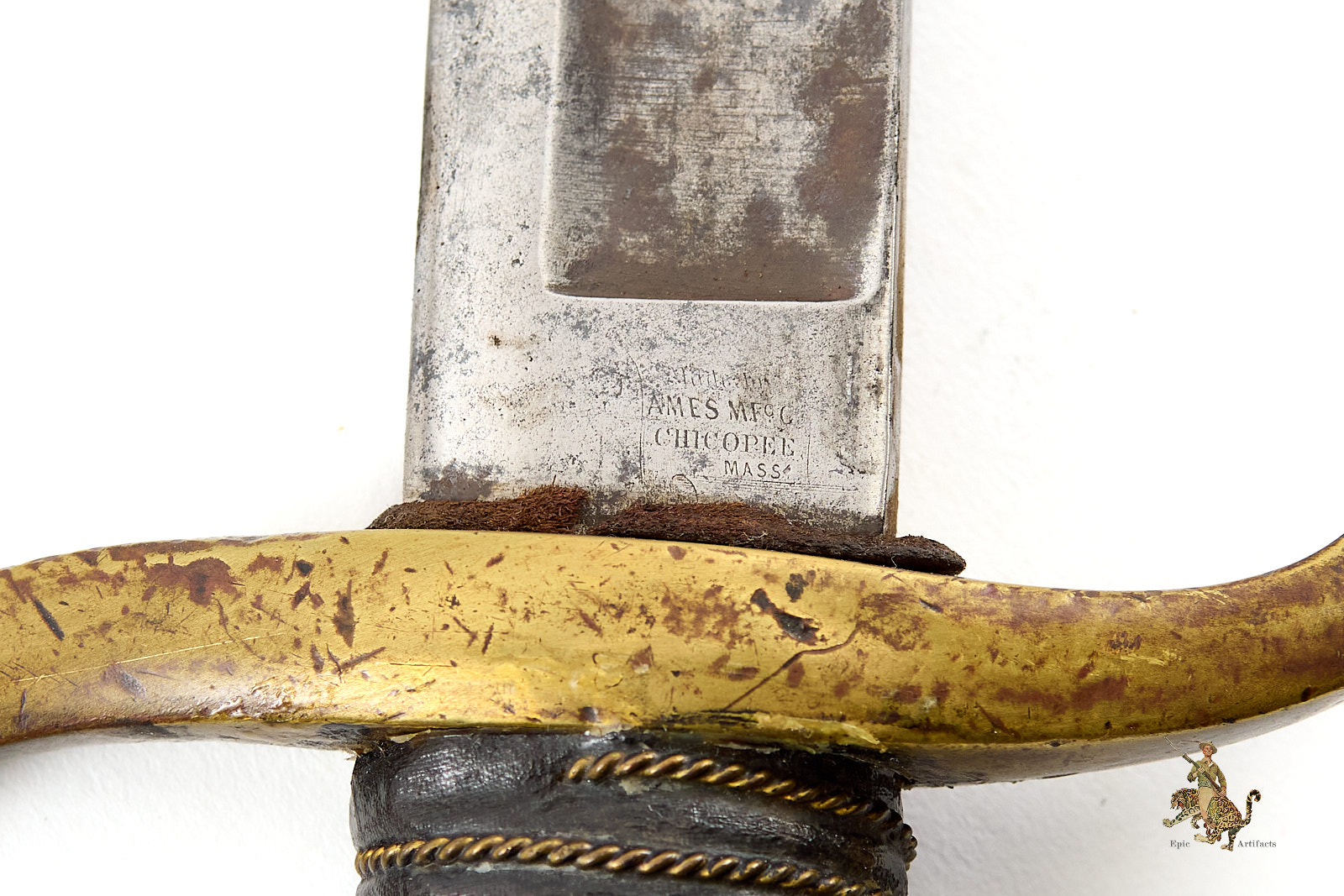
Product Description: This is a fine M1840 US Artillery Sword W/ Scabbard – d.1861 Ames Co., manufactured by the renowned Ames Manufacturing Company of Chicopee, Massachusetts, and dated 1861. Ames was one of the premier arms contractors of the Union, supplying edged weapons and military accoutrements throughout the war, and their swords remain among the most sought-after examples for Civil War collectors.
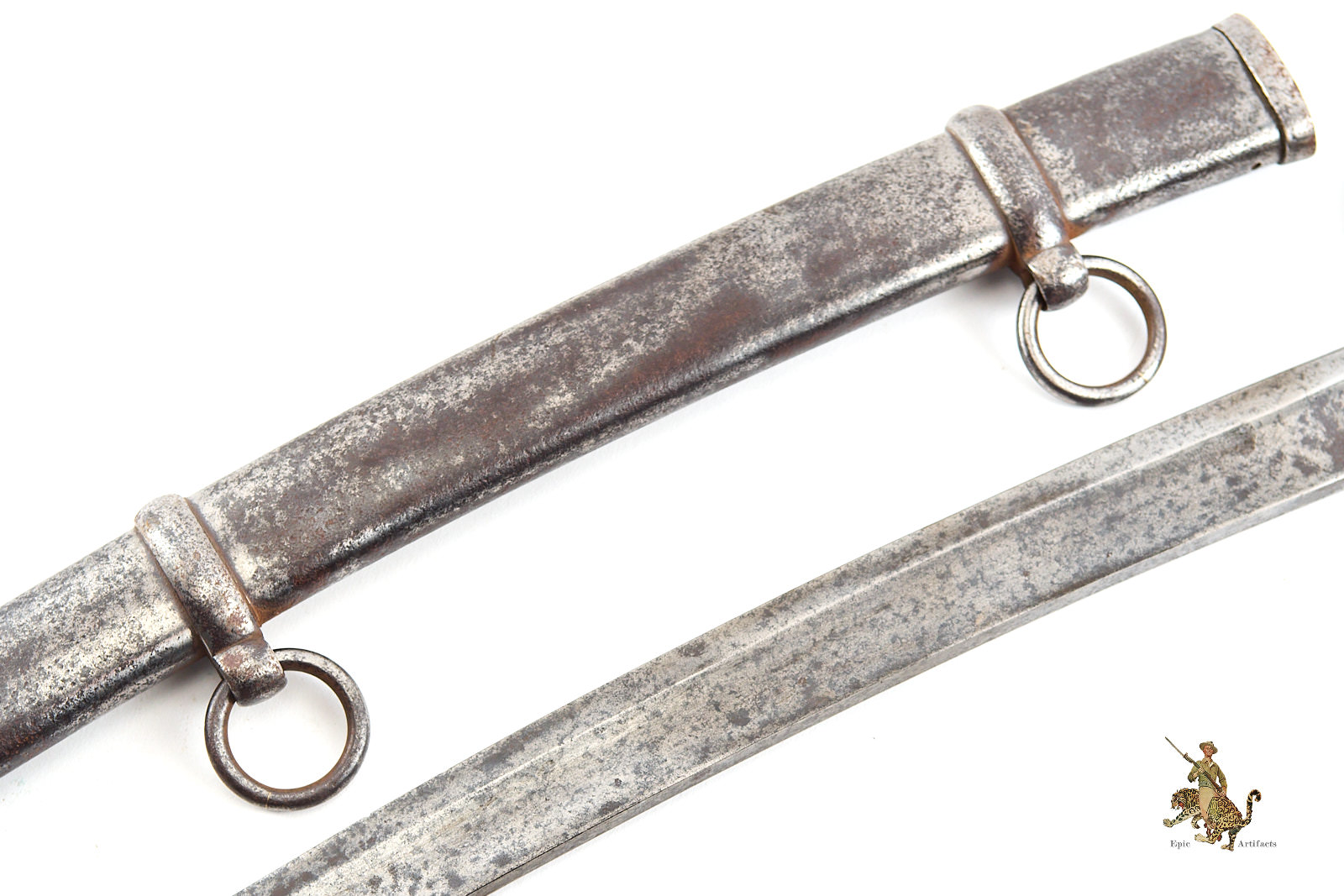
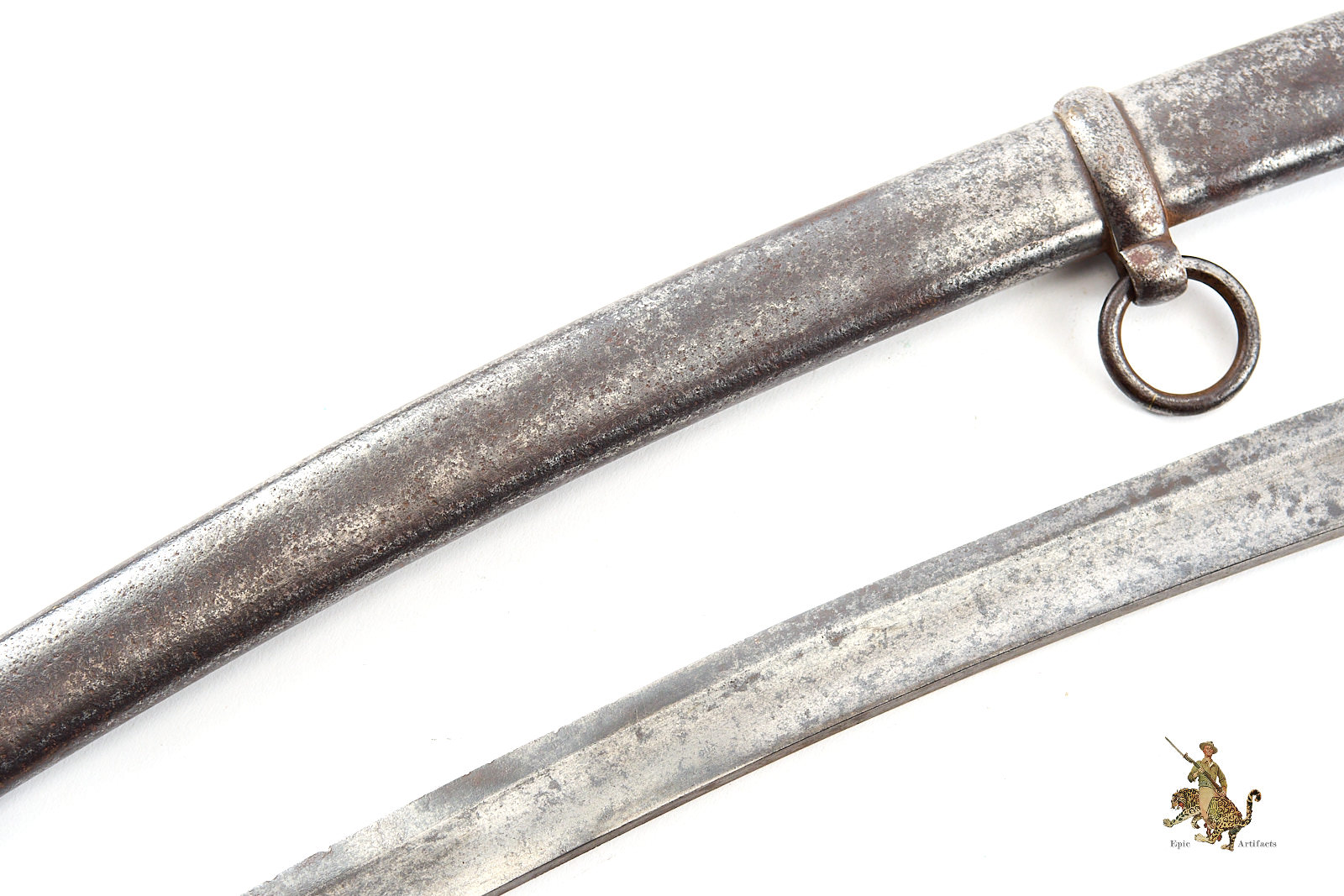
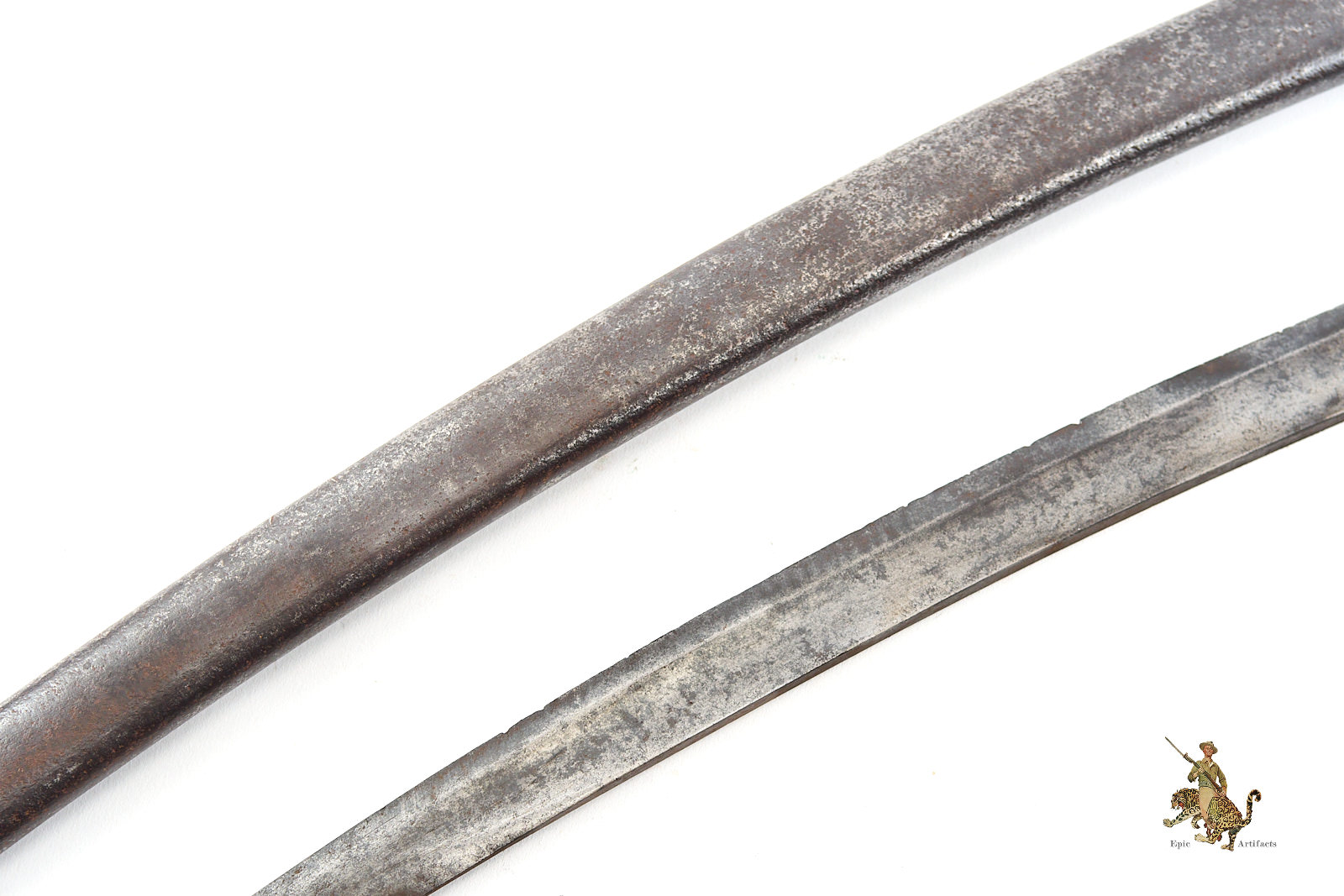
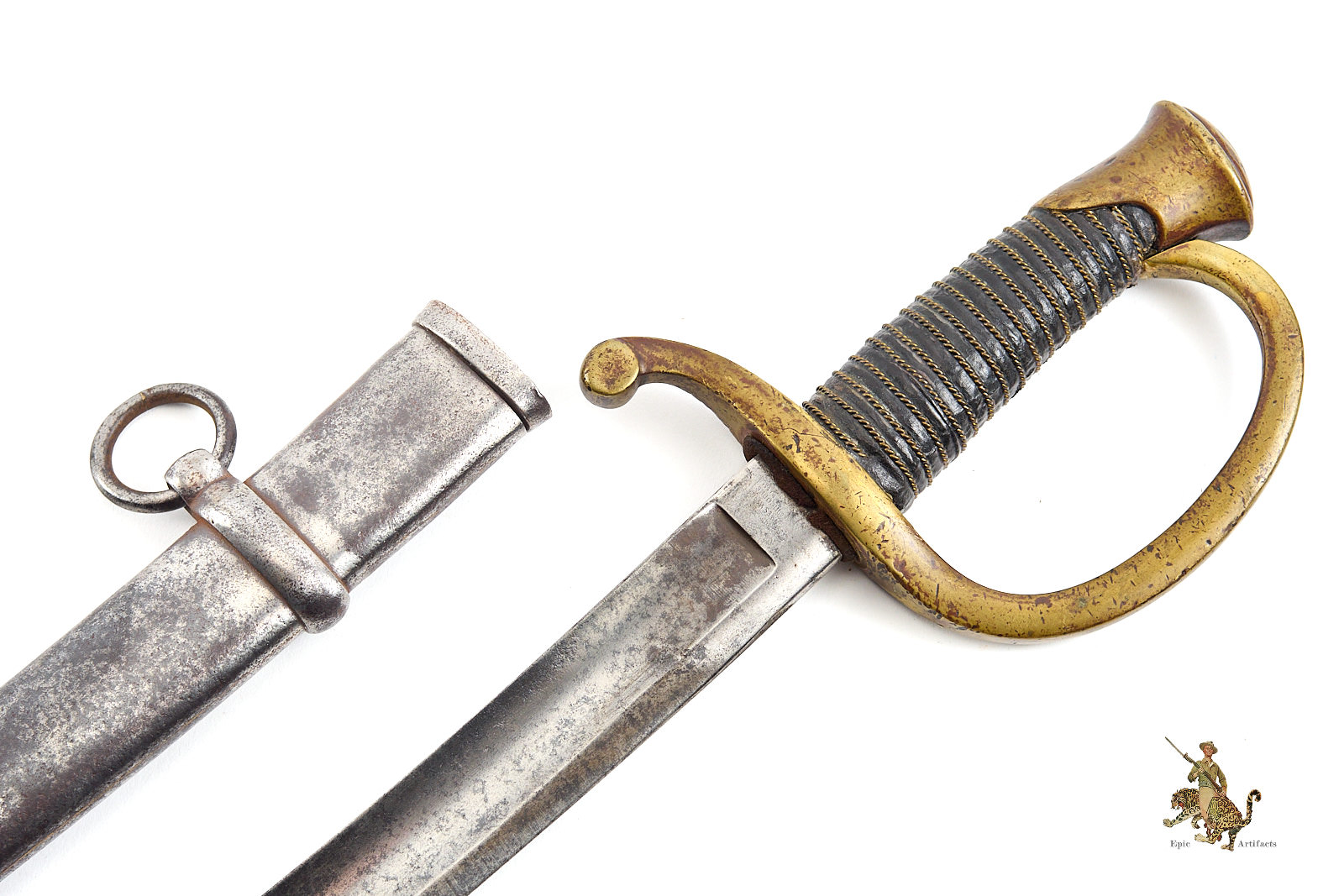
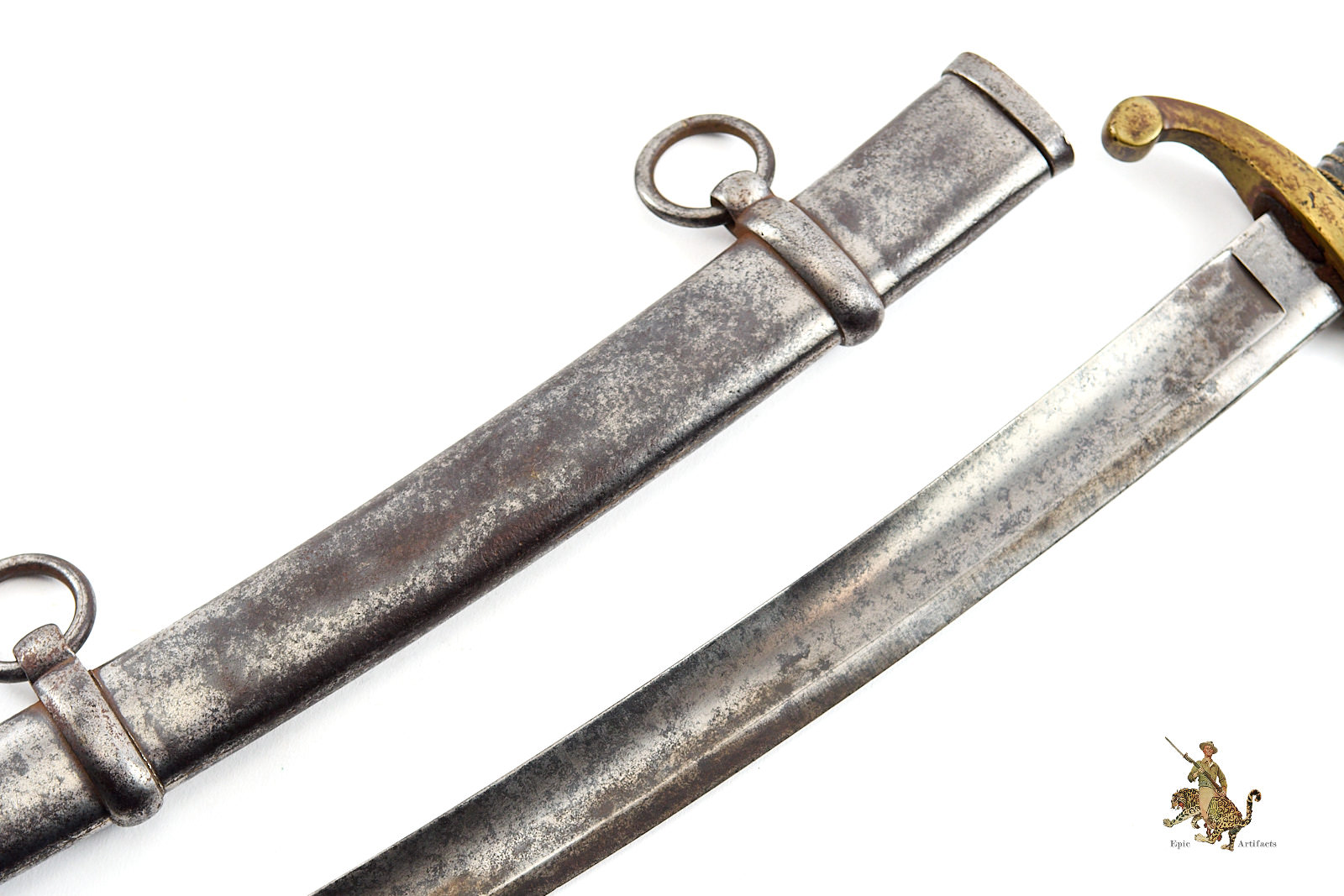
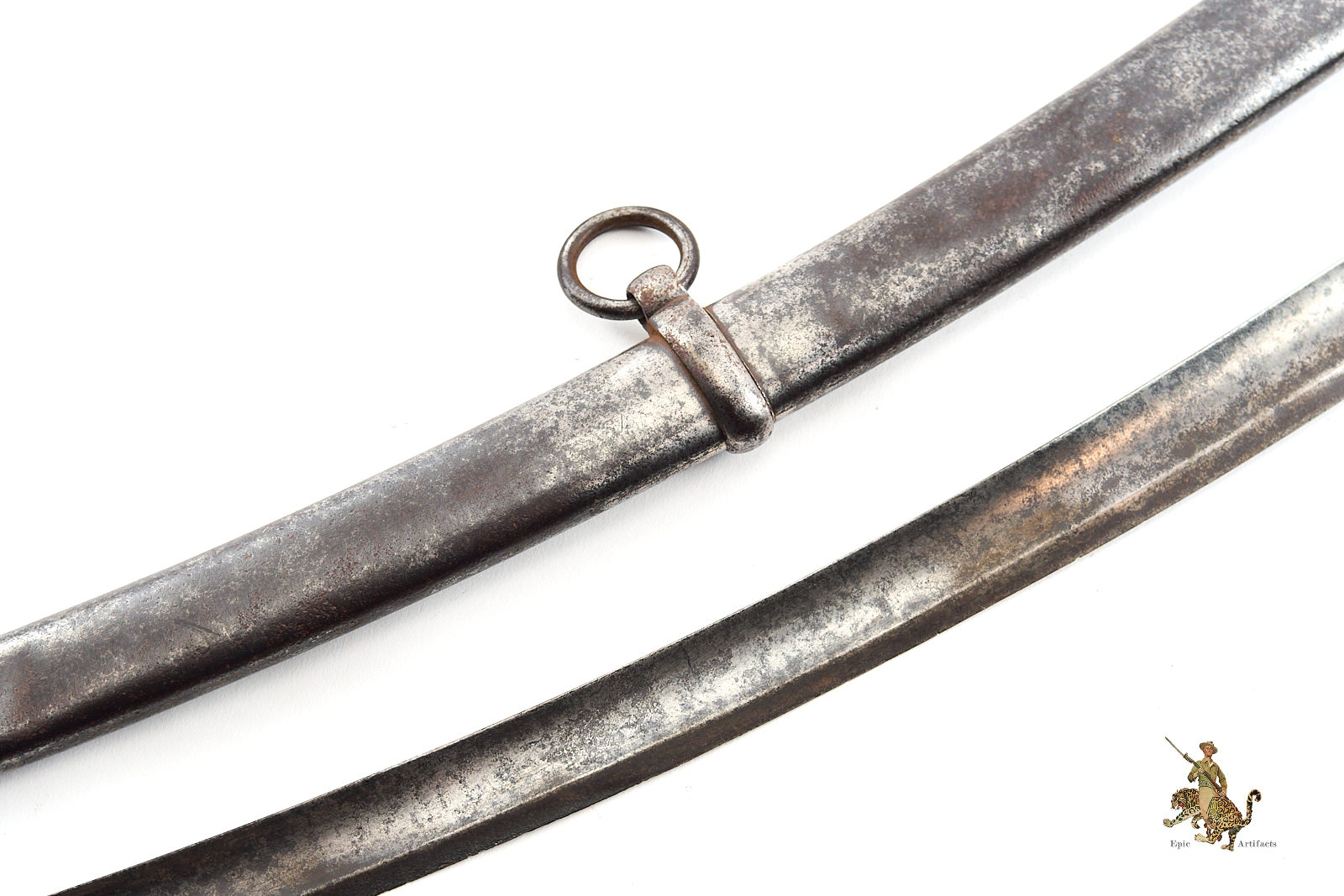
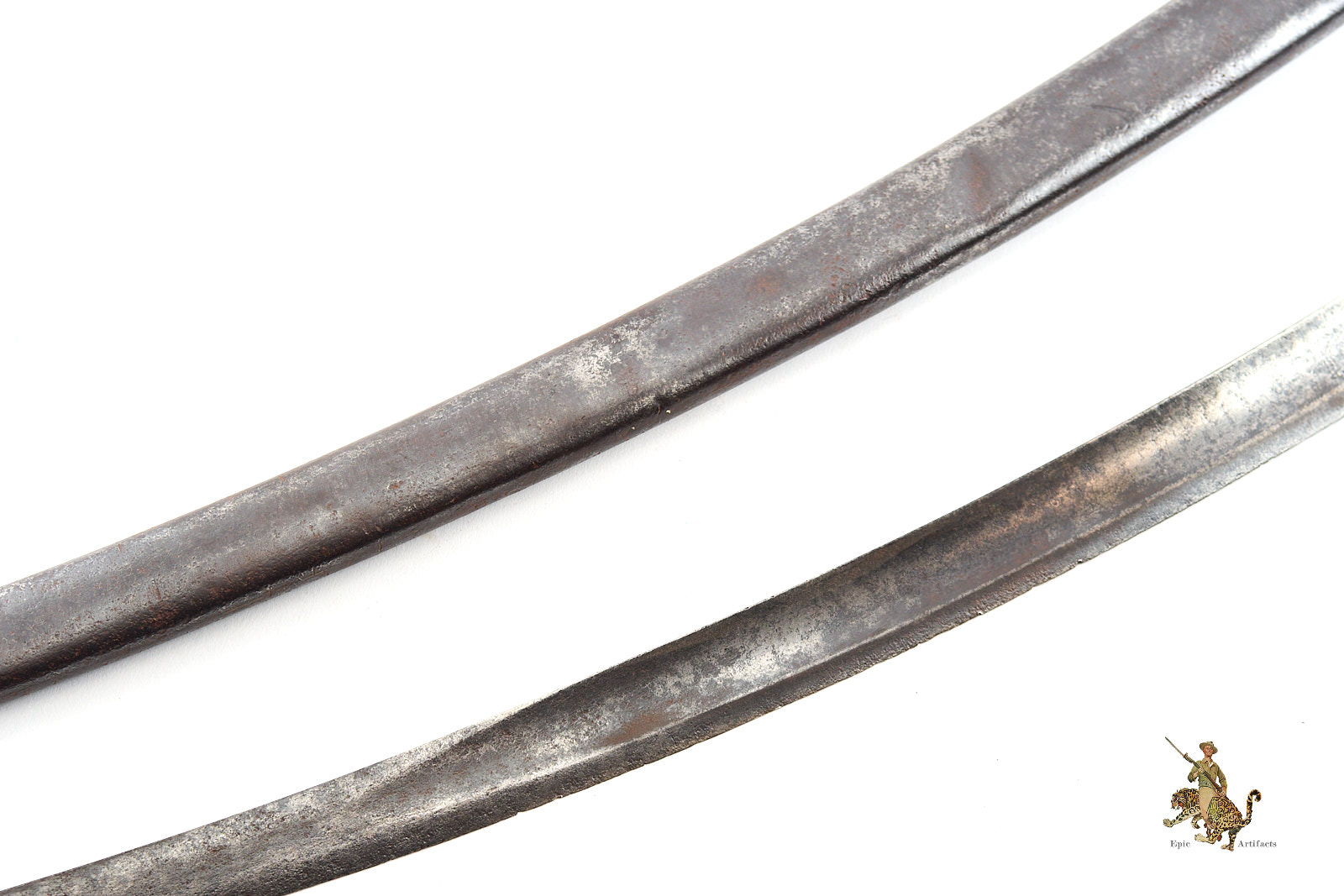
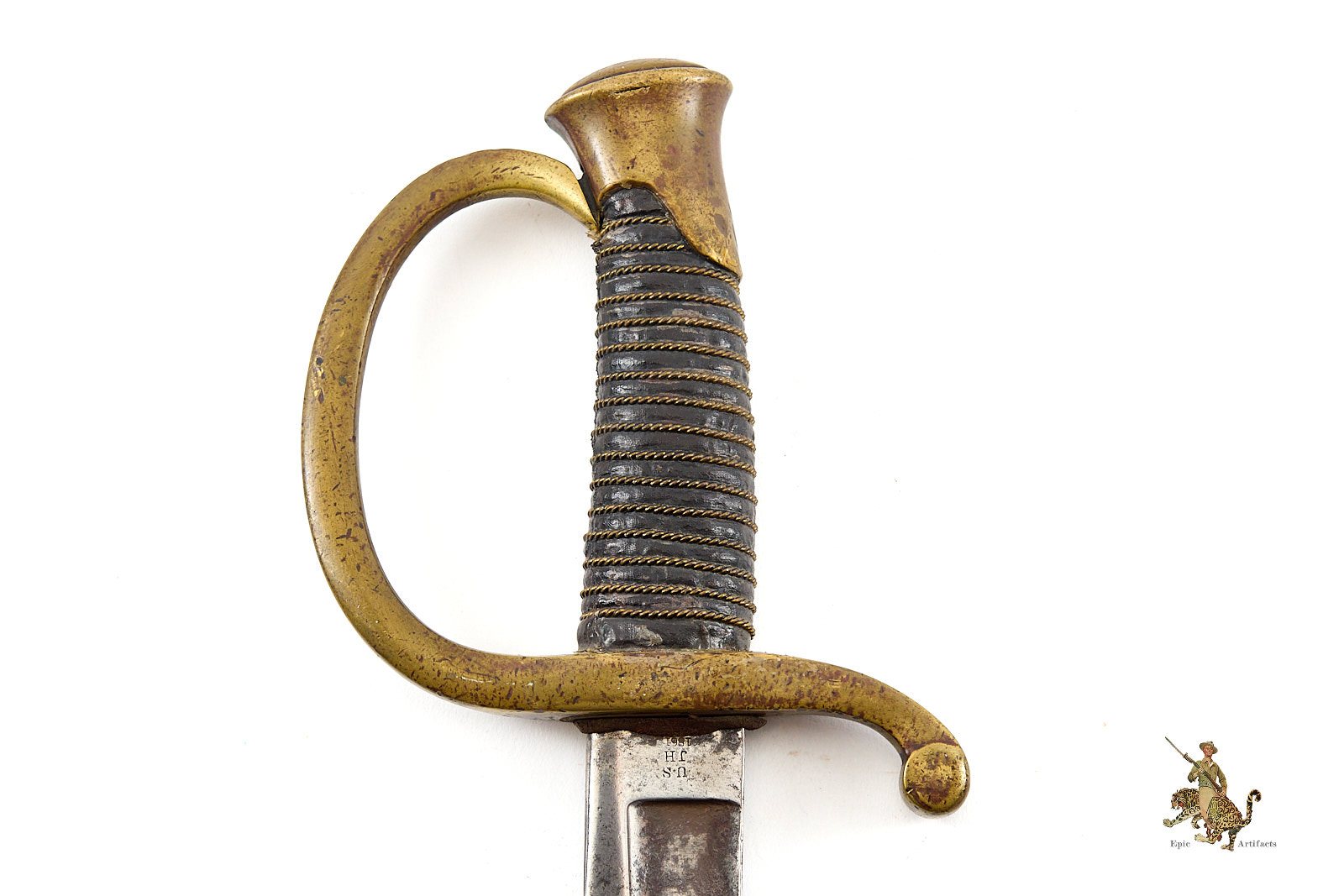
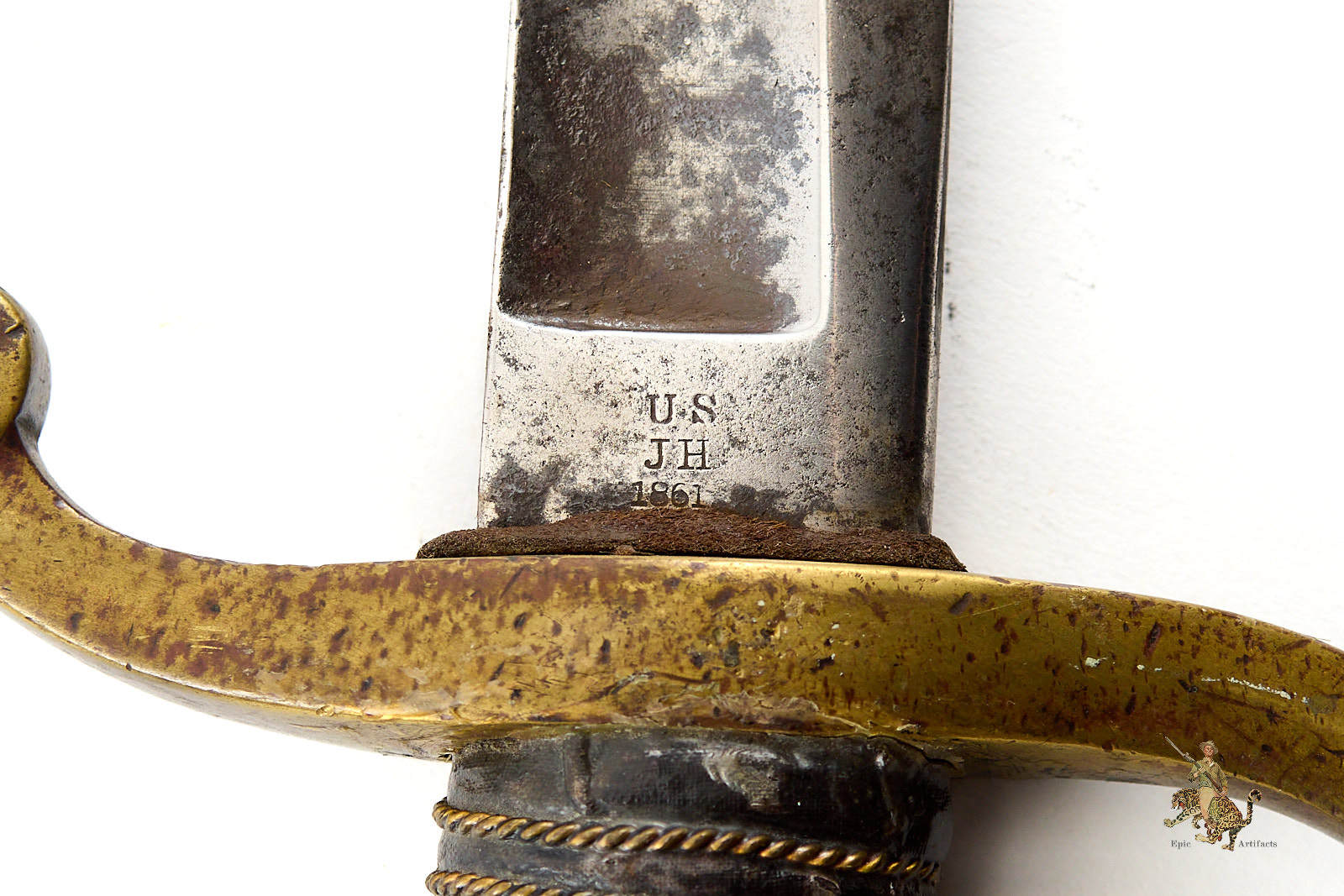
The sword features a curved blade measuring approximately 31.75 inches, with an overall length of 37.25 inches (39.25 inches with scabbard). The ricasso is crisply marked “U.S. / JH / 1861”, denoting government inspection. The blade shows honest signs of period use, with nicks and minor pitting throughout.
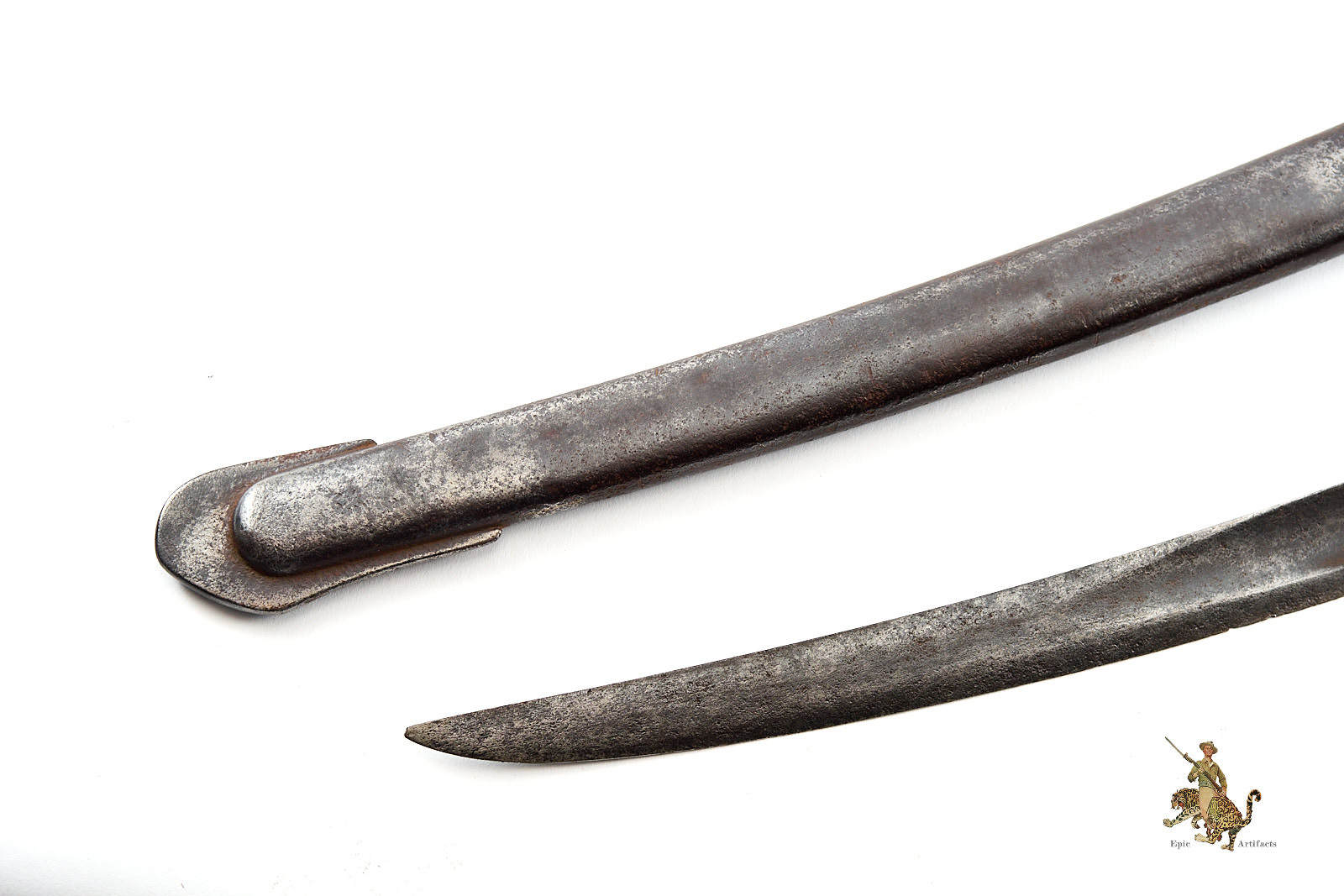
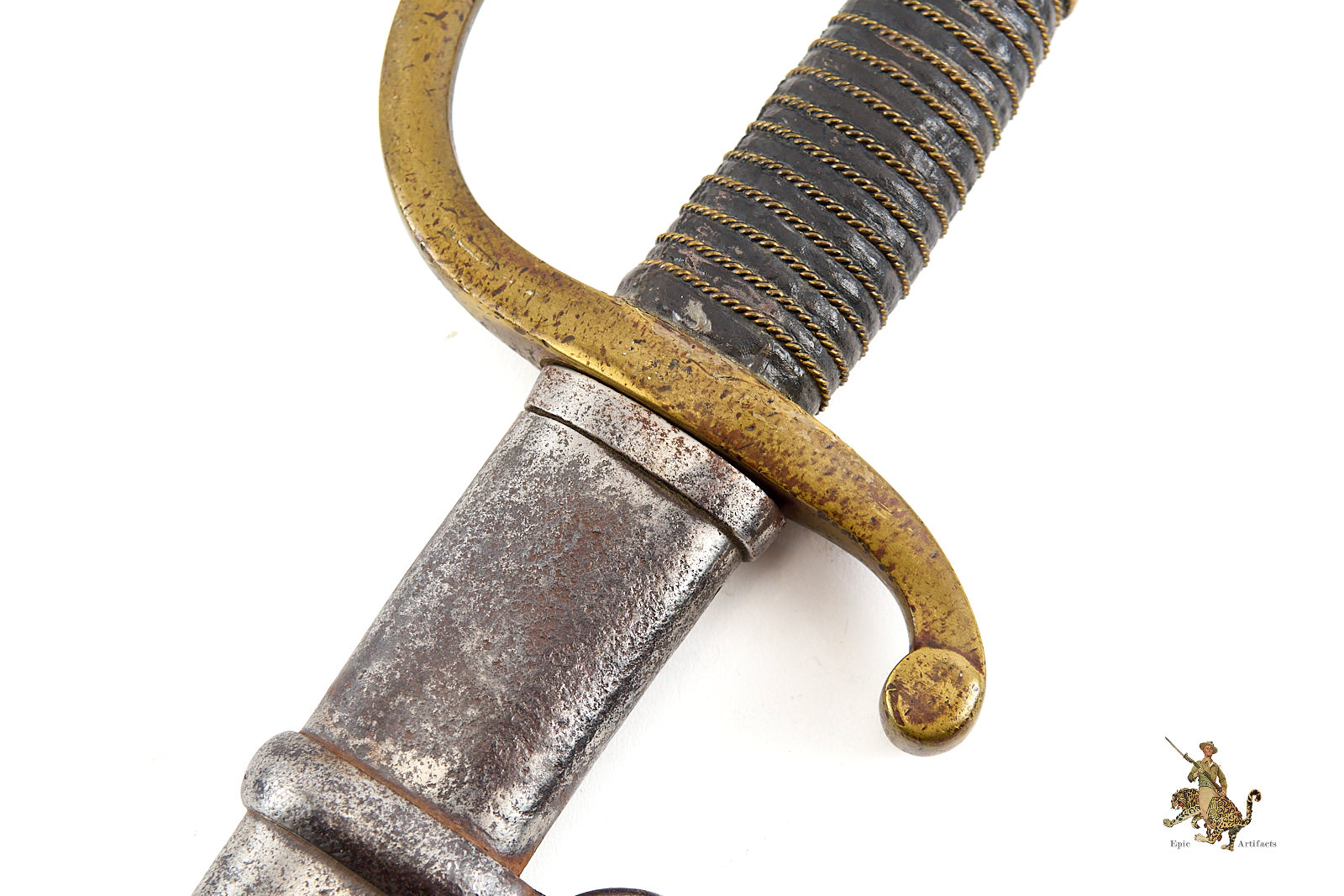
The hilt retains its original brass guard and grip, showing wear consistent with age and handling. Accompanying the sword is its original steel scabbard, showing some denting and pitting expected from age and use.
This Ames Model 1840 US Light Artillery Sword is a solid and representative example of a regulation Union saber, combining desirable maker attribution, wartime inspection marks, and complete condition with scabbard. A historic piece from one of America’s most defining conflicts, and an excellent addition to any Civil War display or collection.
Historical Description: During the American Civil War (1861–1865), swords remained a symbol of rank and honor even as firearms dominated the battlefield. Officers, cavalrymen, and artillery units were commonly issued swords, with the most iconic being the Model 1860 Light Cavalry Saber. This curved, single-edged blade was favored for its lighter weight and improved handling over its predecessor, the heavier Model 1840. Produced in large numbers by manufacturers like Ames Manufacturing Co., these sabers were standard issue for Union cavalry and widely used in close combat, charges, and ceremonial functions. Although swordplay was increasingly rare in actual combat, the saber was still a vital part of a cavalryman’s kit—more for its utility in mounted action and its representation of authority than for frequent battlefield use.