
$1,295.00
Condition: Excellent
Pattern: M42
Size: 64
Maker: CKL – Eisenhüttenwerke
In stock
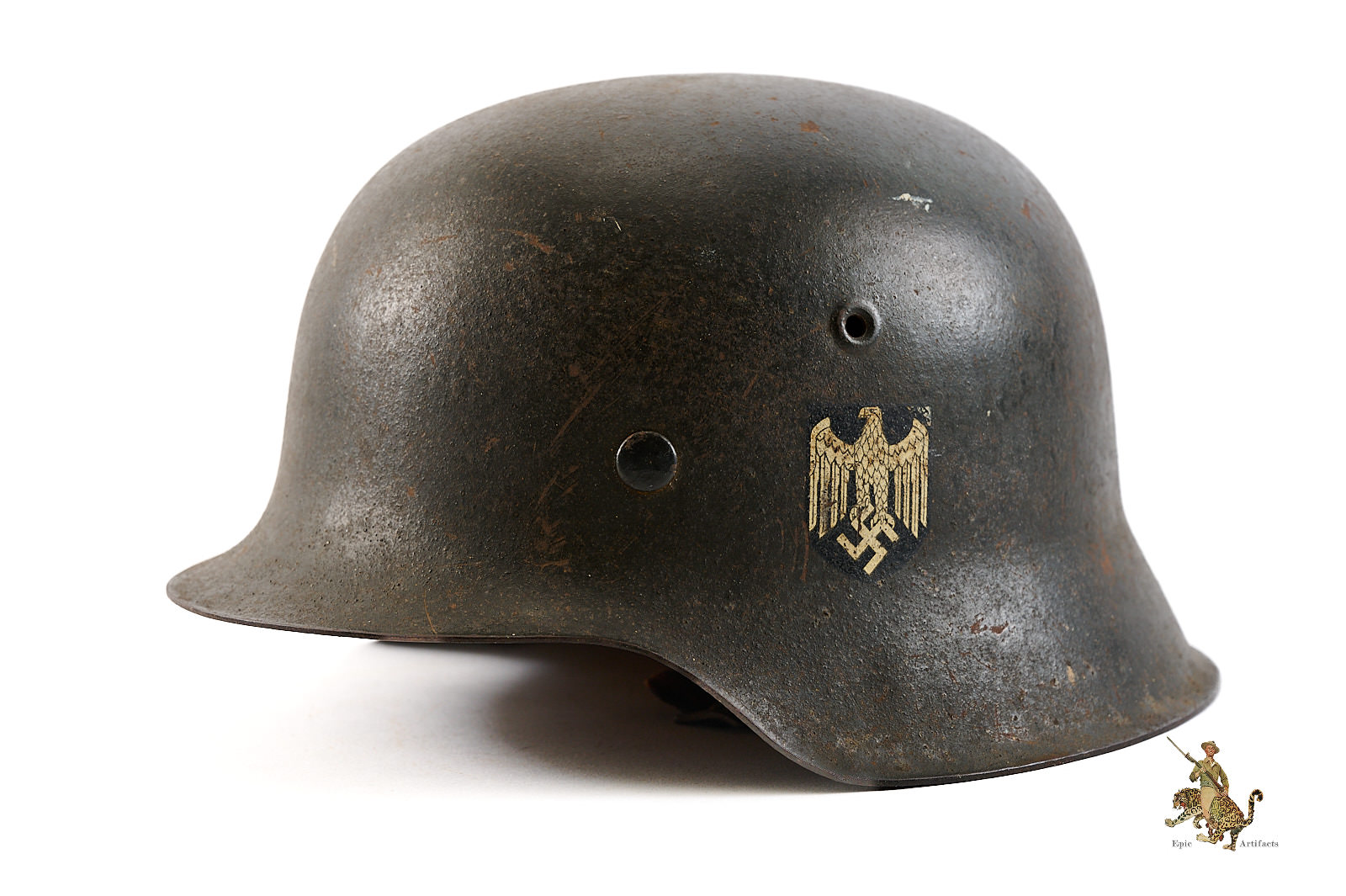
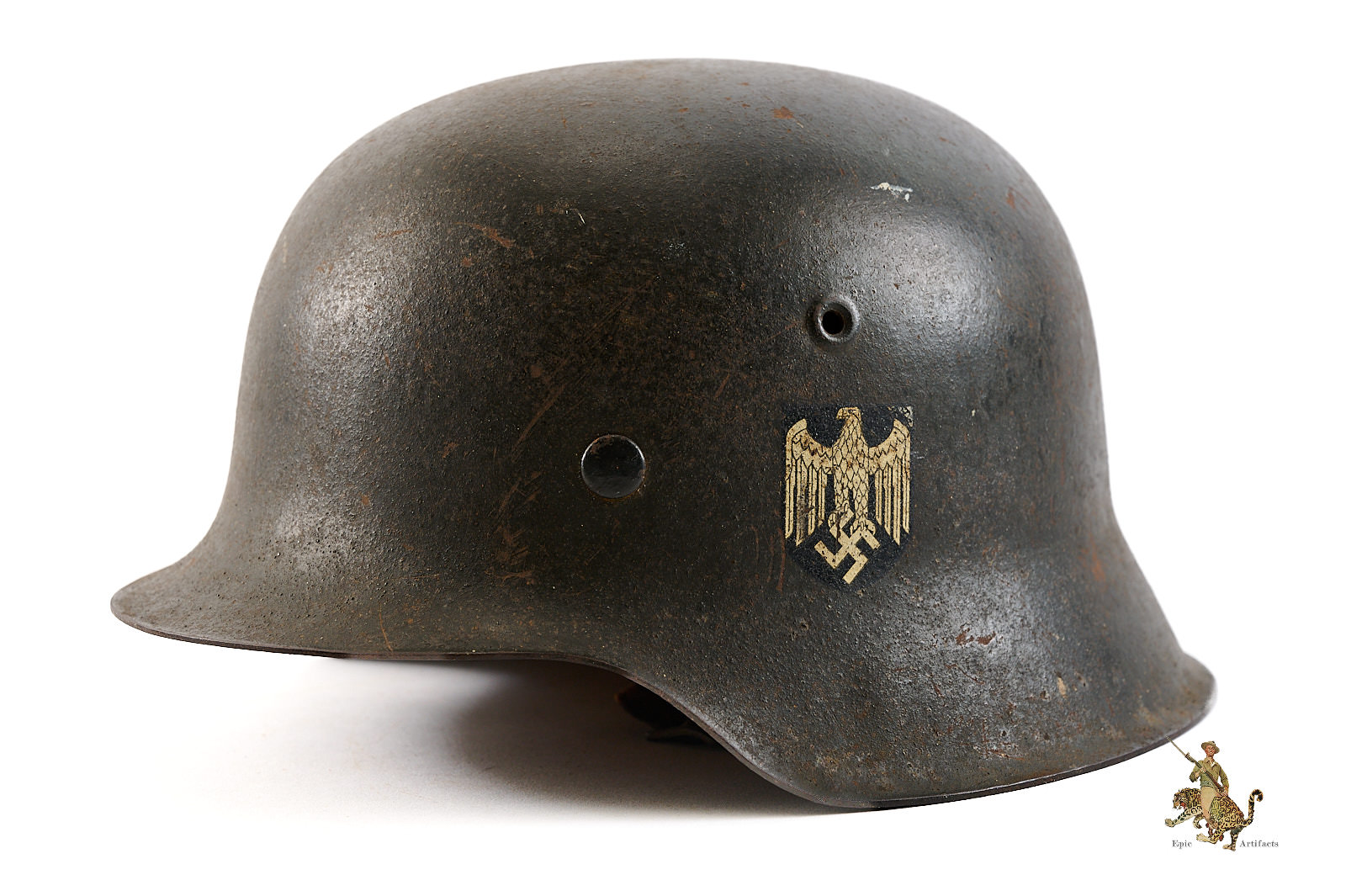
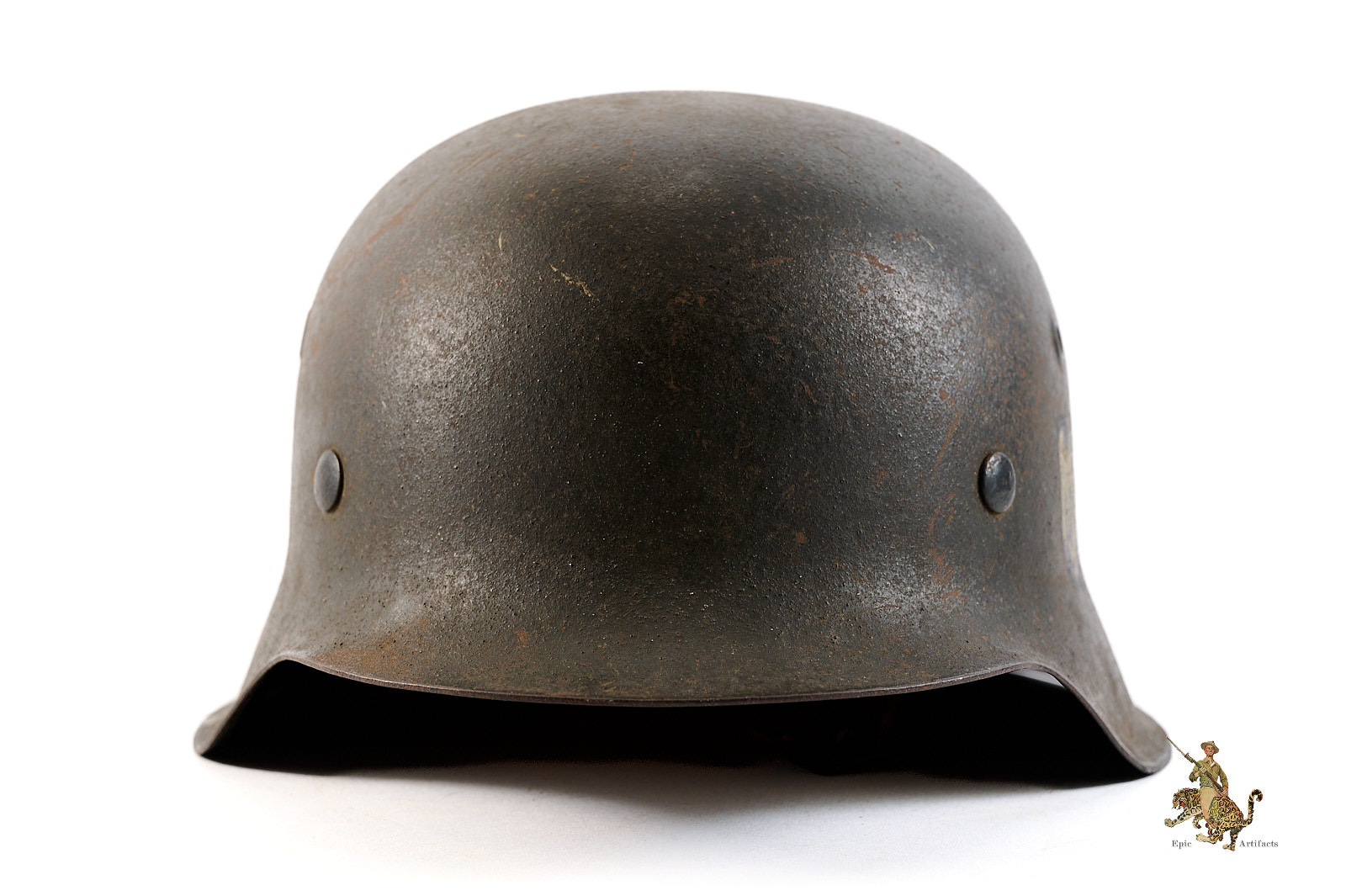
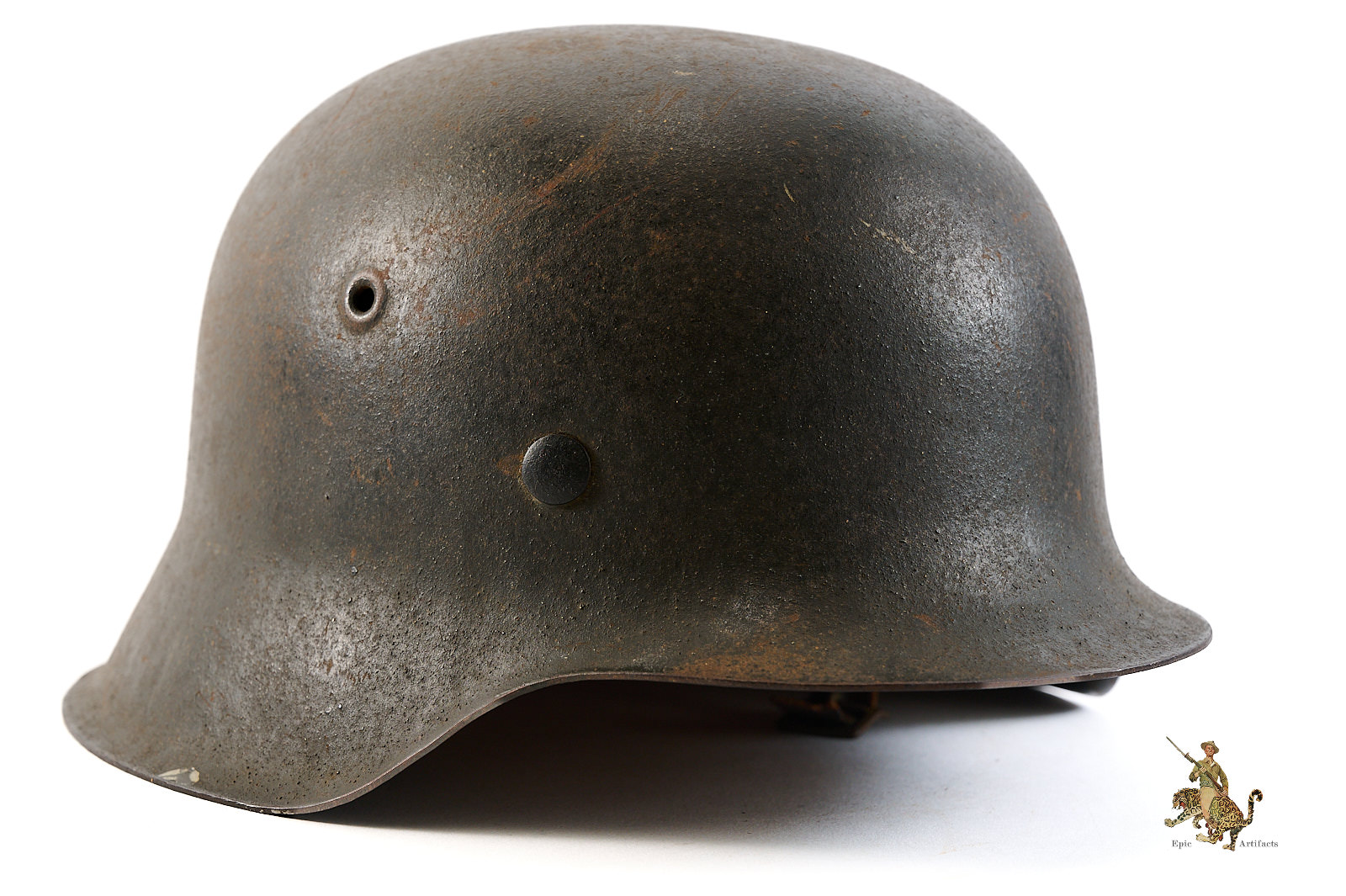
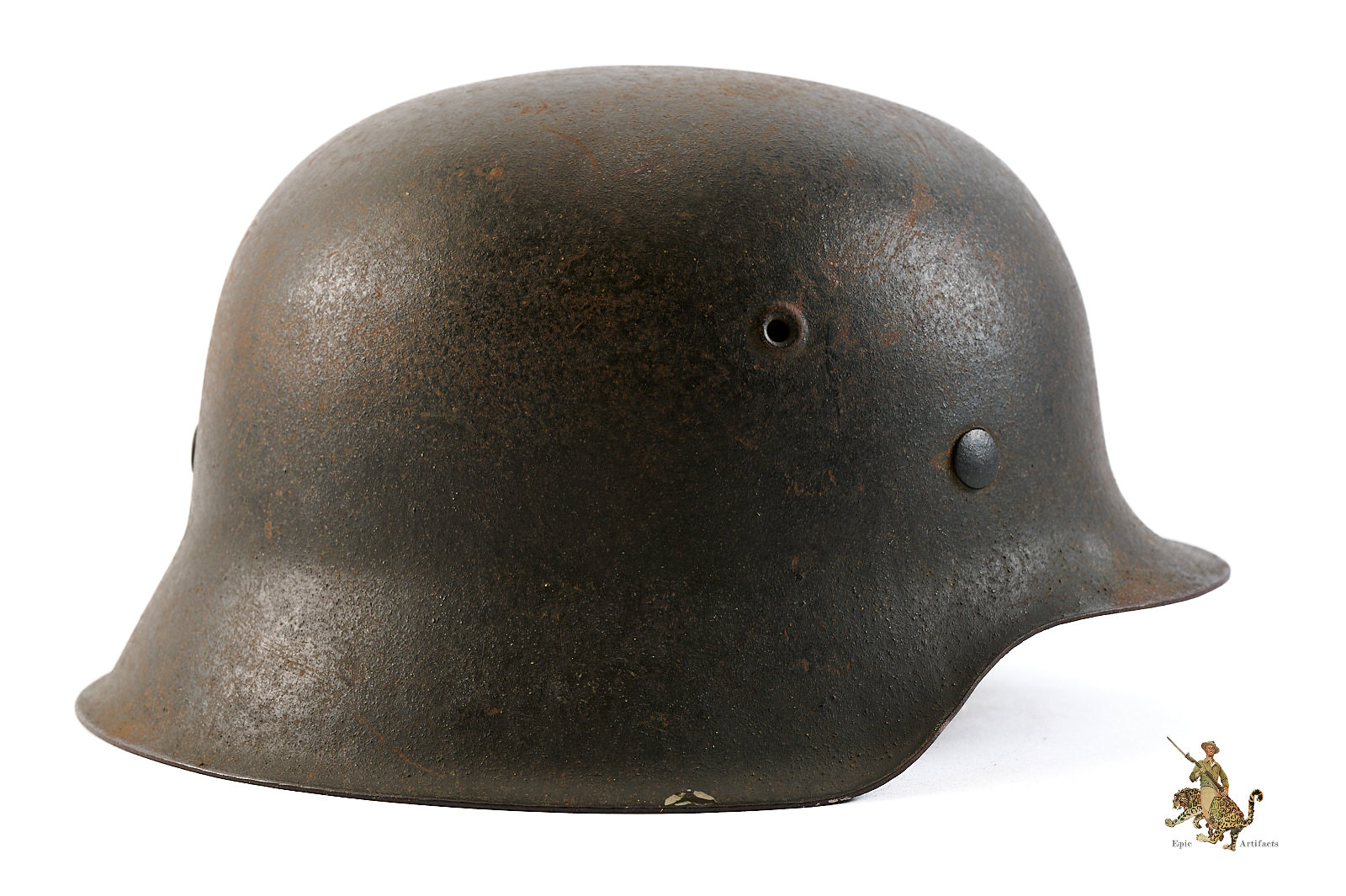
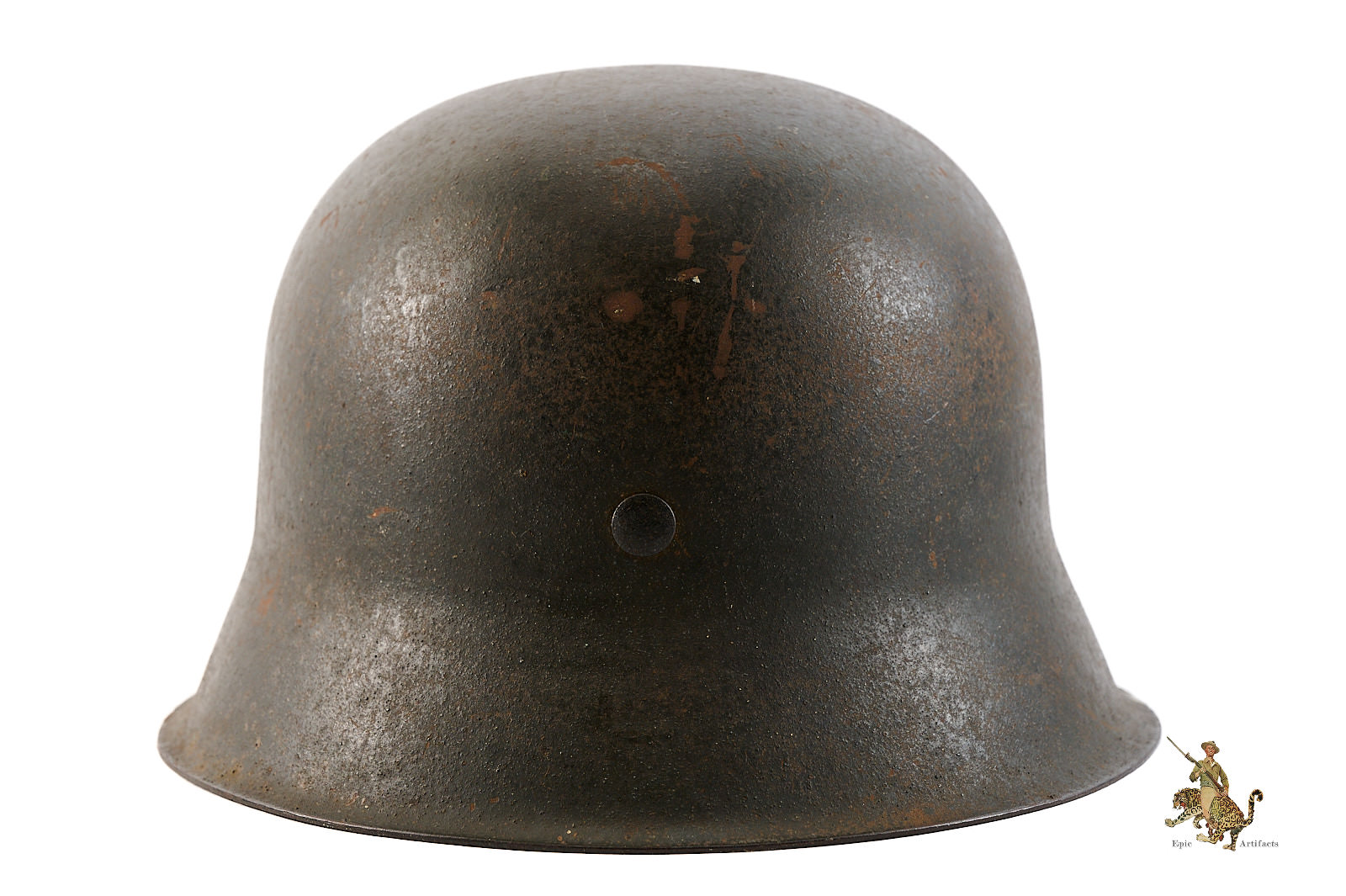
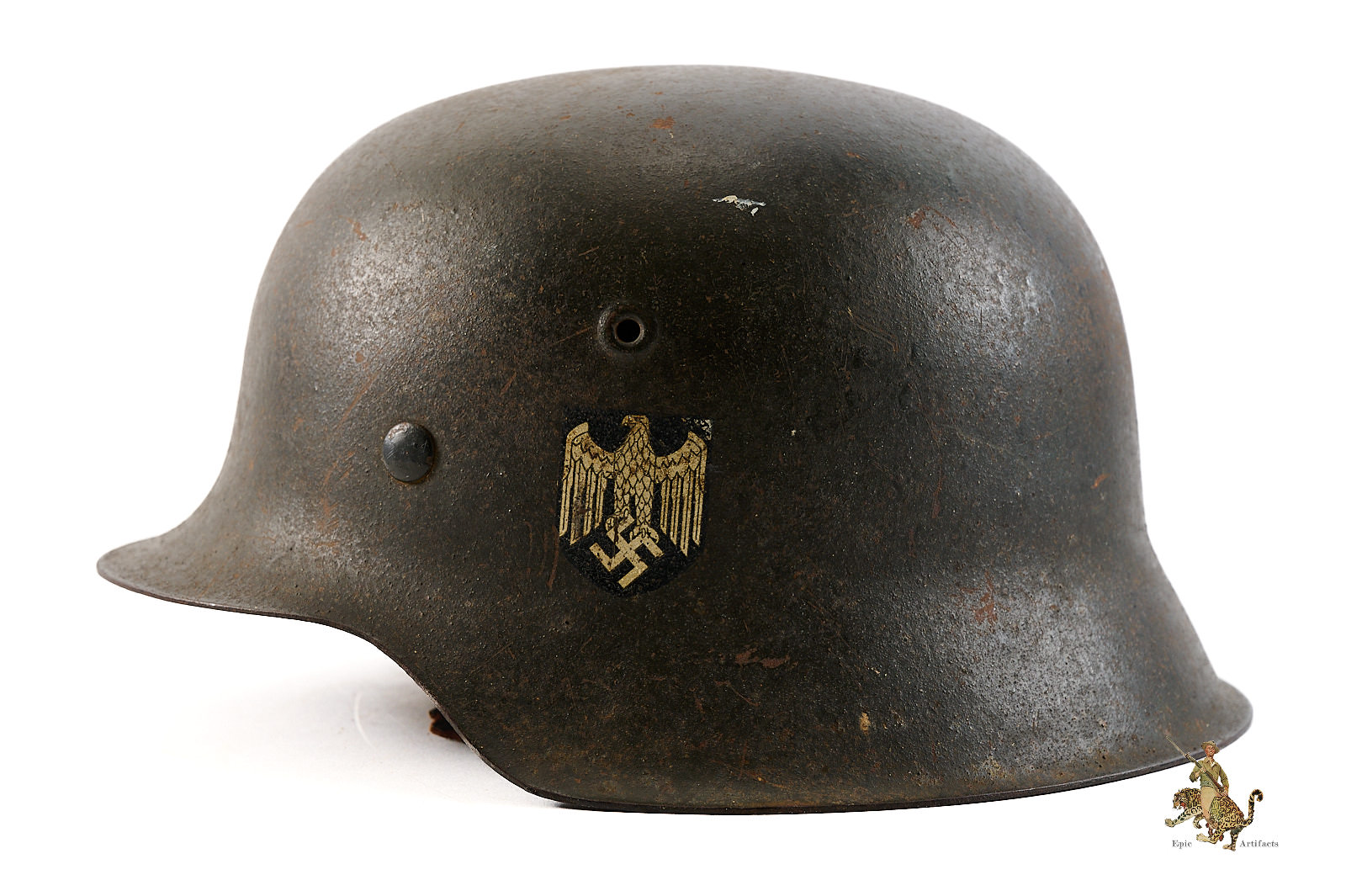
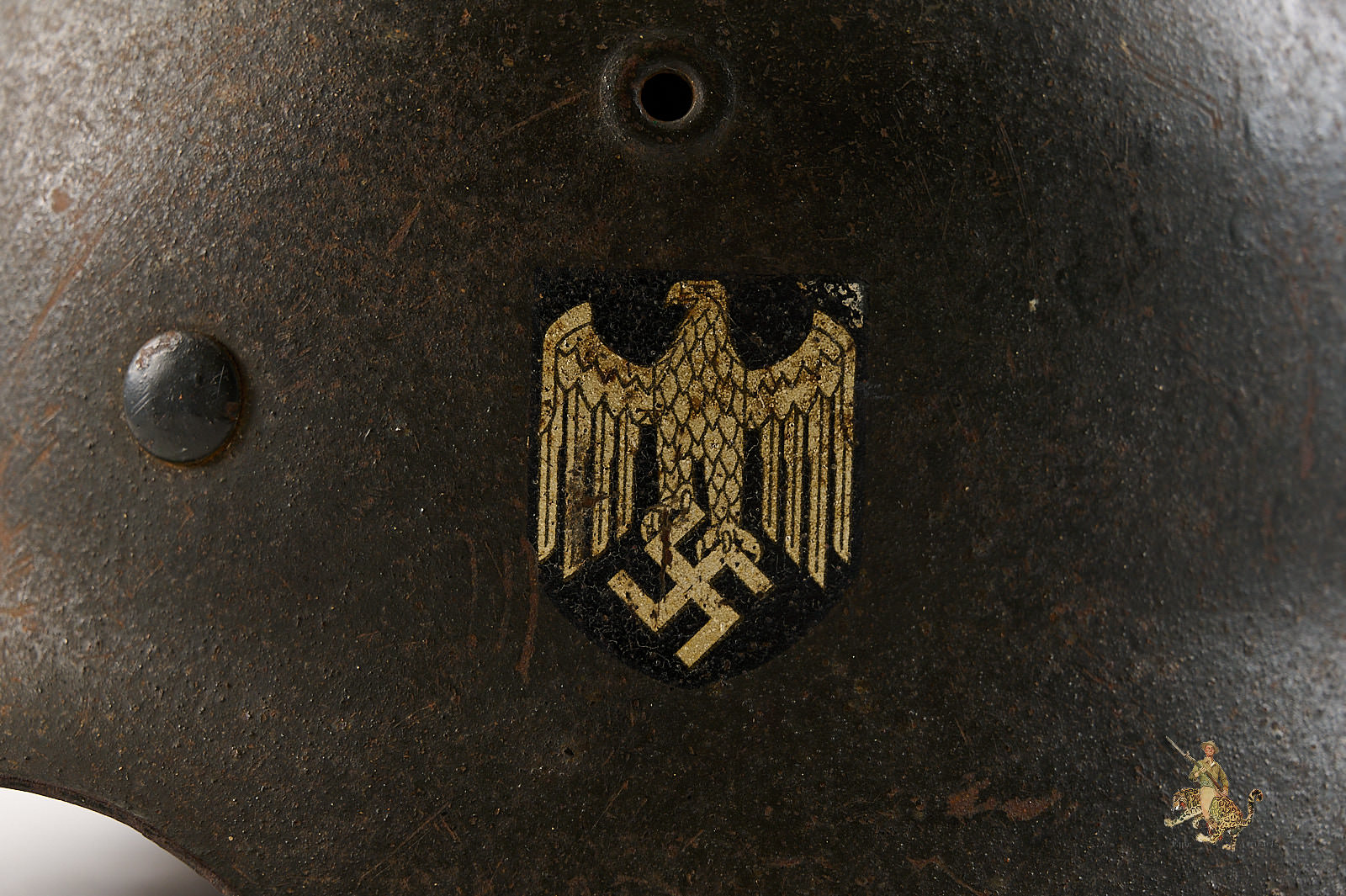
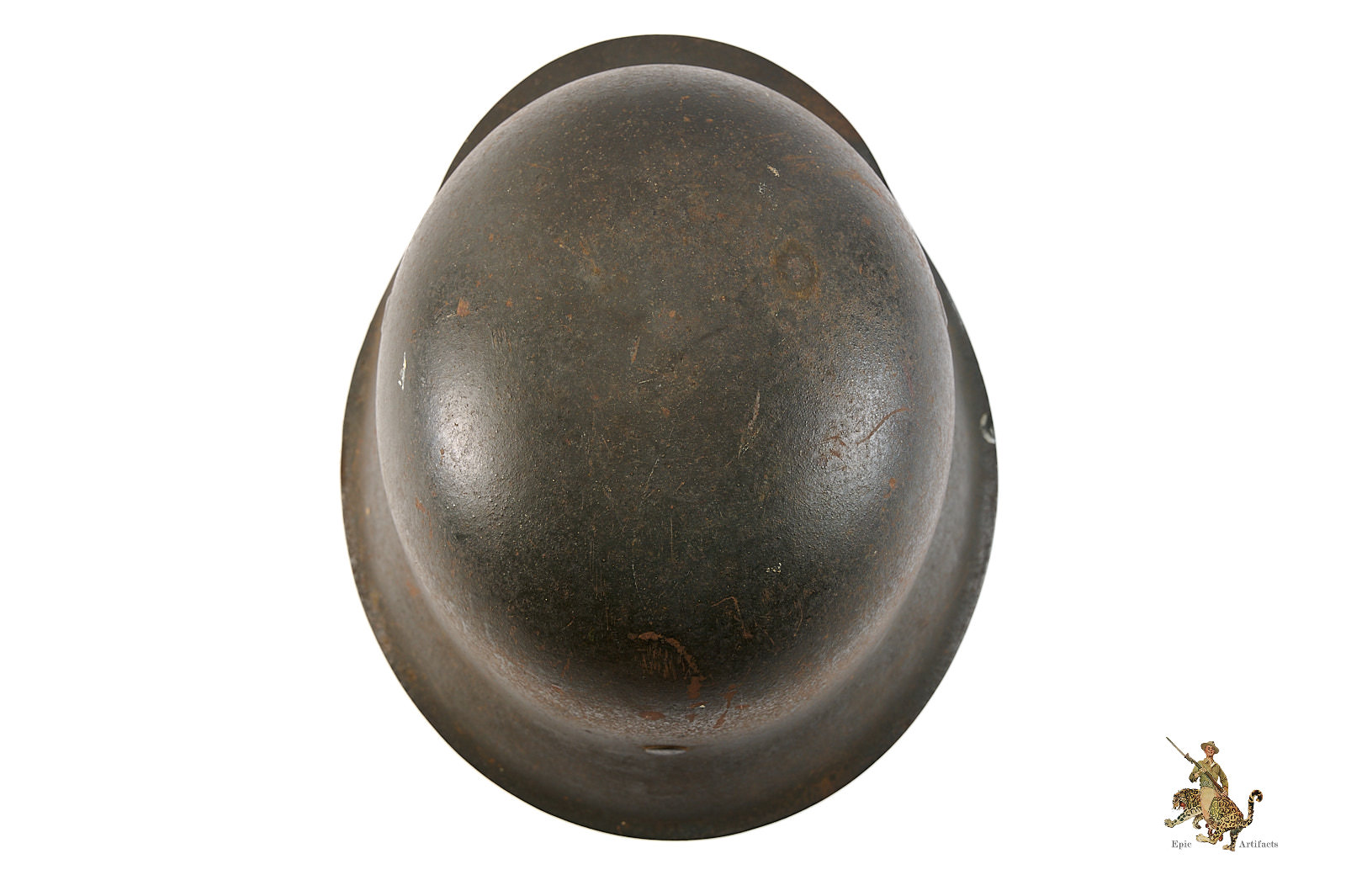
Product Description: A highly desirable and well-preserved M42 Heer Single Decal Helmet – CKL 64, retaining strong original character and battlefield presence. The helmet shell remains in excellent overall condition, featuring its original Heer eagle decal with approximately 95% coverage remaining, displaying only light scratching and minor areas of age-related corrosion.
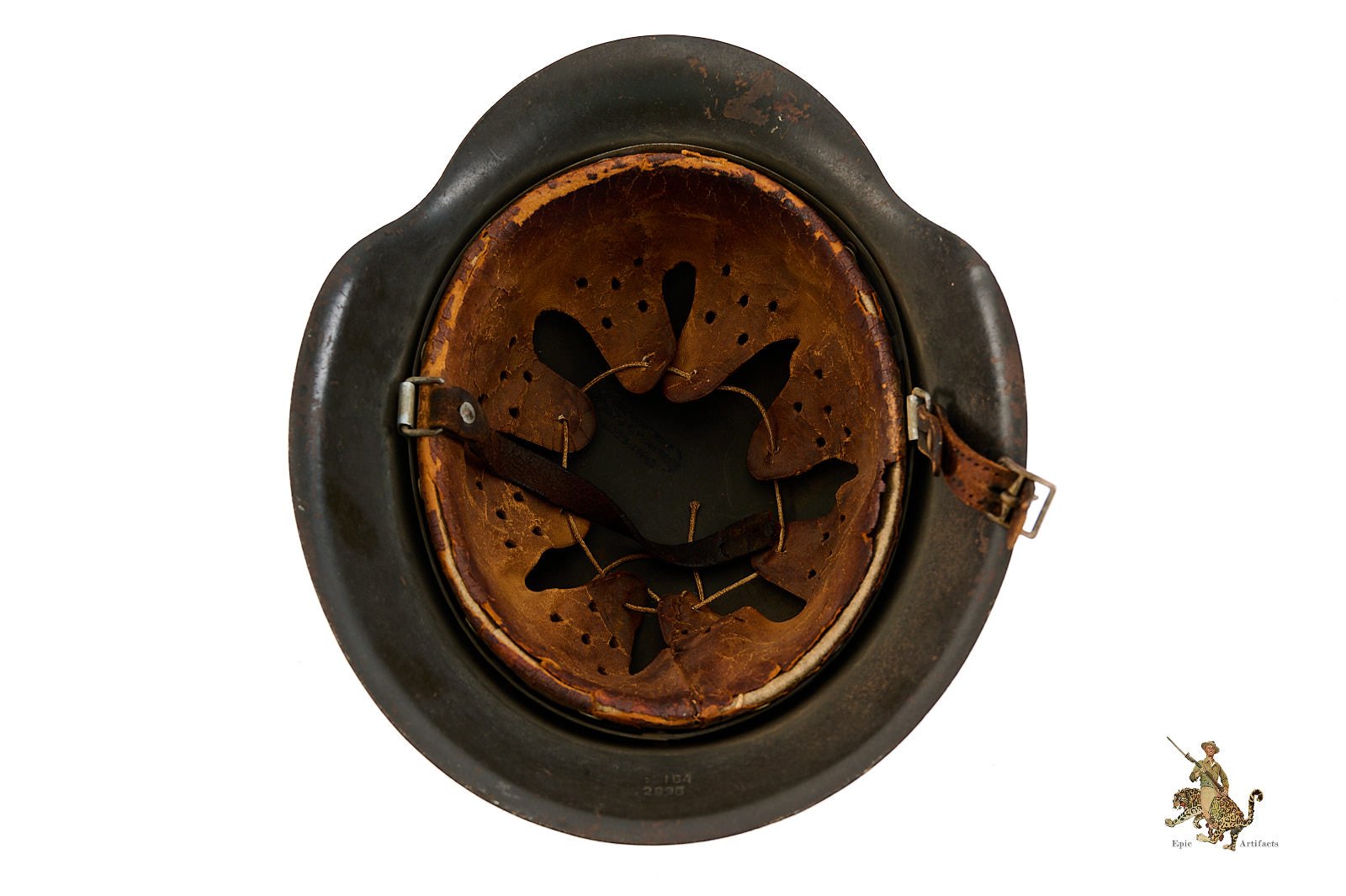
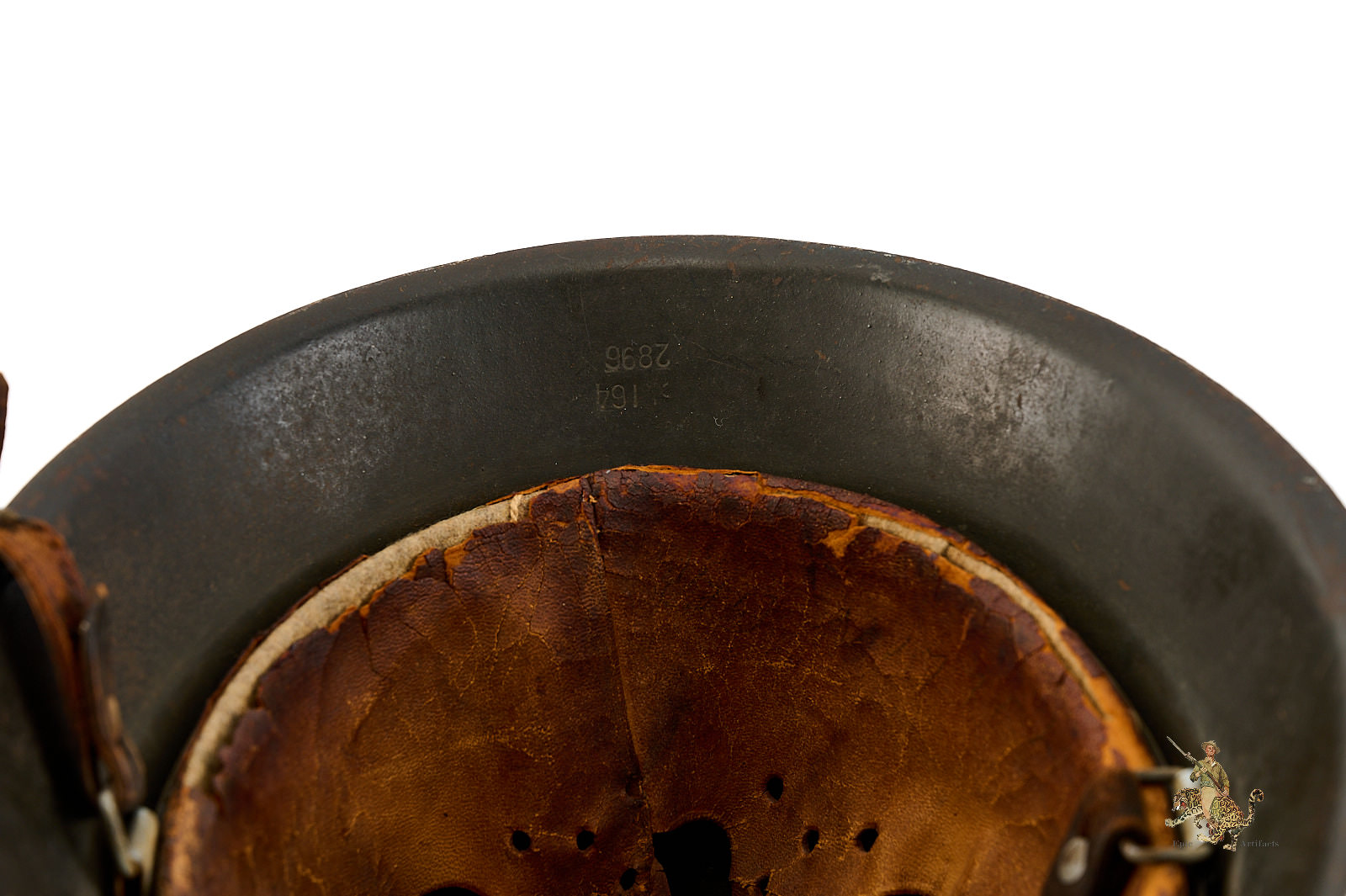
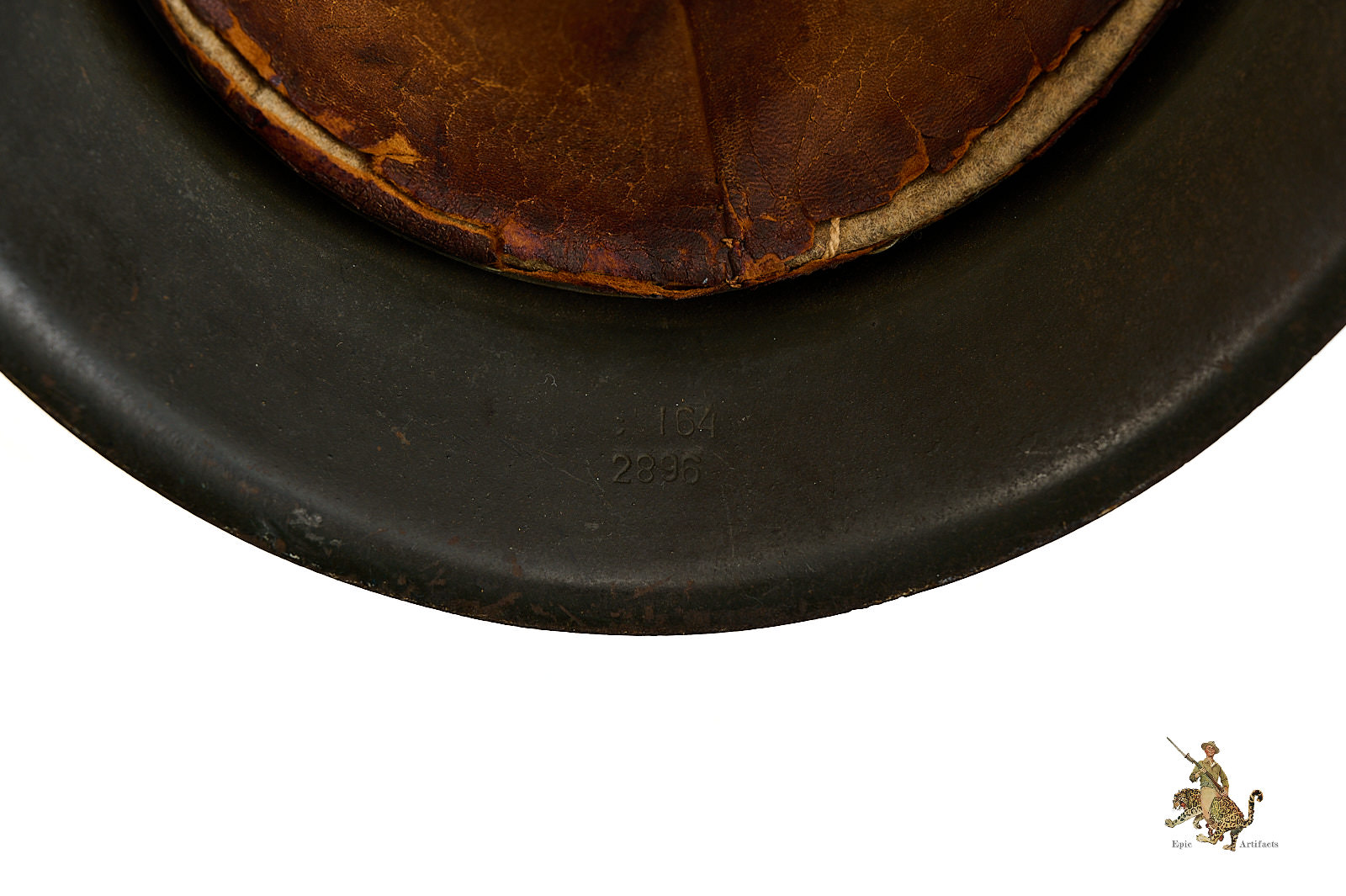
The textured field-grey paint survives impressively across the majority of the shell, with only modest paint loss and honest wear consistent with wartime use and long-term preservation. The interior skirt is clearly stamped “CKL 64,” with lot number “2896” visible at the rear, identifying production by one of the noted wartime helmet manufacturers.
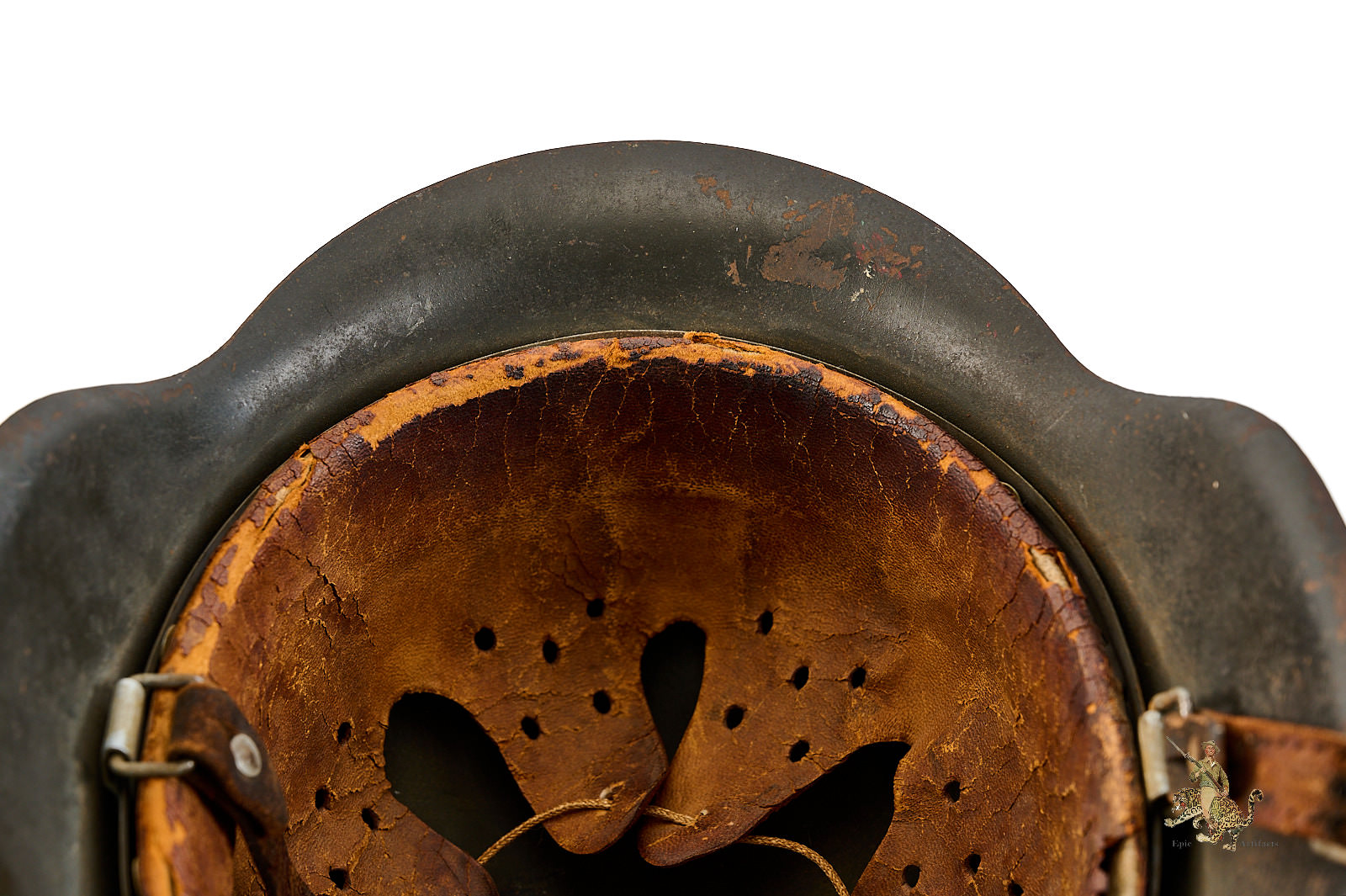
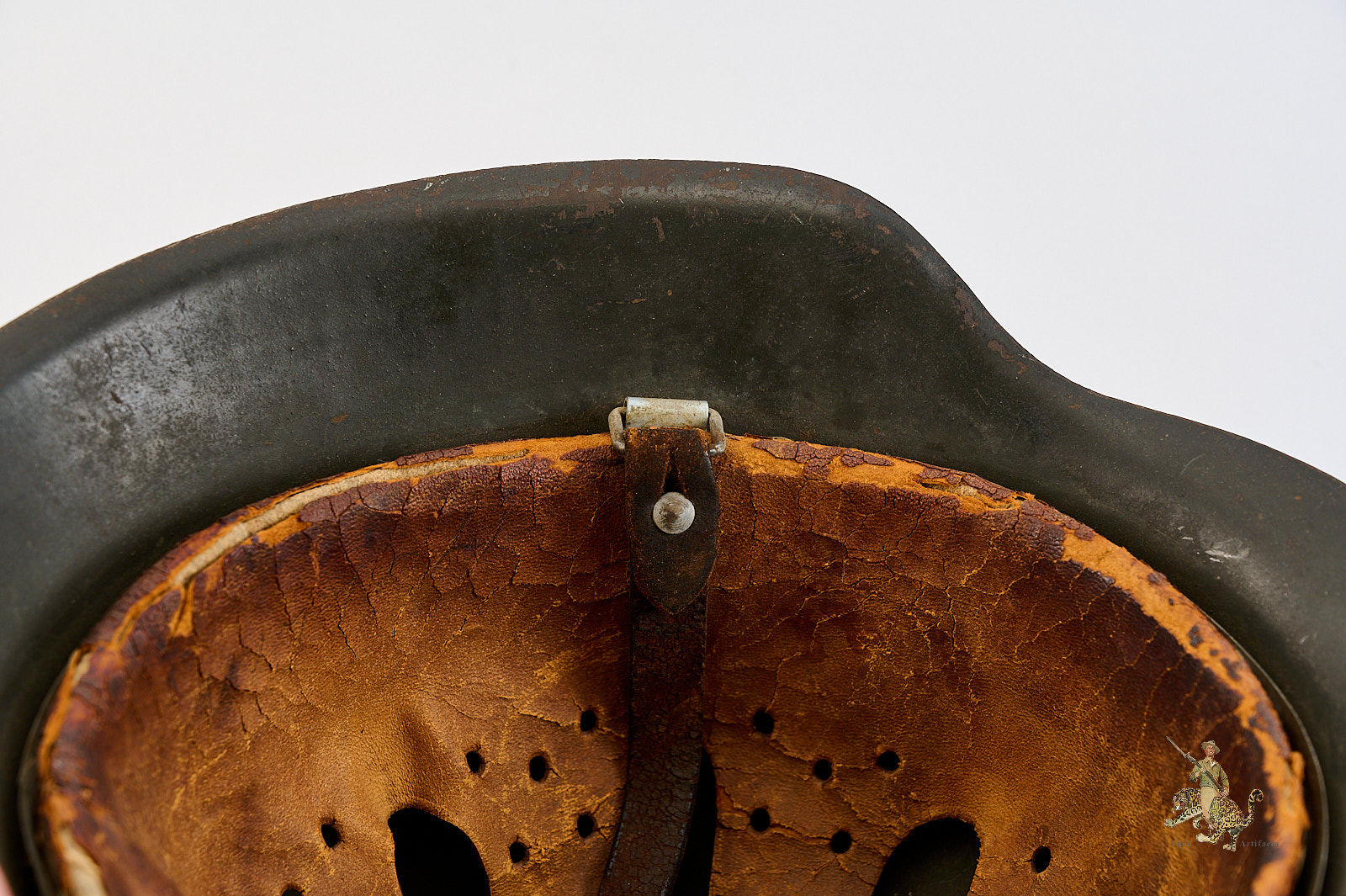
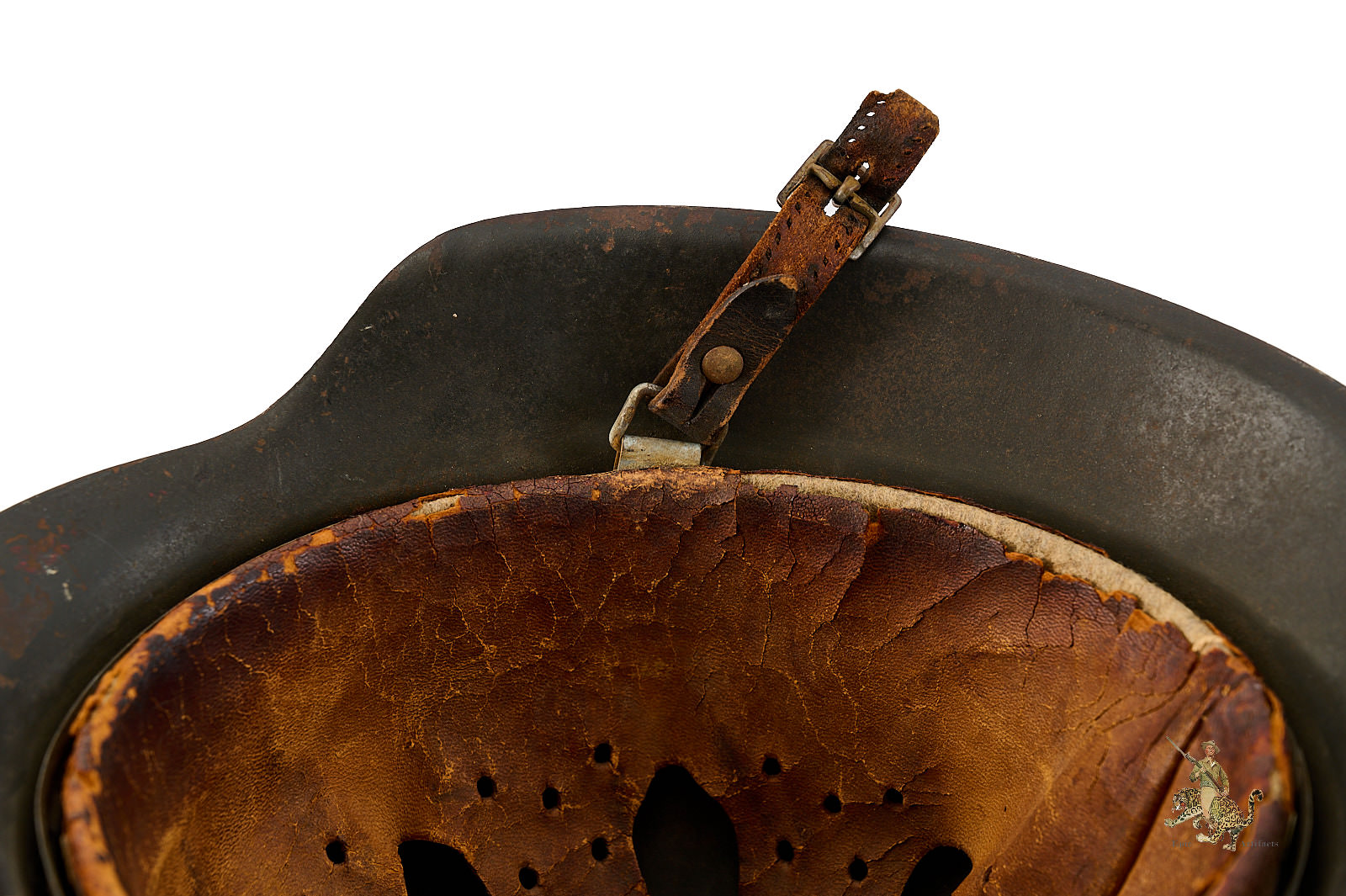
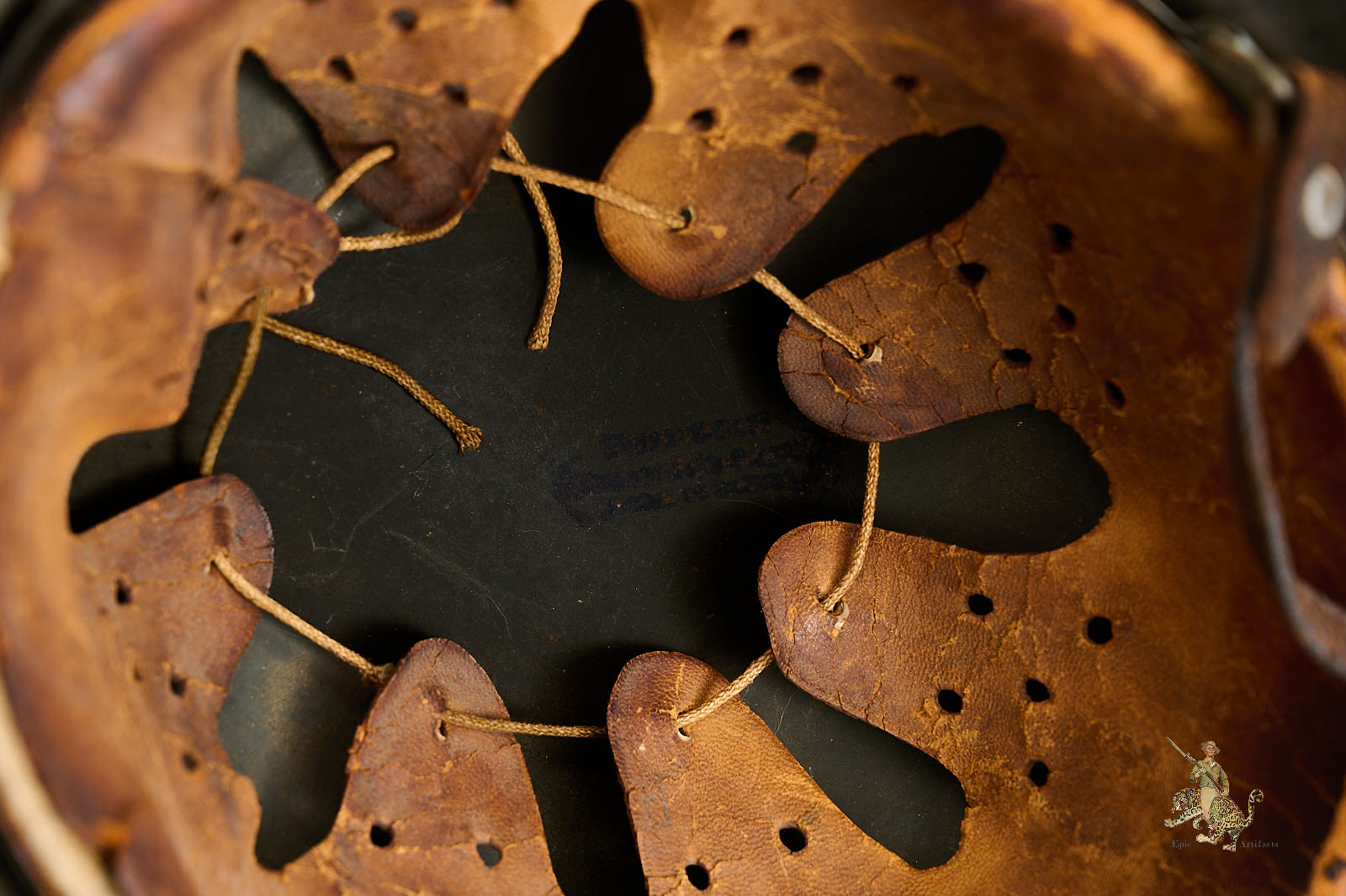
Inside, the original leather liner remains largely intact, retaining all liner fingers together with its original drawstring. The lower edge of the leather exhibits expected age wear, including cracking, separation, and tearing around portions of the metal suspension band, yet still presents attractively and authentically. A dome stamp is present within the crown, though now largely illegible from age and wear.
The helmet is accompanied by a partial original chinstrap, with the buckle section surviving intact, while the opposing section is absent aside from two remaining attachment holes. Despite these condition notes, the helmet displays exceptionally well and retains considerable collector appeal.
An authentic and increasingly difficult-to-find combat example, this M42 Heer Single Decal Helmet – CKL 64 represents an excellent opportunity for collectors seeking an untouched and visually impressive German wartime helmet with strong originality throughout.
Historical Description: When the German Army first marched into war in 1914, it went to the front lines wearing the traditional “Picklehaube” helmets. The war soon developed to necessitate the need for an improved headgear to protect the wearer. The German Army developed the M16 helmet in 1915 and began issuing it in mass quantity to its fighting troops in 1916. The M16 underwent changes to bring about the next model, the M18. Both the M16 and M18 saw use by the German Army during WW1, as well as the interwar years by the Reichswehr and Freikorps. In 1931, a new liner system was developed. The M16 and M18 helmets were in mass supply right up to the time the Nazi Party took control of the German government. During Adolf Hitler’s rearming of the German military in the early 1930’s, the M16 and M18 helmets saw extensive refitting with the newer liner system, fresh paint, and the addition of a centralized decal system for the newly formed Wehrmacht’s respective branches. Decals were generally placed on each side of the helmet, one side being the branch and the other the national colors shield or party shield. In 1935, the M35 helmet was introduced. This new design was lighter and more streamlined than the older style helmets and is what the world now recognizes as the iconic helmet of the German Military. M35 helmets can most easily be identified from the separate rivet ventholes and rolled edges. With the outbreak of war, some changes were made to bring in a new model, the M40. The changes made to this new model was the use of a more matte field grey finish and the vent holes were now integral to the helmets shell. In 1940, the national colors decals and party shields were ordered to be removed. It should be noted that many M35 helmets were brought up to date by repainting them with the matte field grey finish and/or other modifications if necessary. These refitted helmets are what collectors now term “reissue helmets”. The next model helmet to evolve was the M42. The model M42 has the same features of the M40 with the exception of the edges of the helmet not being rolled and remain flared. This was to speed up production and lower cost as the war dragged on and the German economy began changing to a total war economy. In 1943 all decals were ordered to be removed from combat helmets.
We are the leading team of military antique specialists. We have specialized in military antiques for over 25 years.
Epic Artifacts offers the highest prices available for your collectibles.
We purchase single items, entire collections, or family estates. Inquiries
Feel free to email us directly: info@epicartifacts.com