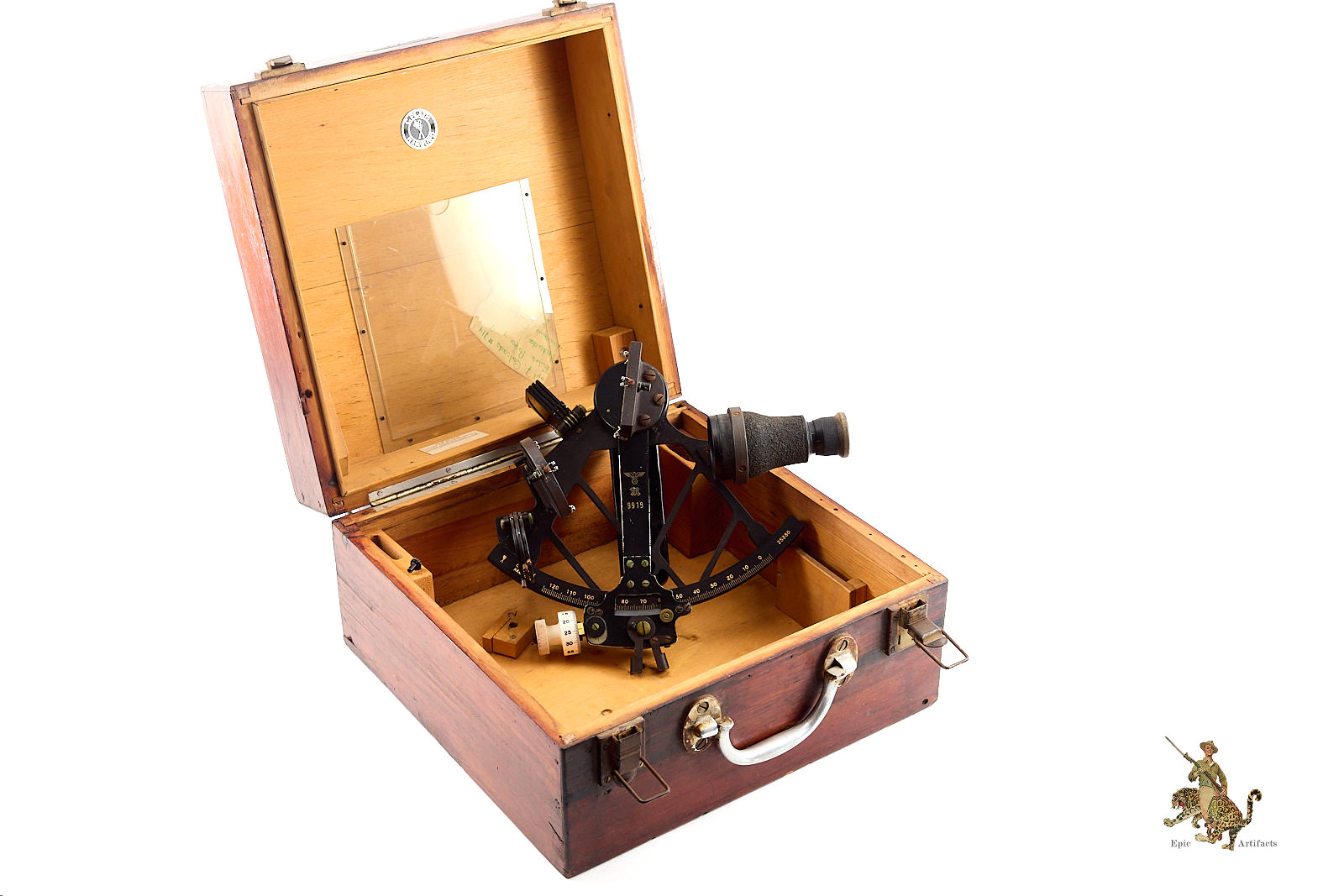
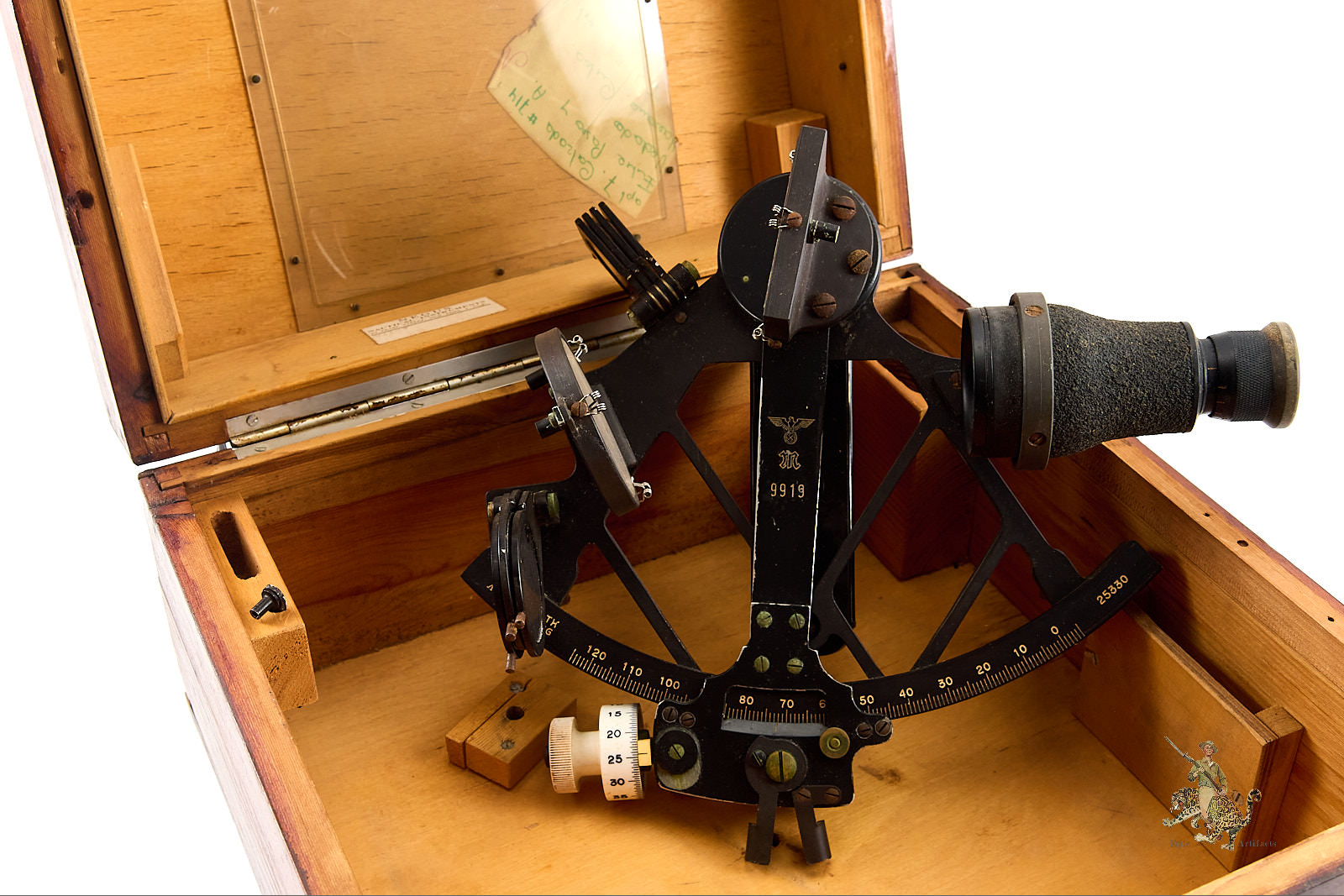
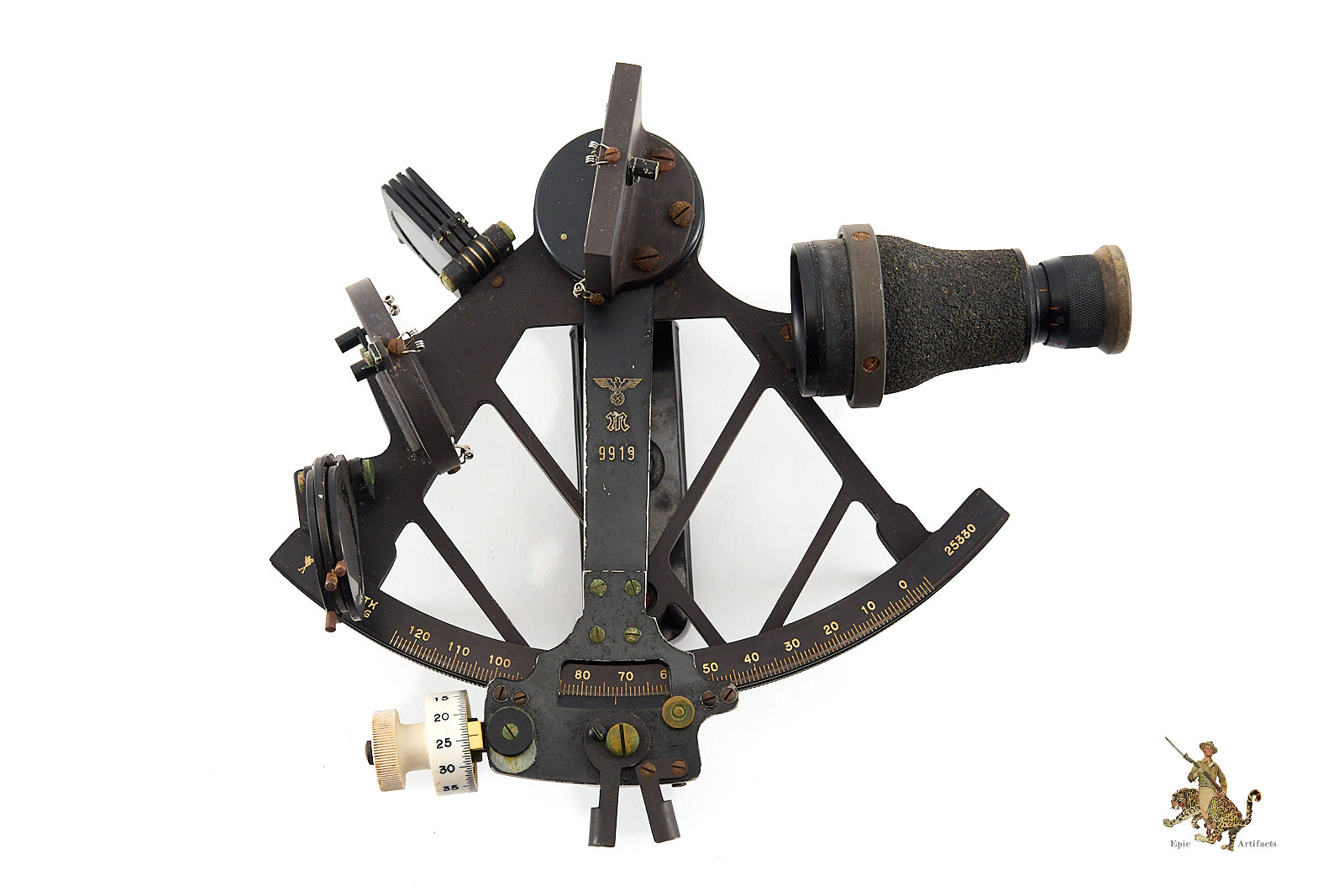
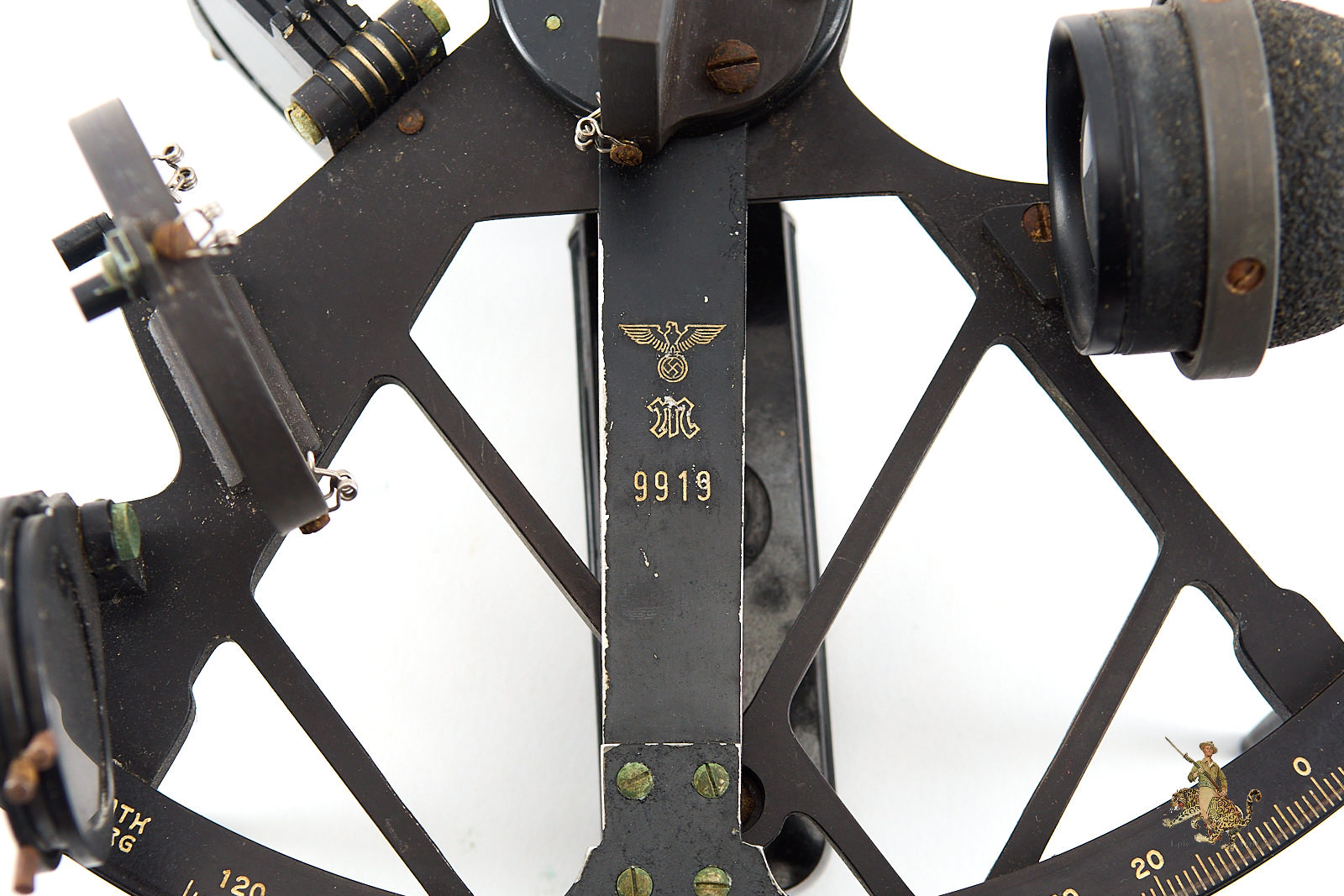
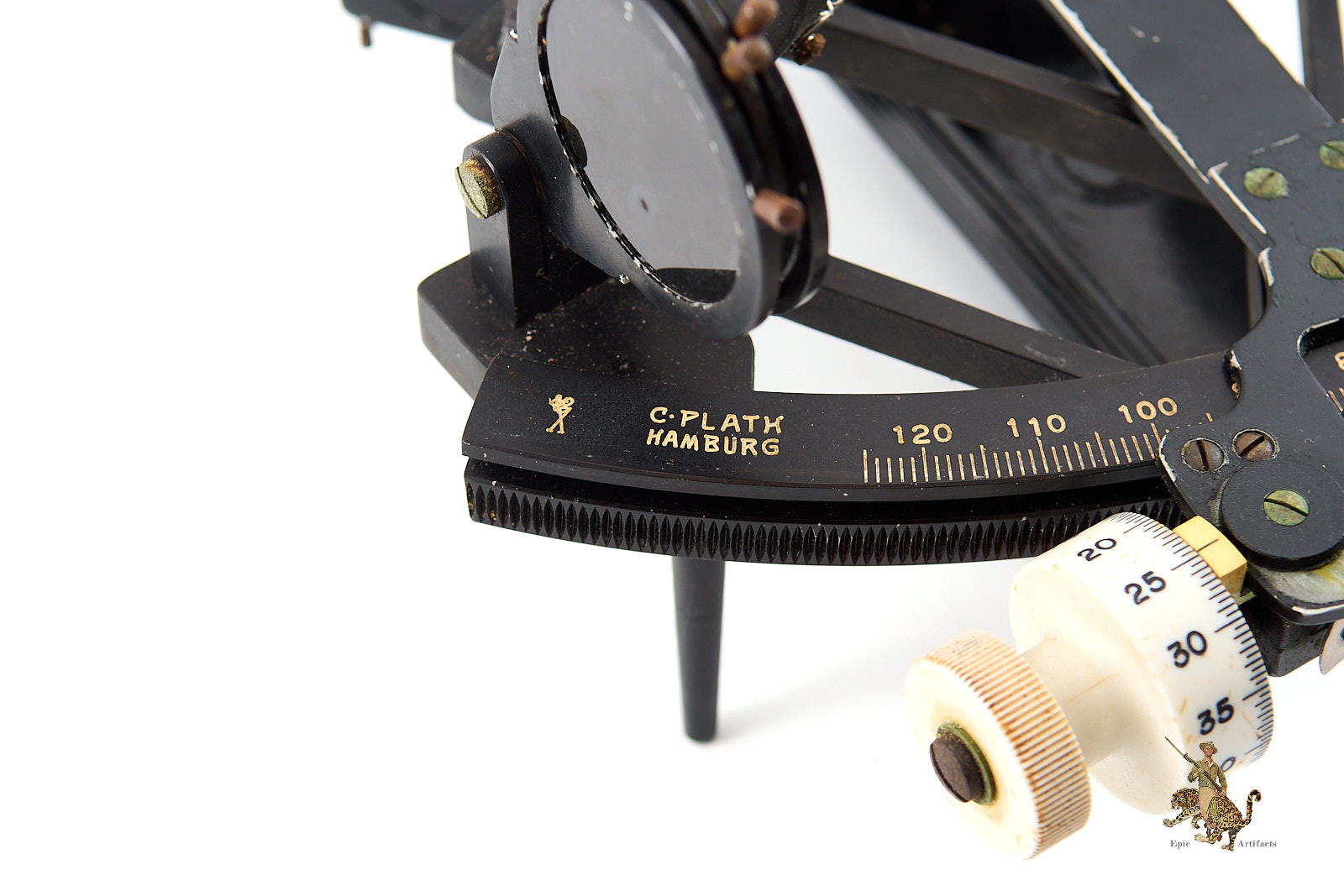
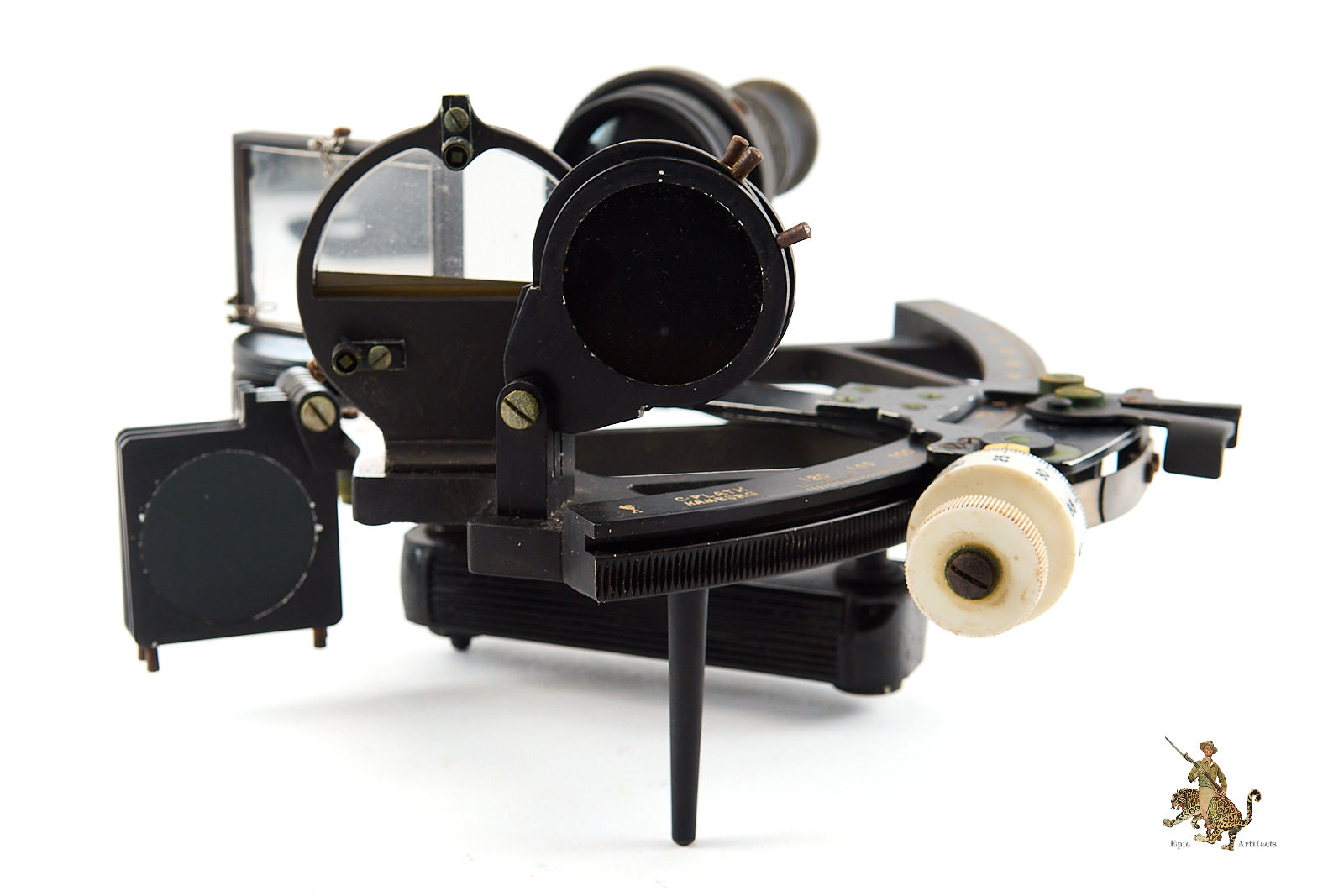
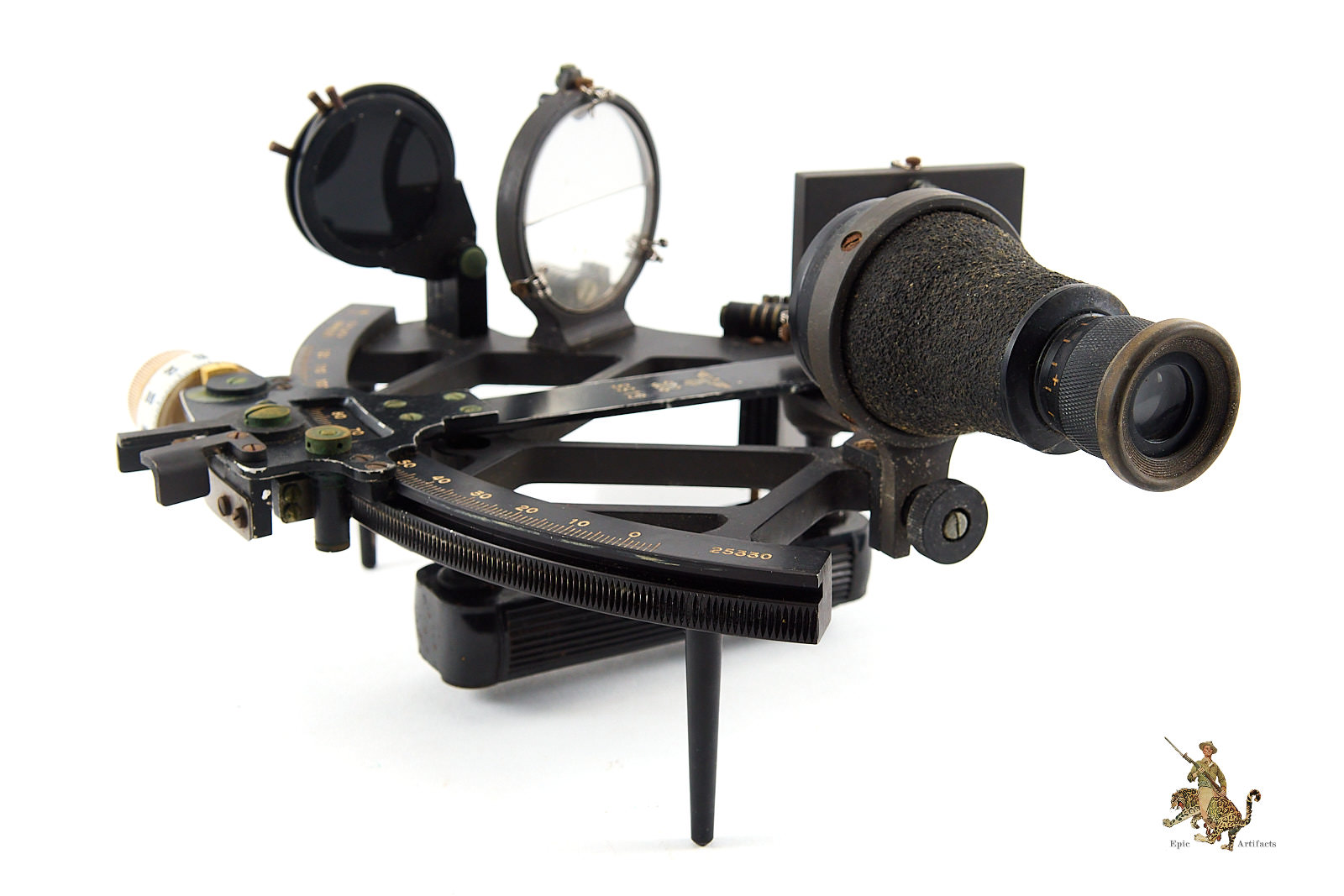
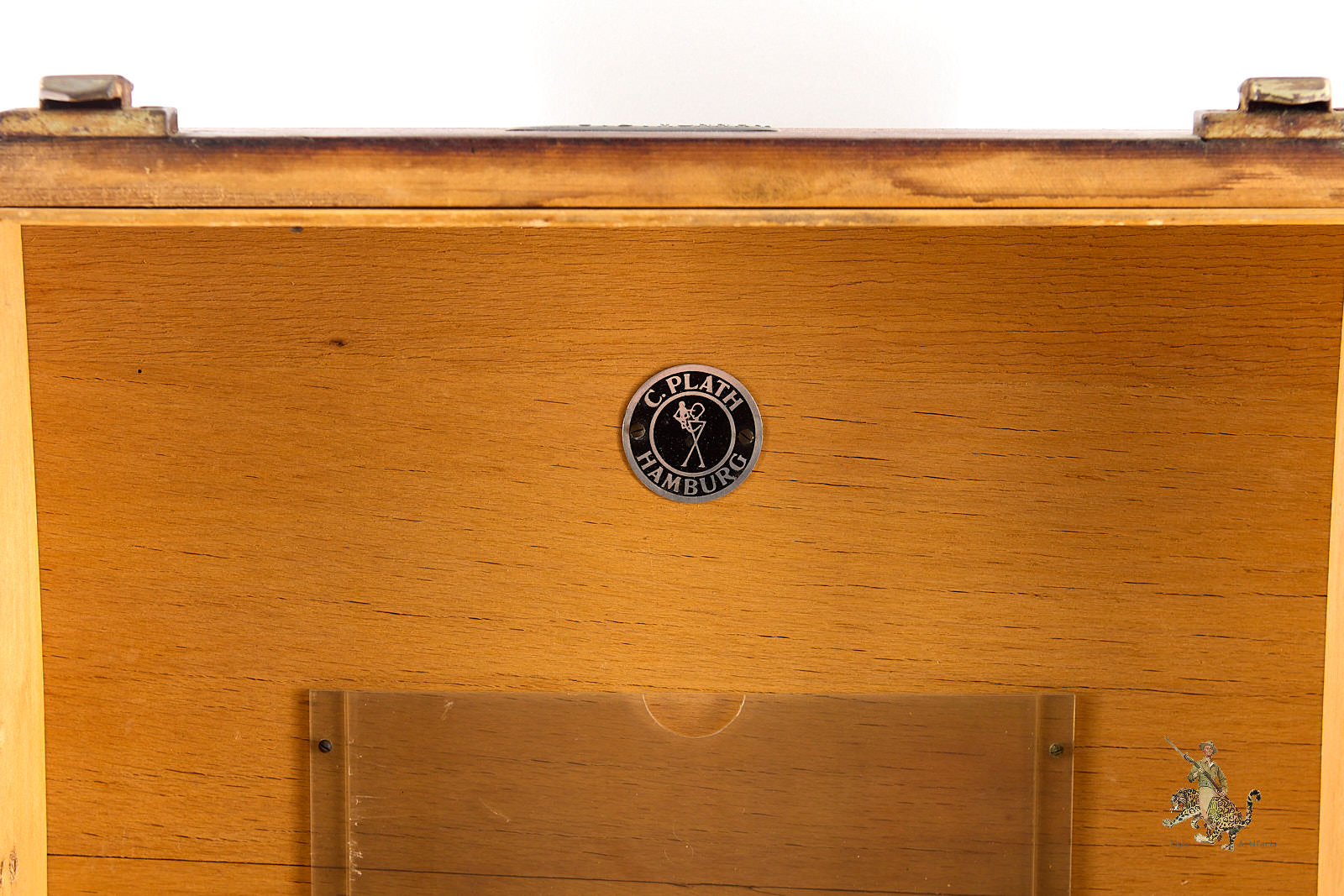
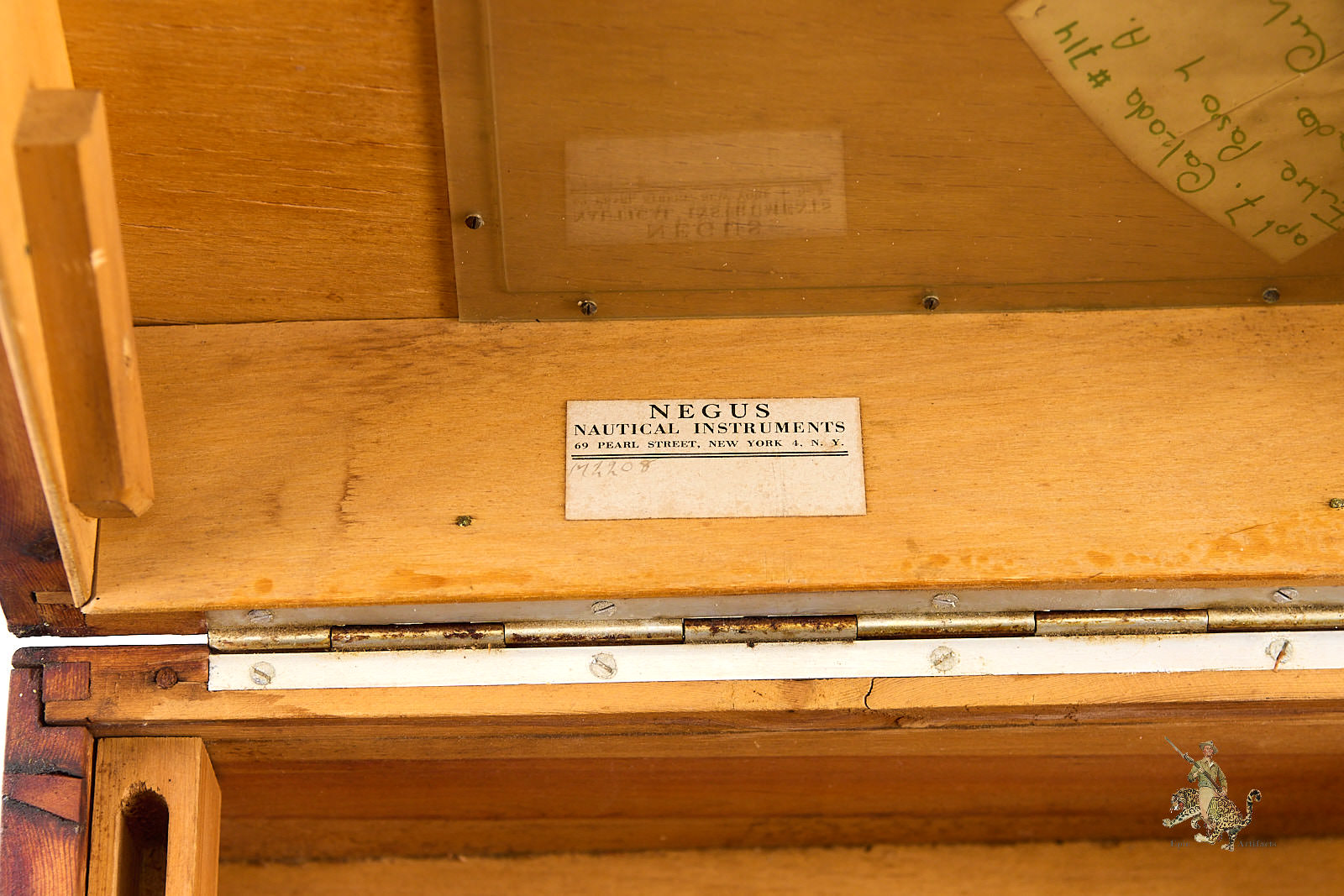
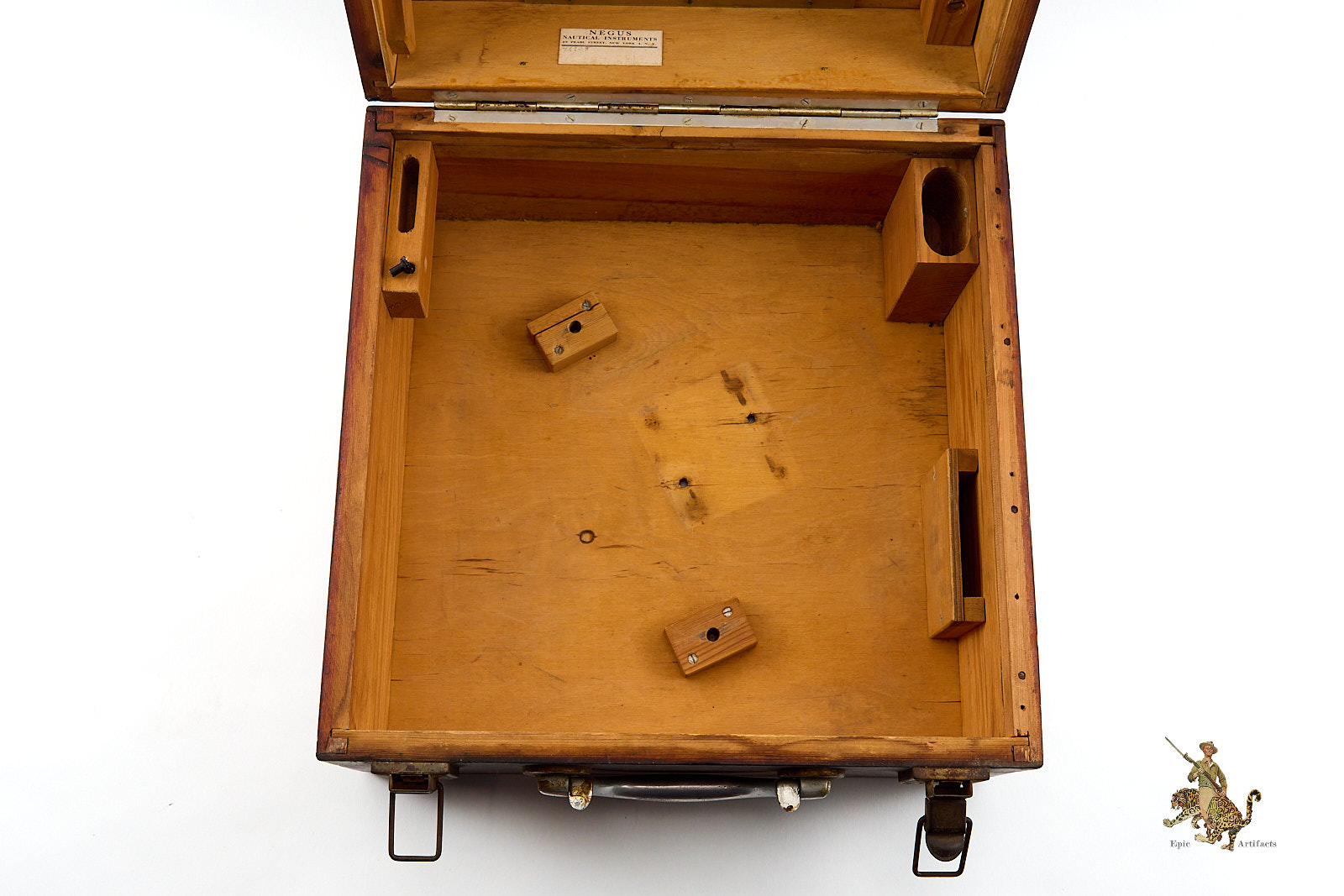
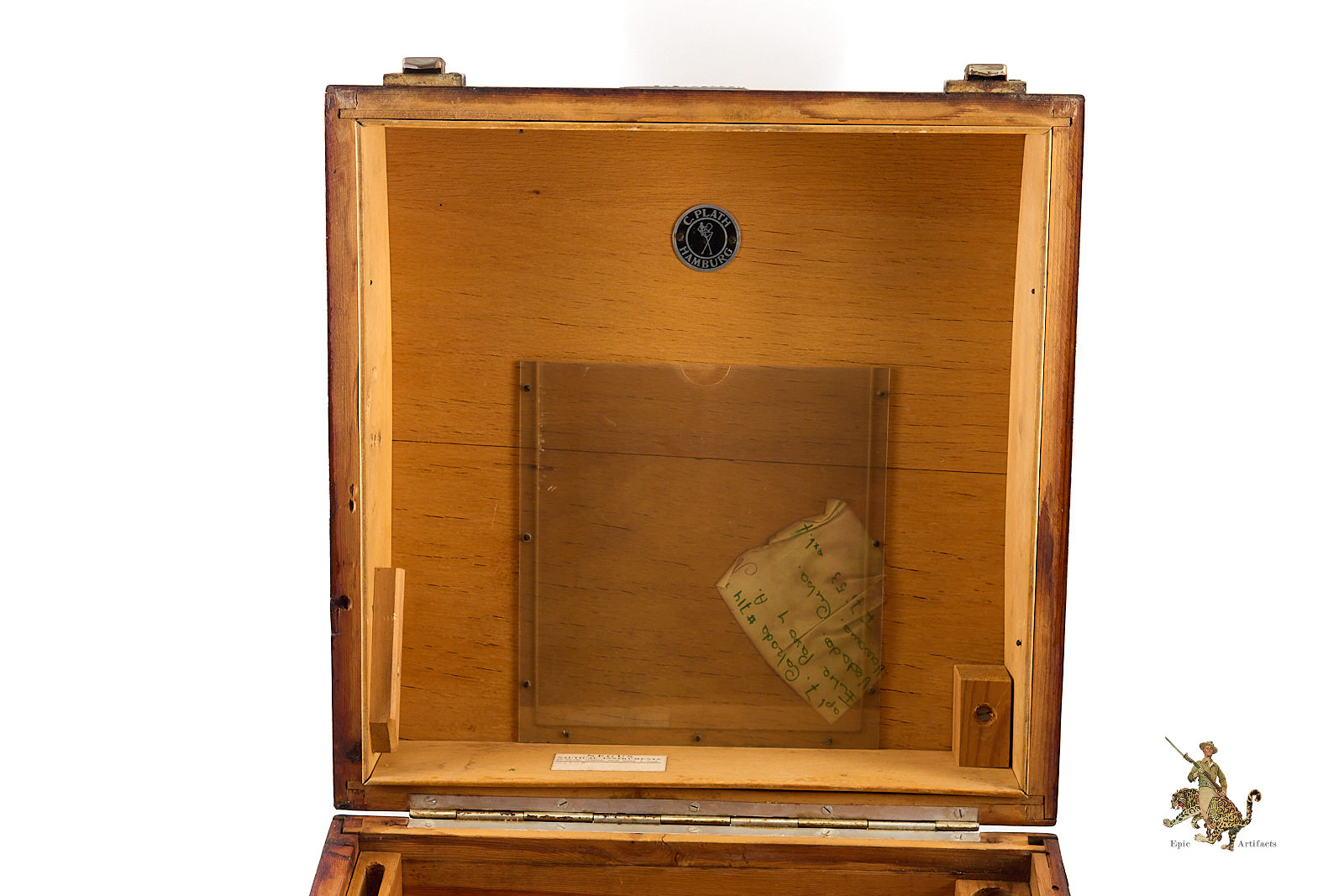
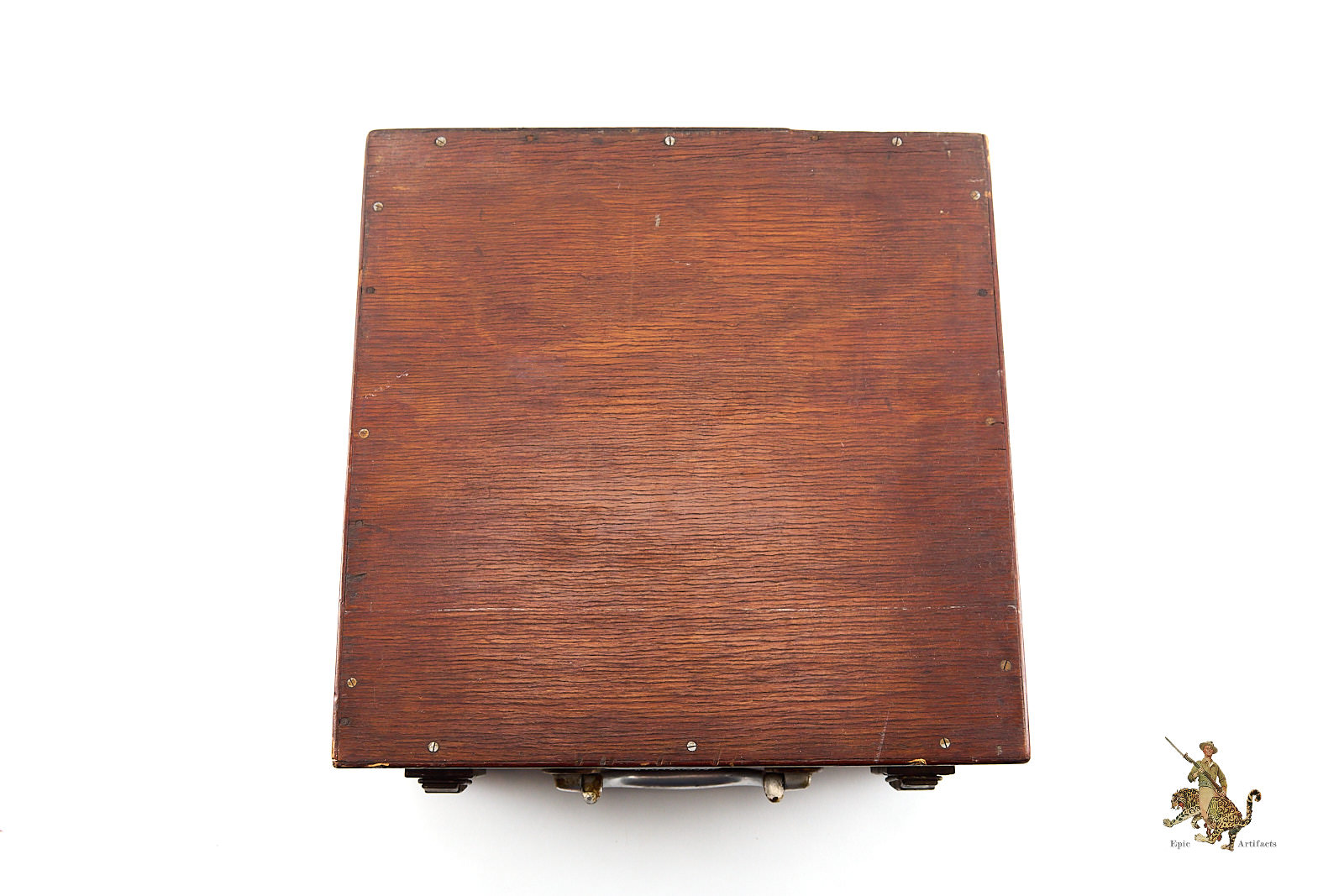
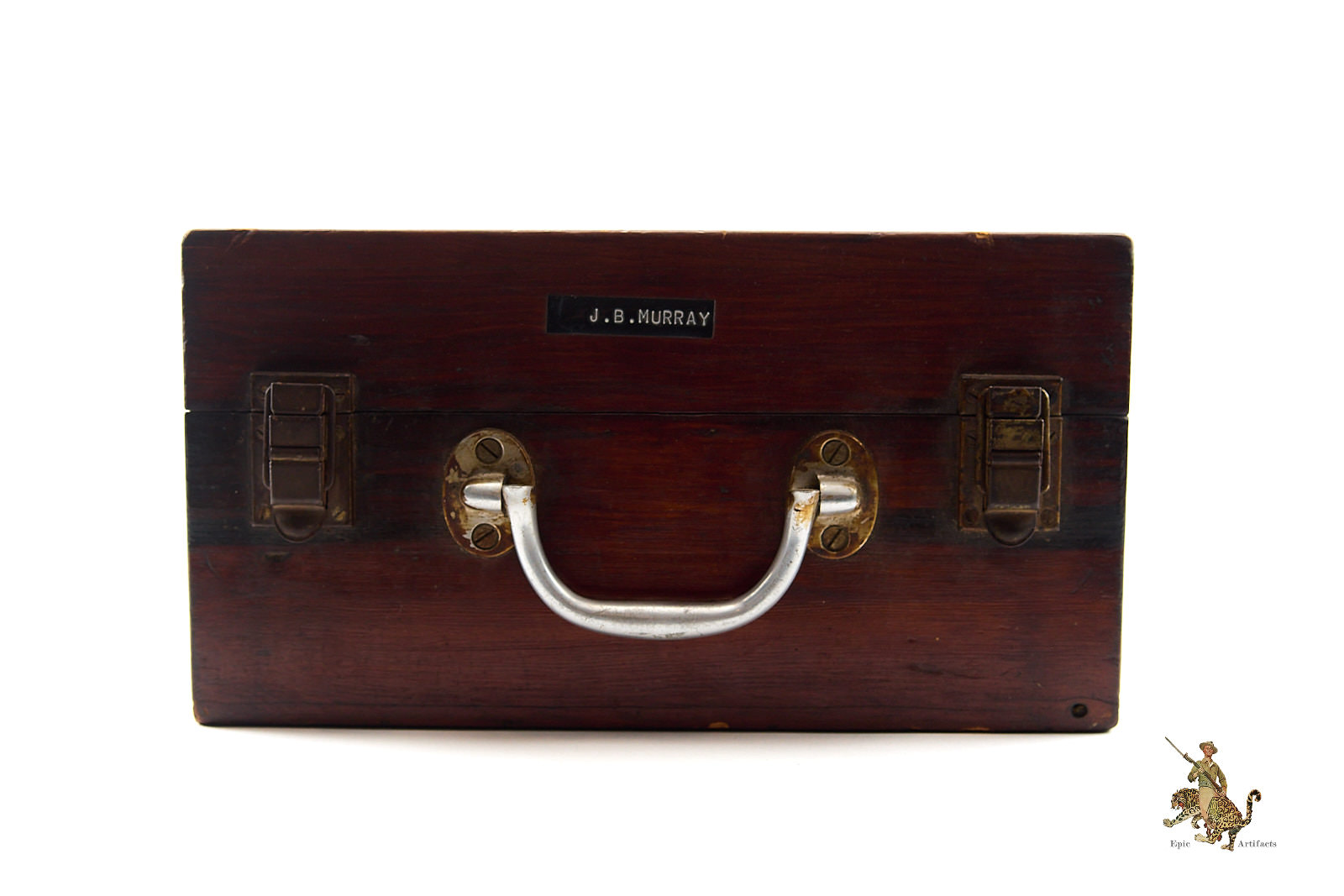
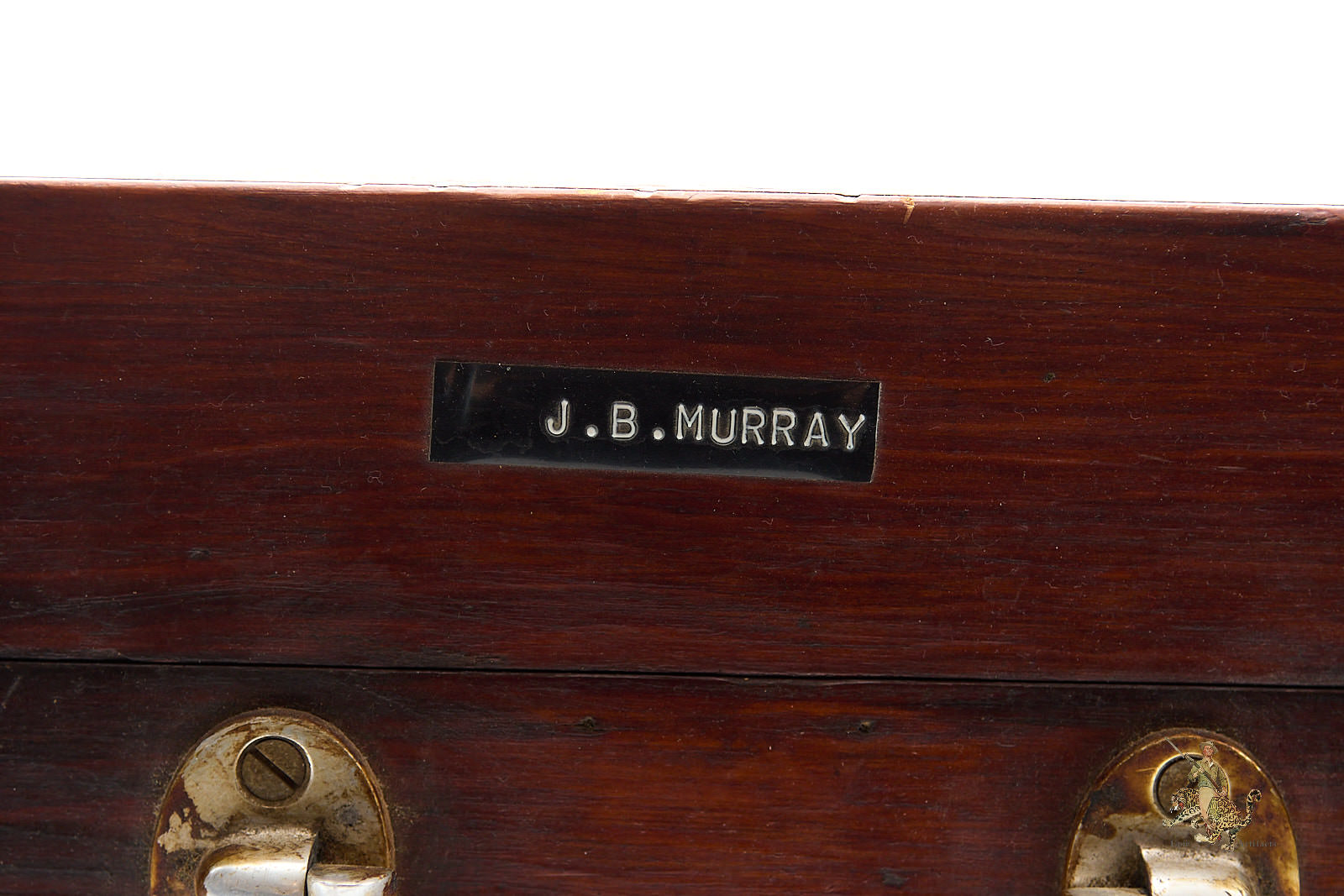
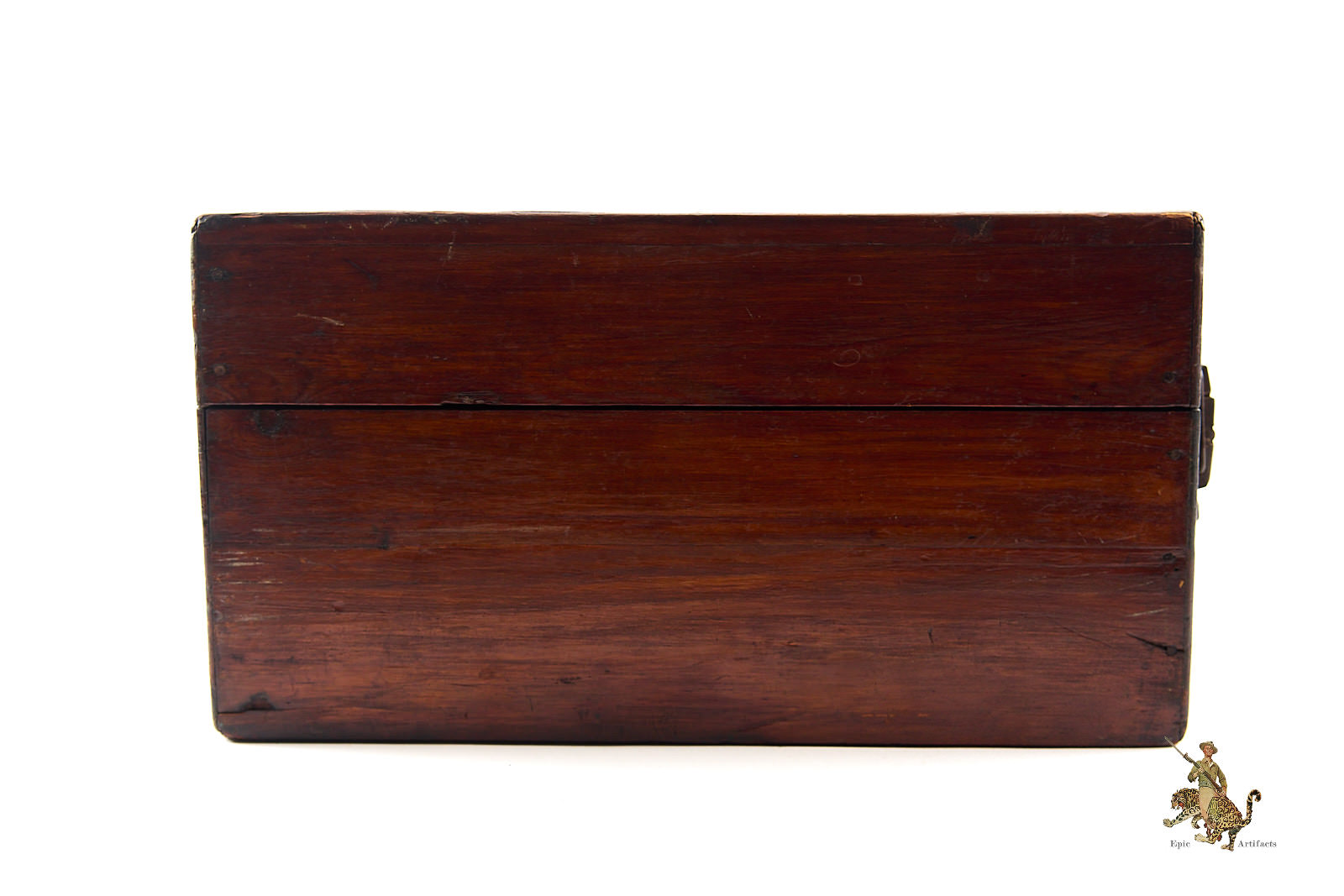
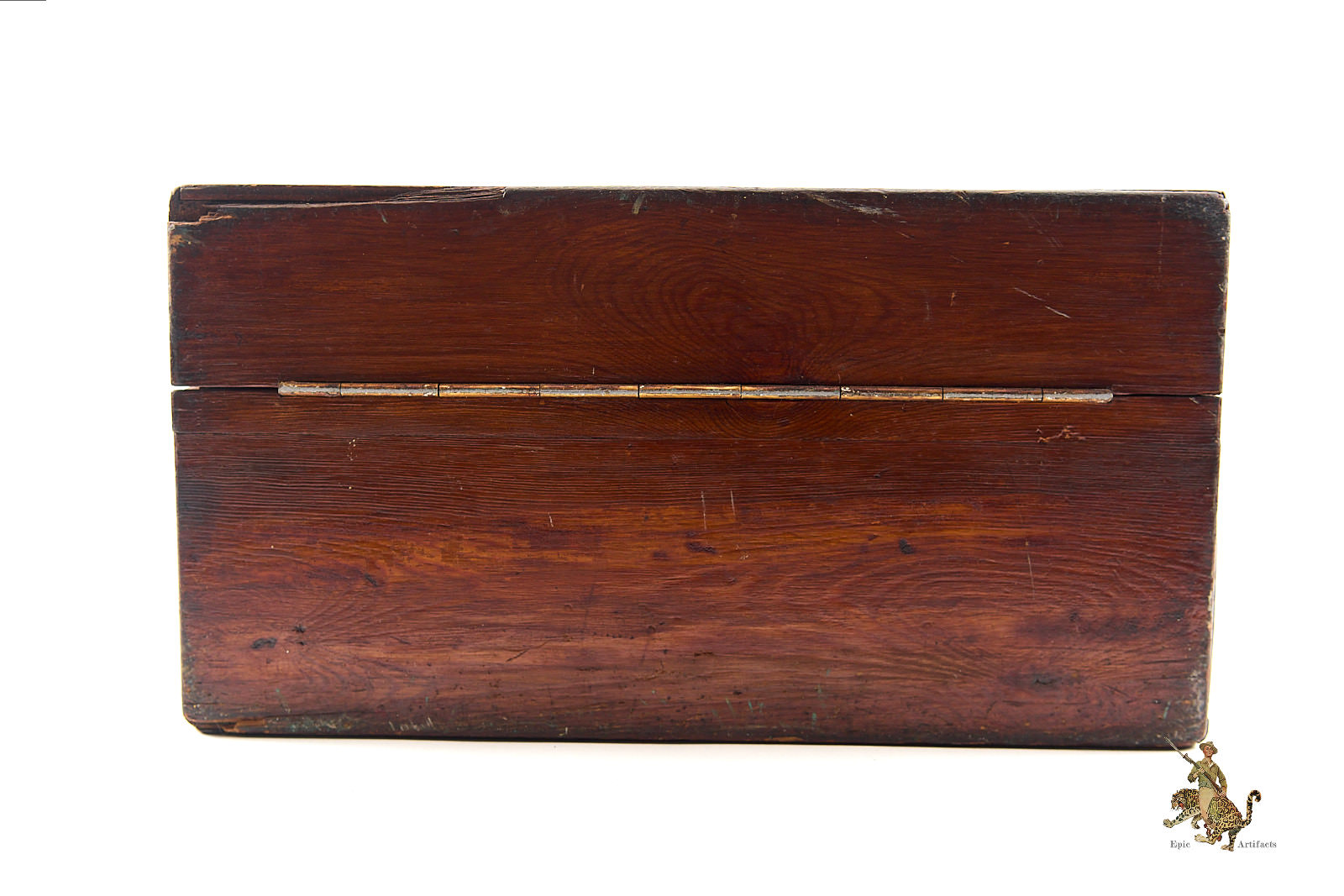
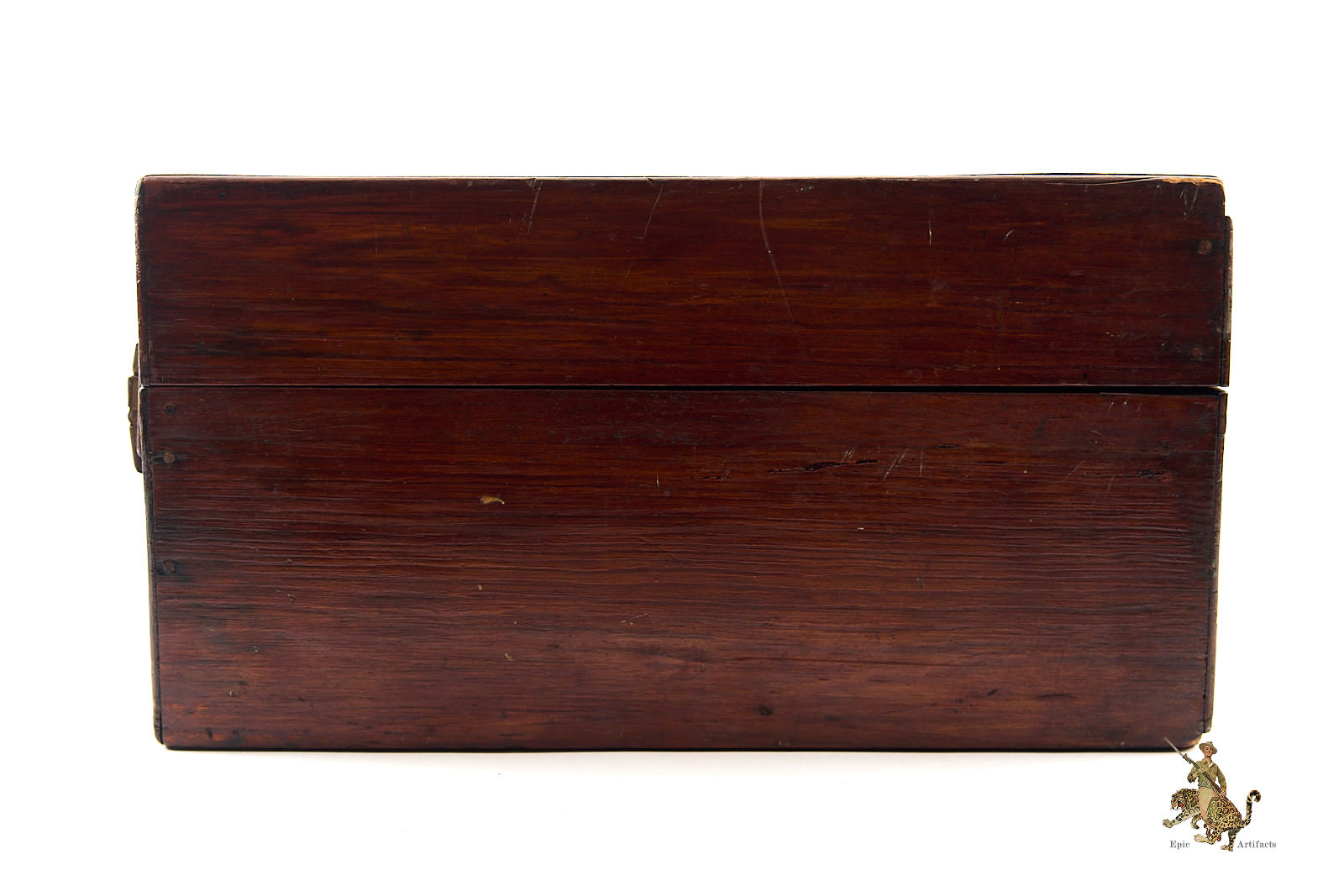
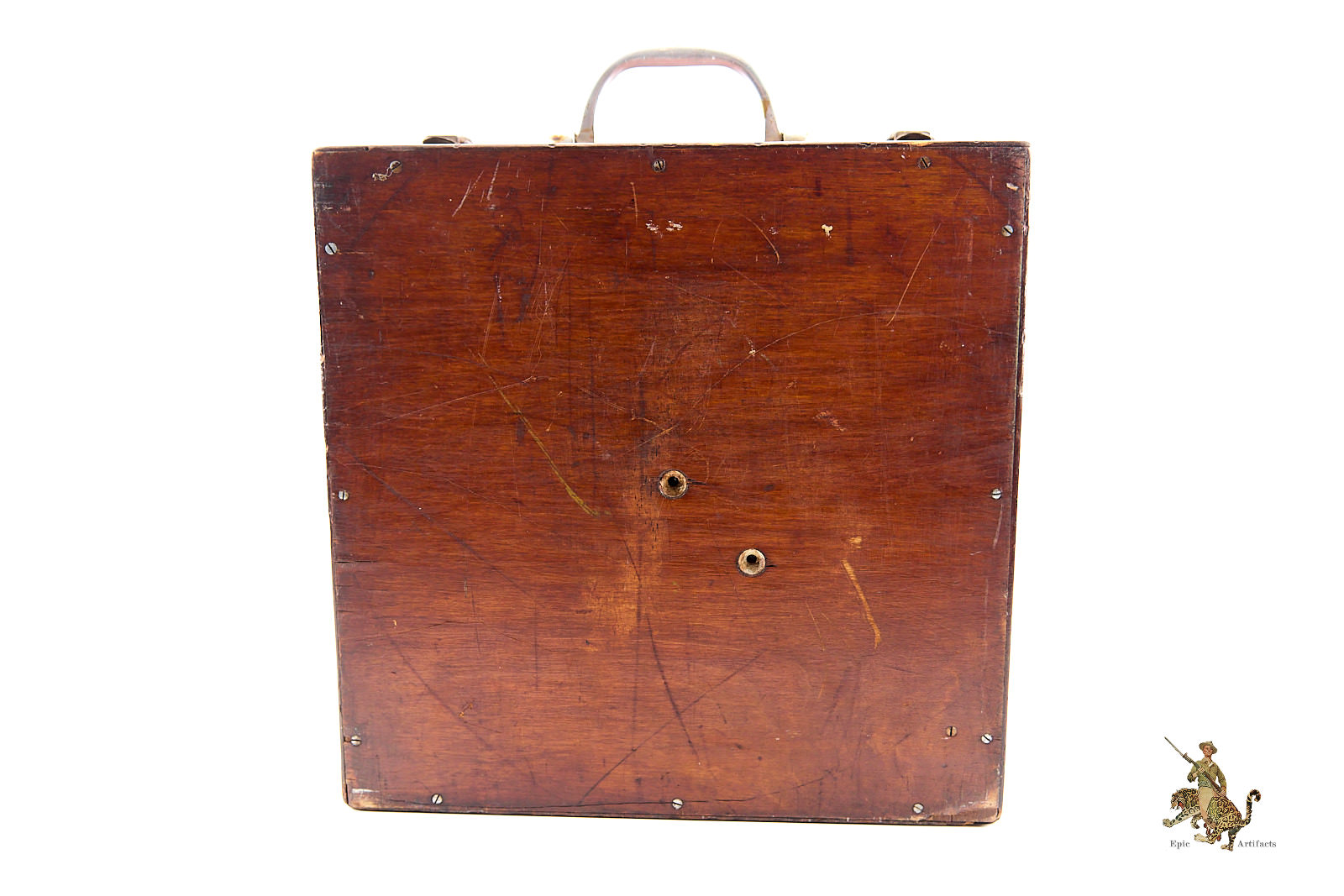
Product Description: An important navigational instrument of World War II, this Kriegsmarine Sextant in Case – C. Plath was used aboard U-boats and other German naval vessels, reflecting both precision engineering and operational history. The metal sextant body is marked with a centralized eagle and swastika over “M,” while the bakelite handle bears the maker’s imprint, “C. Plath Hamburg.” The accompanying wood case features a sticker for Negus Nautical Instruments, a metallic label for C. Plath Hamburg, and an additional outer label marked “J.B. Murray,” possibly indicating the veteran who brought the instrument back, adding a personal layer of provenance.
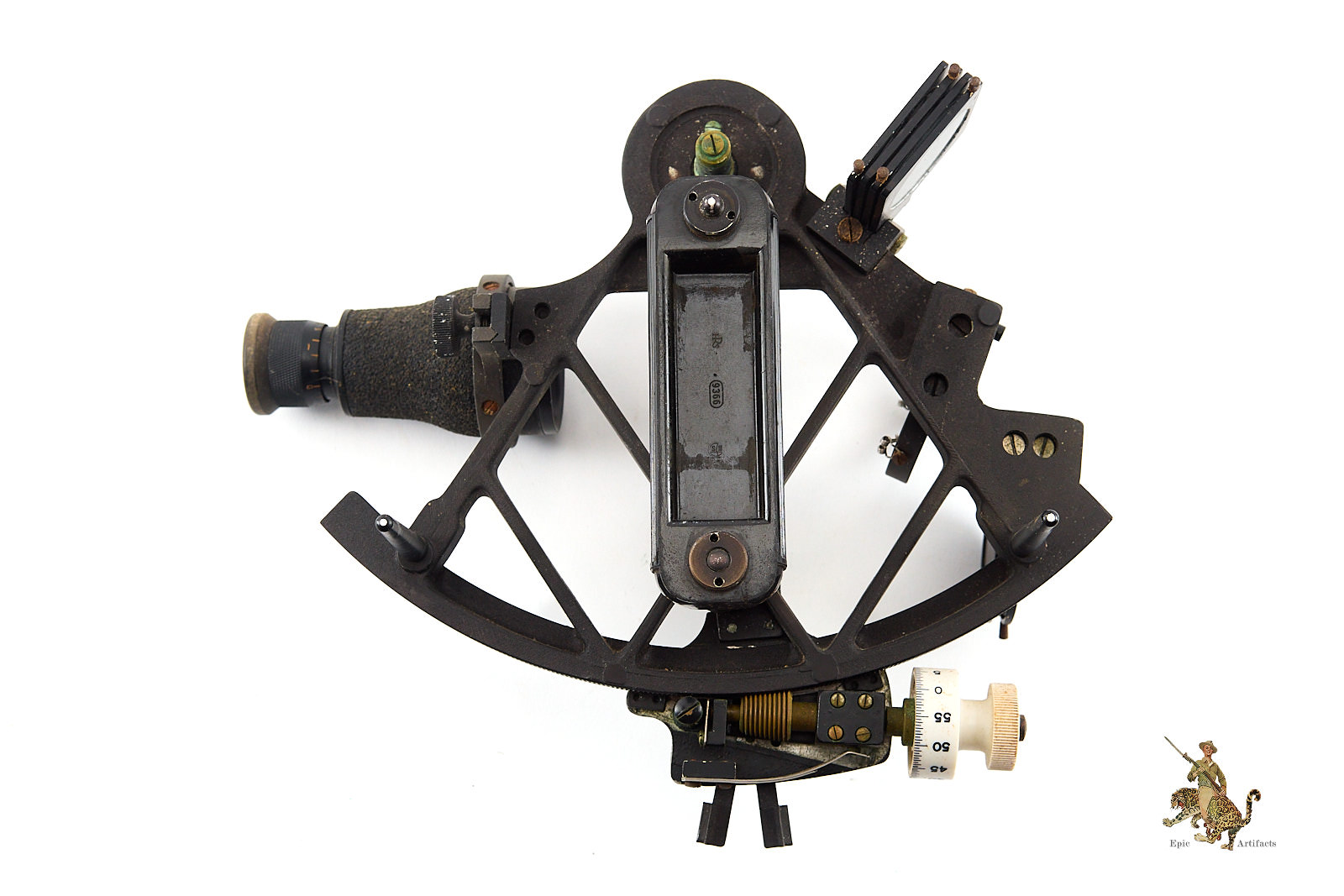
The instrument retains all of its original lenses and components, though some glass surfaces show light wear and minor finish loss consistent with age and service. Overall, the Kriegsmarine Sextant in Case – C. Plath presents a complete and historically significant example of German naval navigation equipment, offering insight into both the craftsmanship of C. Plath and the operational realities of wartime seafaring, as well as its post-war journey.
Historical Description: During the Second World War, the German Kriegsmarine relied heavily on precise navigational instruments to conduct operations across the Atlantic, Baltic, and North Seas, particularly for U-boat deployments and surface fleet movements. Sextants, chronometers, compasses, and alidades were essential tools for determining position, course, and distance under conditions where electronic navigation aids were limited or unavailable. Crafted by renowned manufacturers such as C. Plath of Hamburg, these instruments combined mechanical precision with durable materials, ensuring reliability in harsh maritime environments. Sextants in particular allowed officers to perform celestial navigation, a critical skill for maintaining operational security while avoiding detection by Allied forces.
Beyond their practical applications, German naval navigational instruments were often encased in carefully constructed wooden or metal cases, sometimes with maker labels, calibration markings, and protective fittings. They were integral not only for routine shipboard operations but also for specialized missions, such as U-boat patrols and mine-laying expeditions, where accurate positioning could determine success or failure. Today, surviving examples of WWII-era German sextants and related nautical equipment provide both historical and technological insight, illustrating the sophistication of naval navigation and the emphasis placed on precision instruments in maritime warfare.