
$215.00
Condition: Excellent
Maker: WKC
In stock
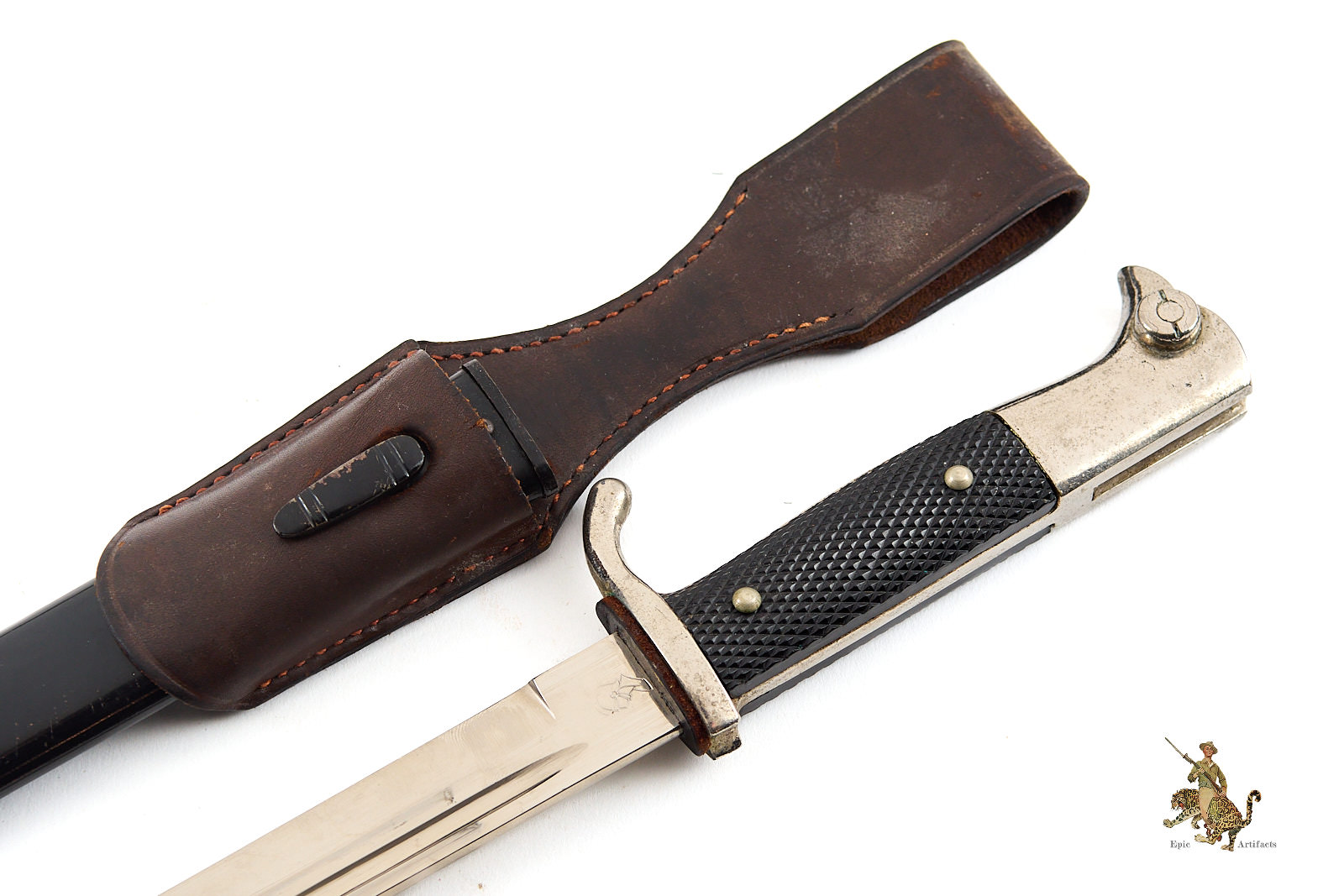
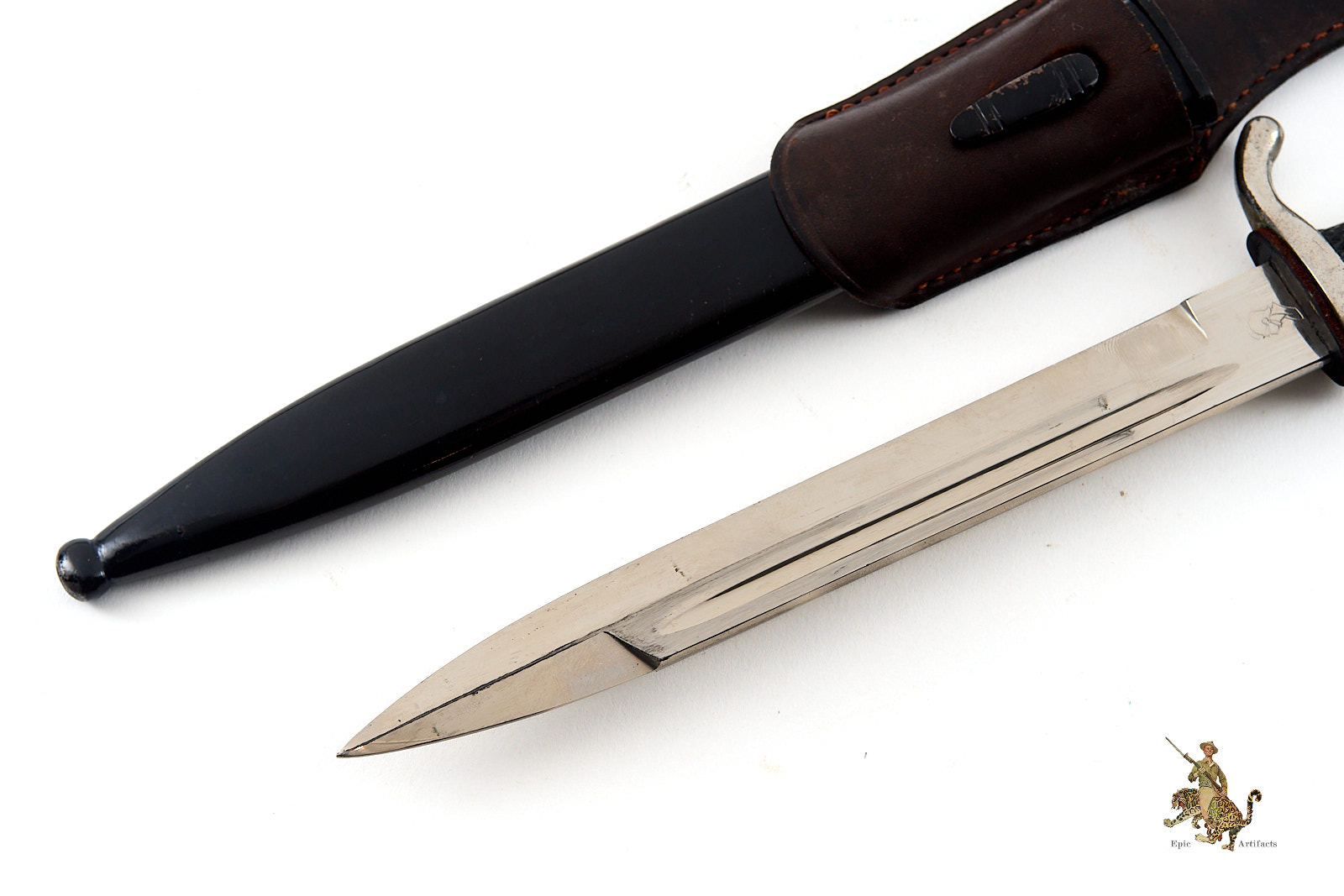
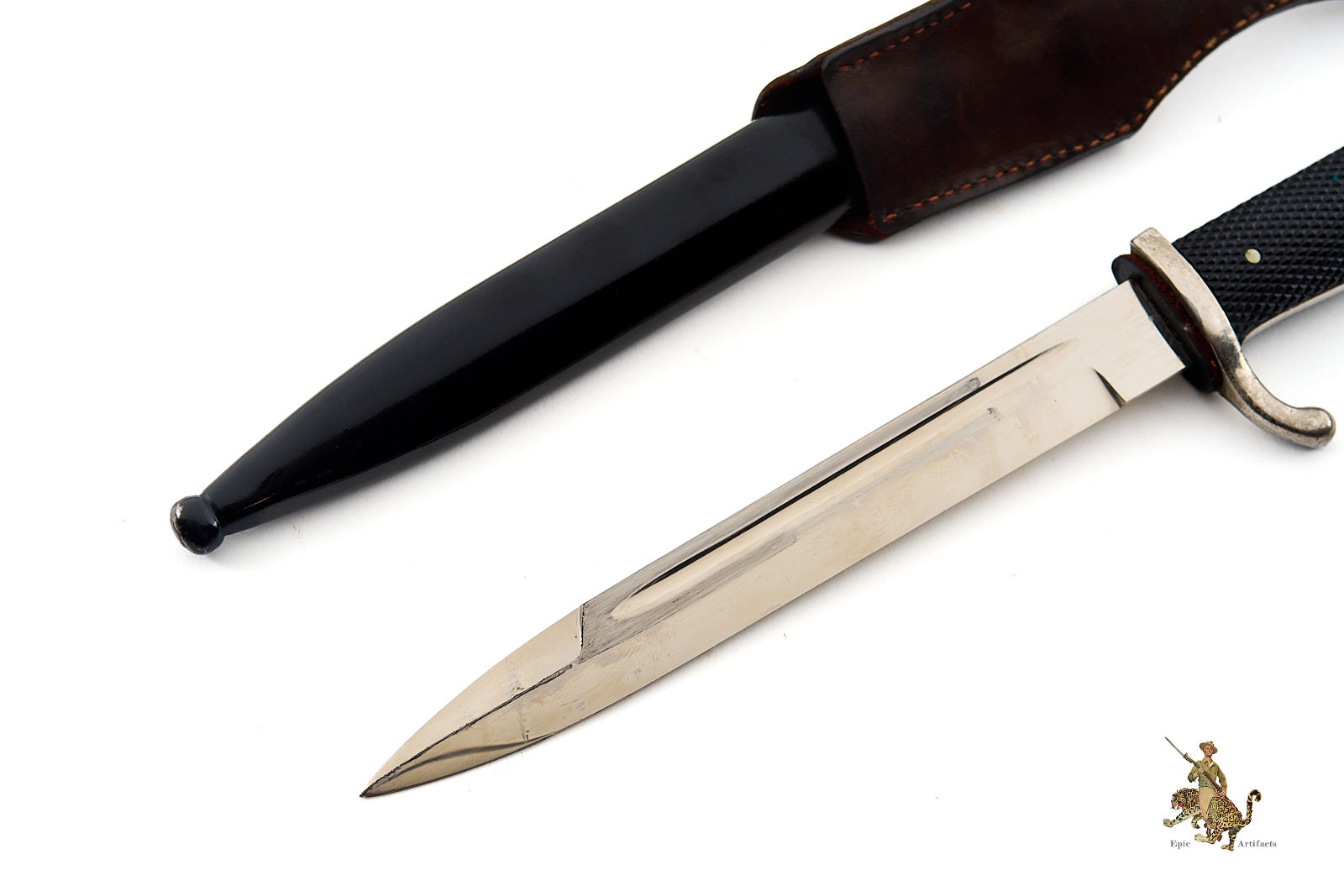
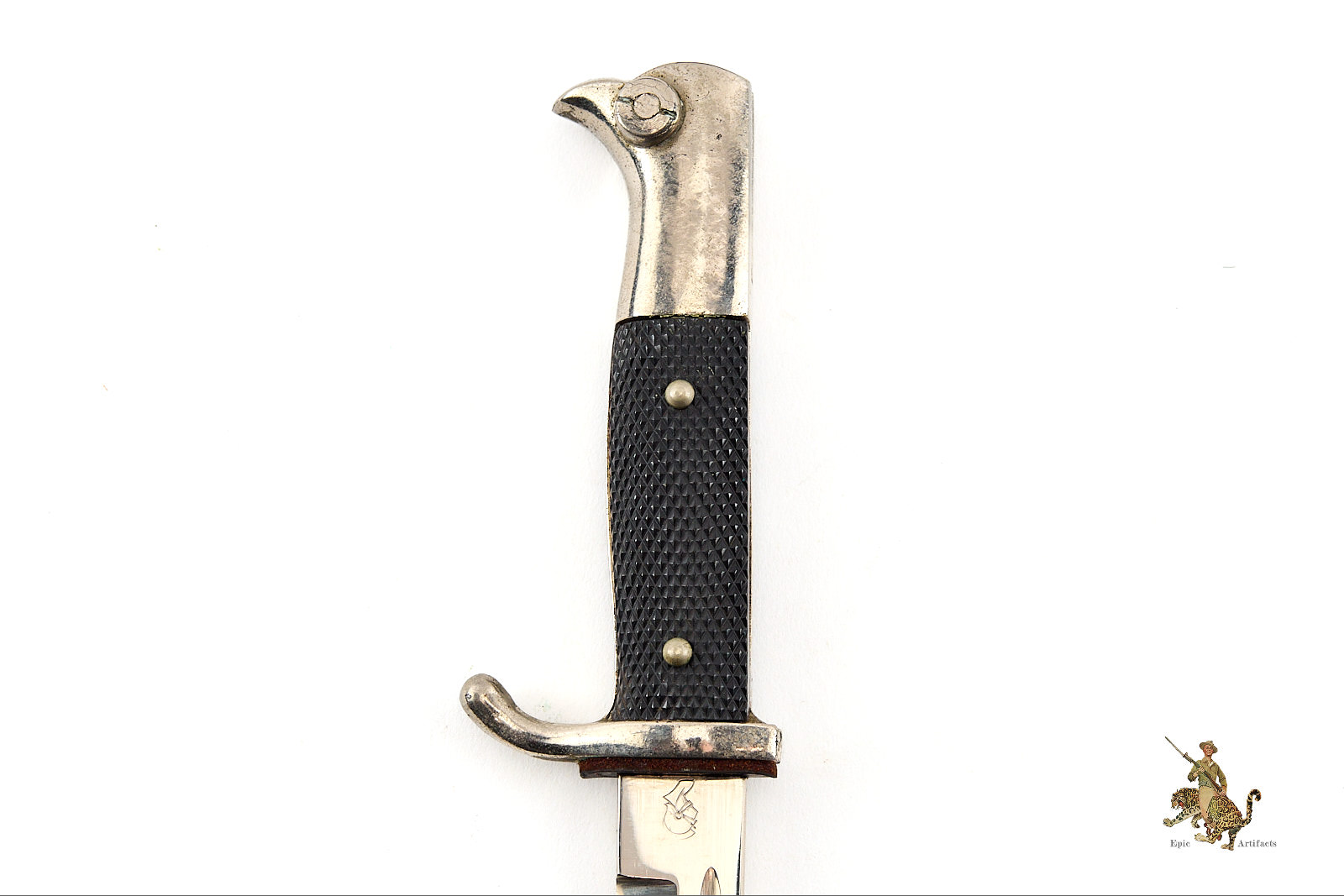
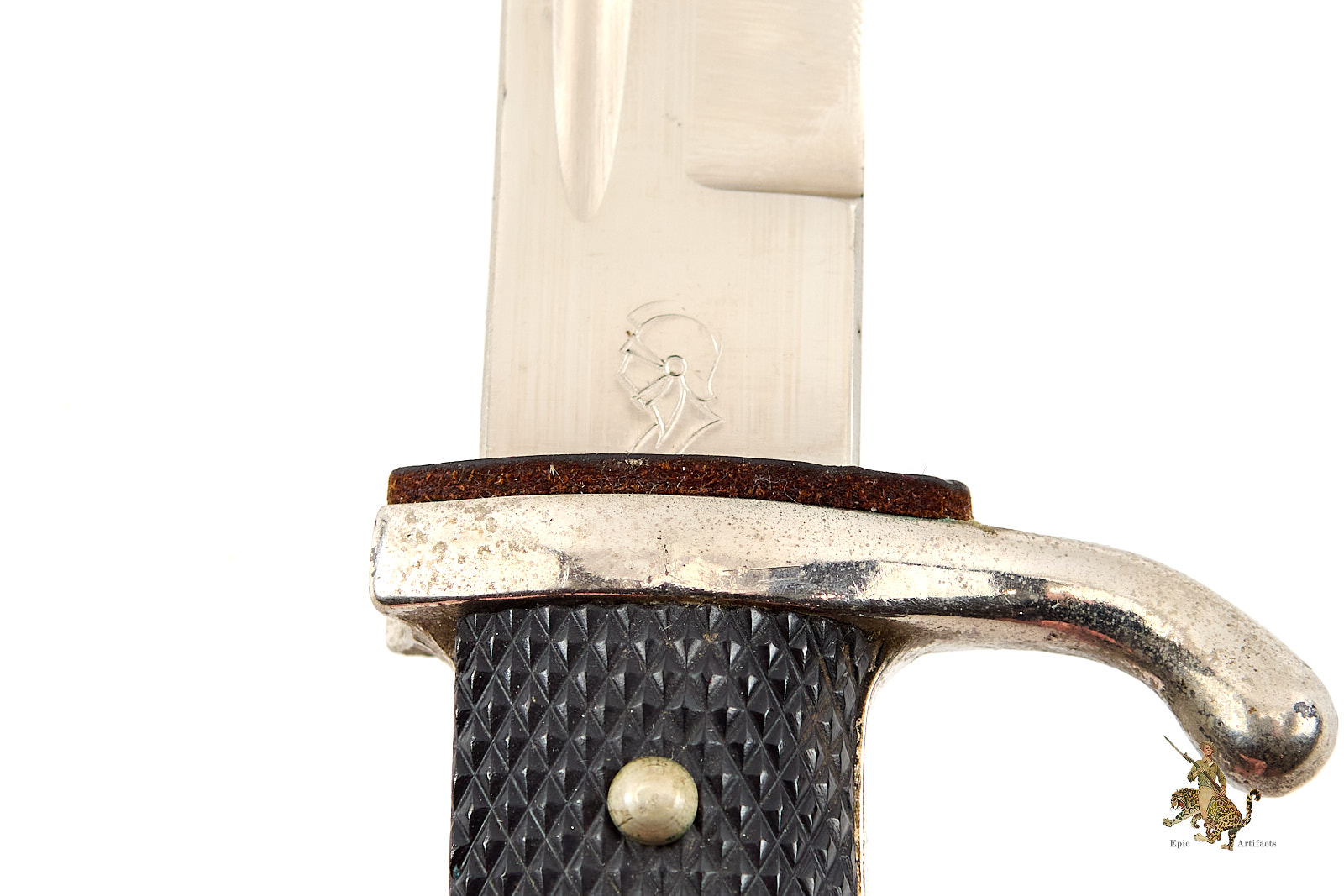
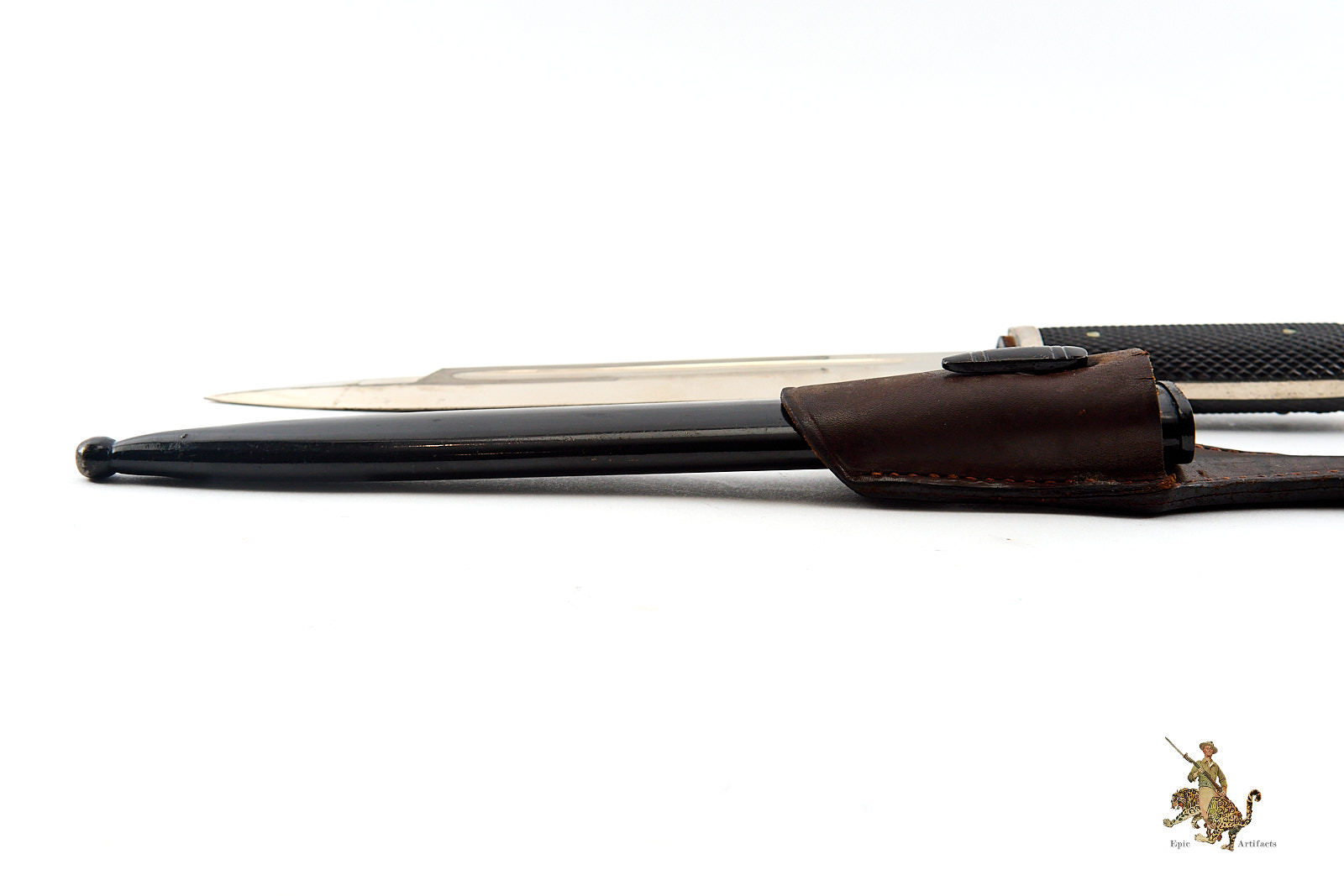
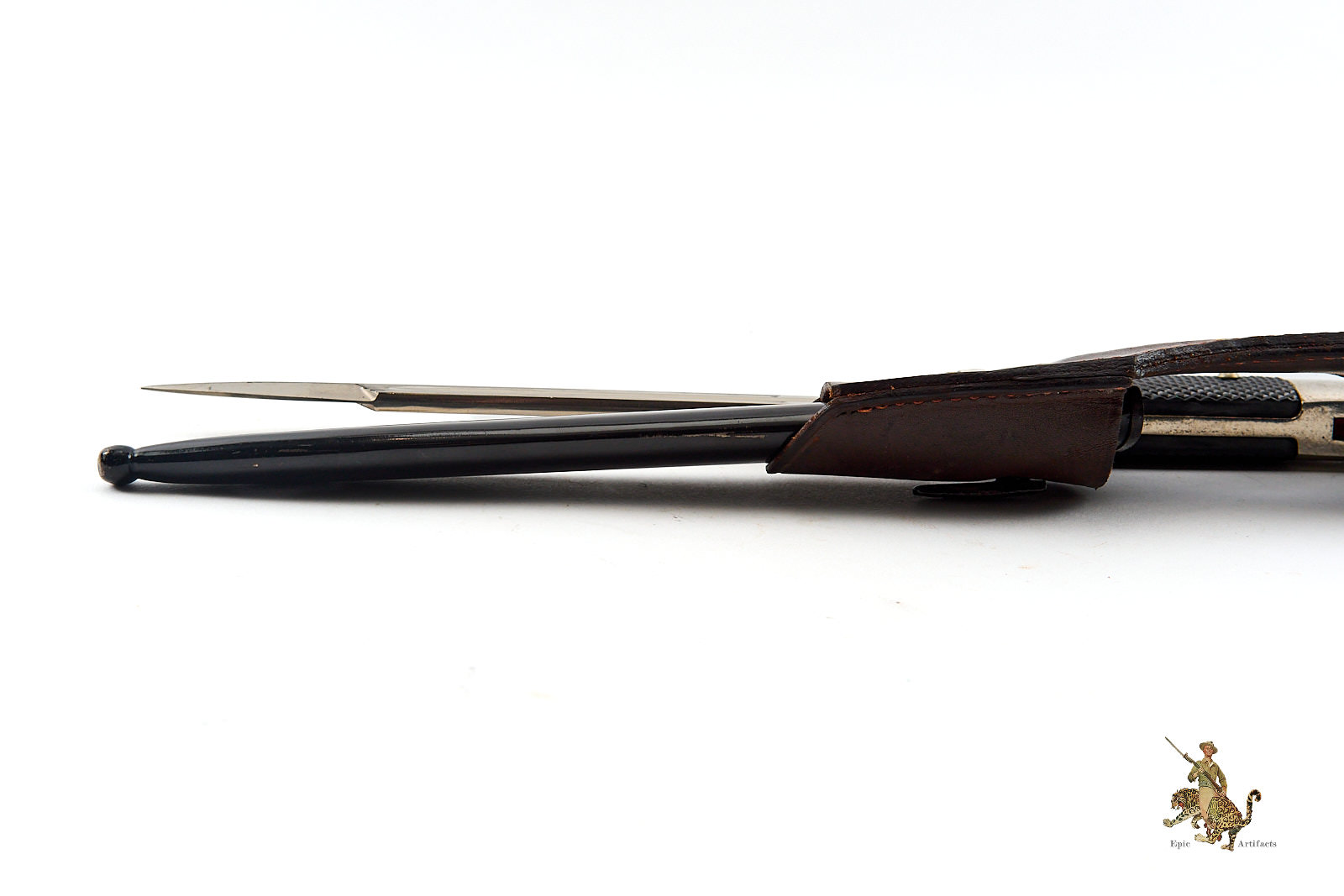
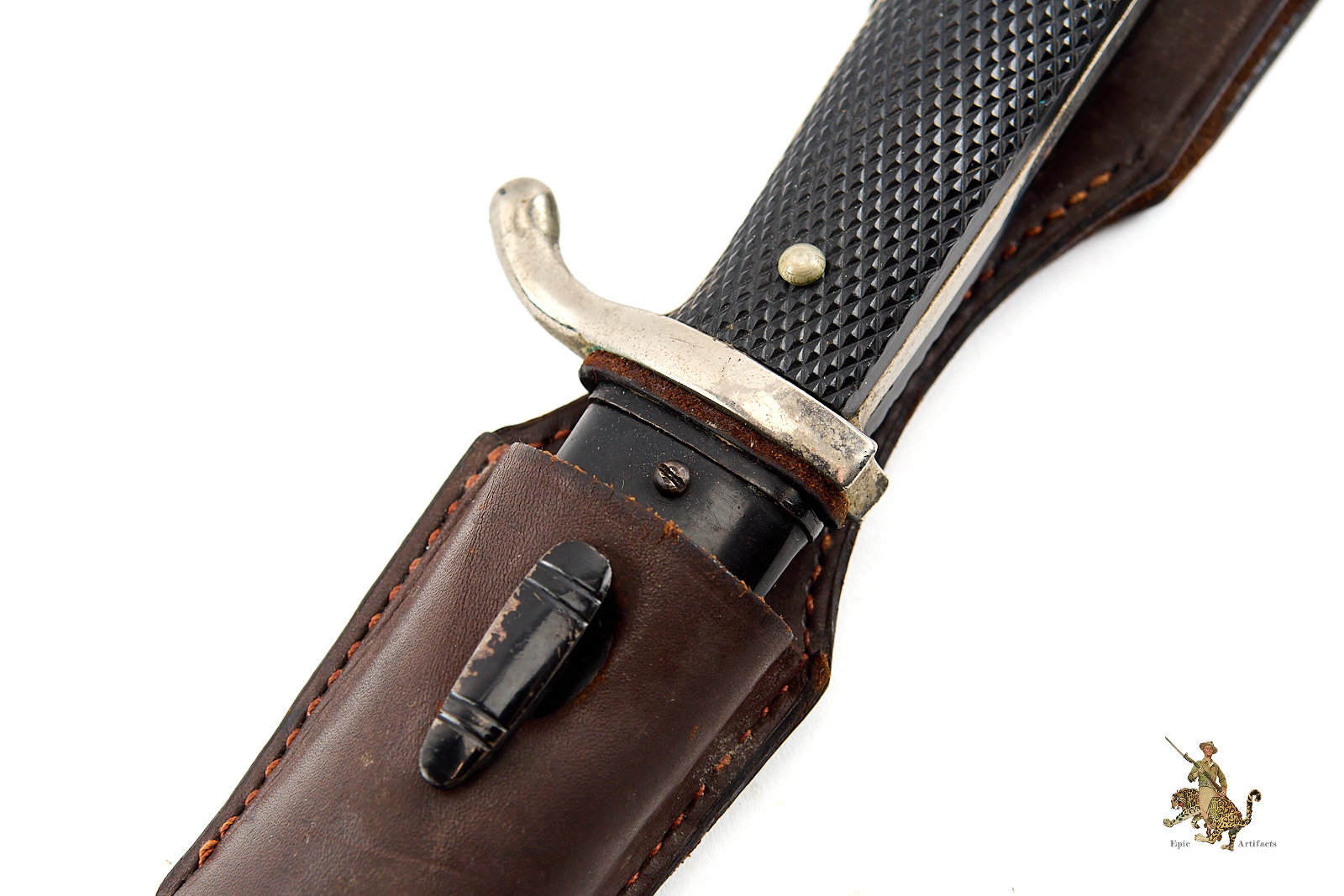
Product Description: Heer Short Bayonet with Frog – WKC — A finely crafted and well-preserved example of a German Army dress bayonet, this Heer Short Bayonet with Frog – WKC embodies the quality production and formal elegance associated with edged weapons manufactured for Wehrmacht personnel during the Second World War. The blade remains in excellent condition, retaining its original finish and exhibiting a crisp and clearly struck WKC maker’s mark at the ricasso, indicative of its Solingen origin and desirable among collectors.
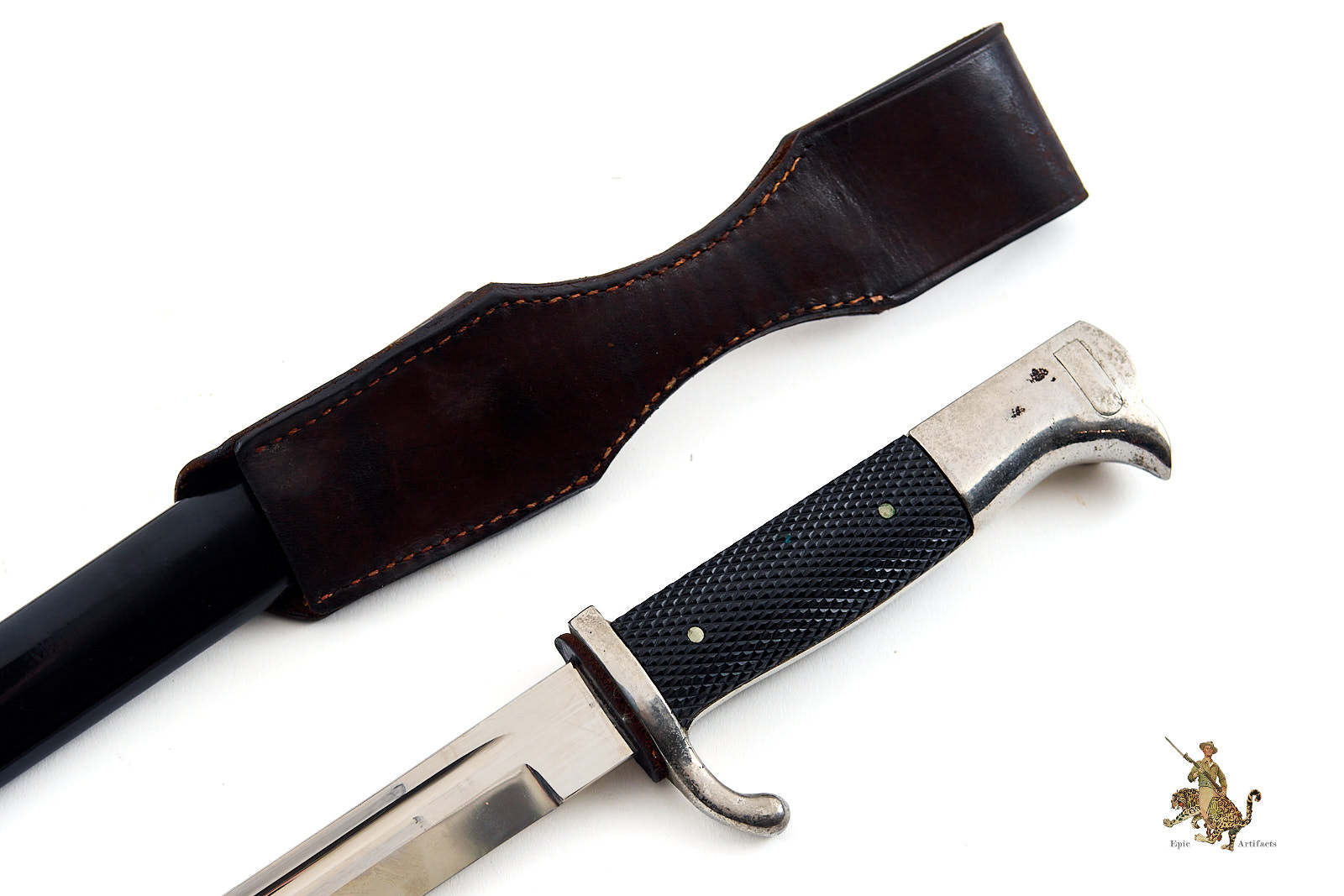
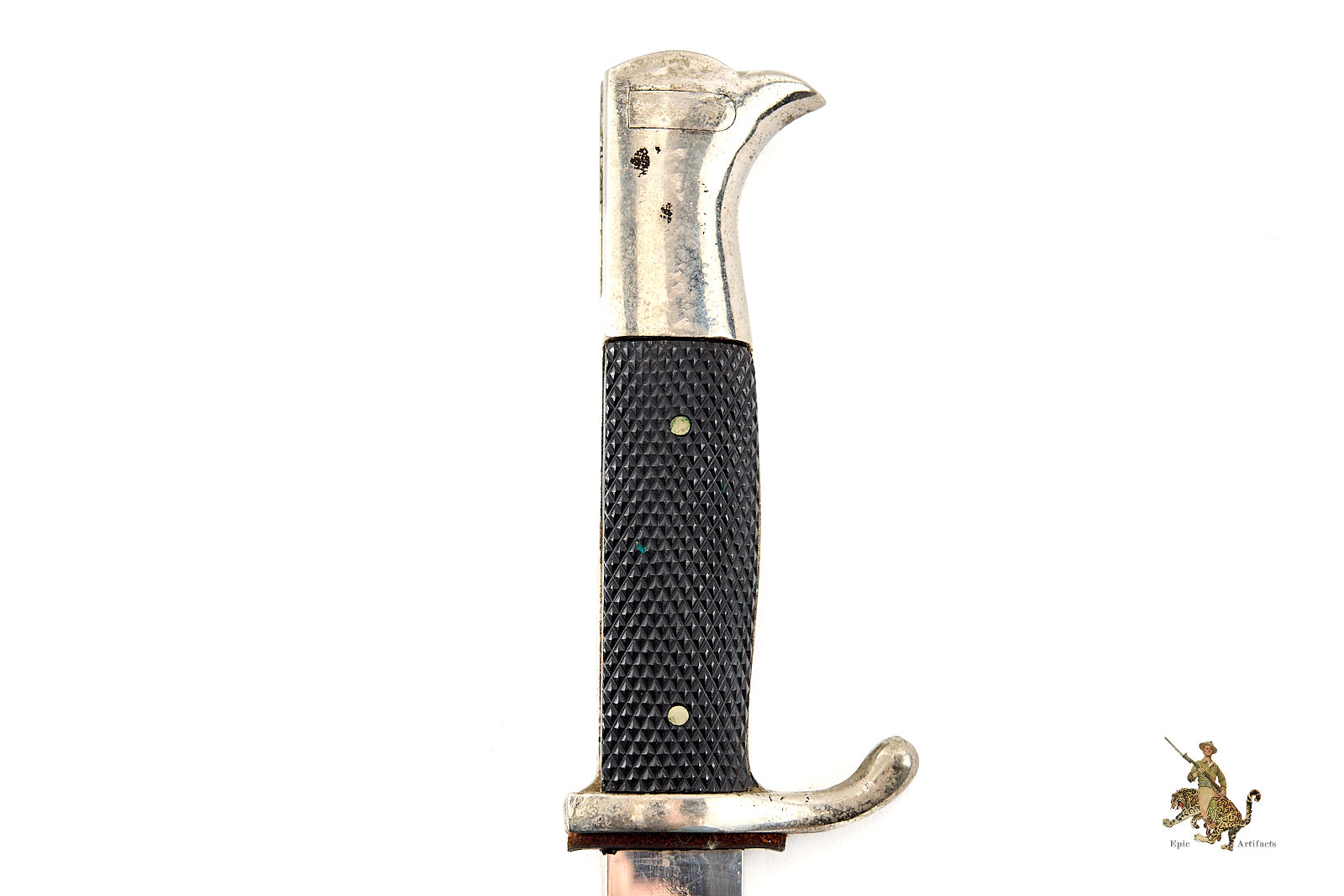
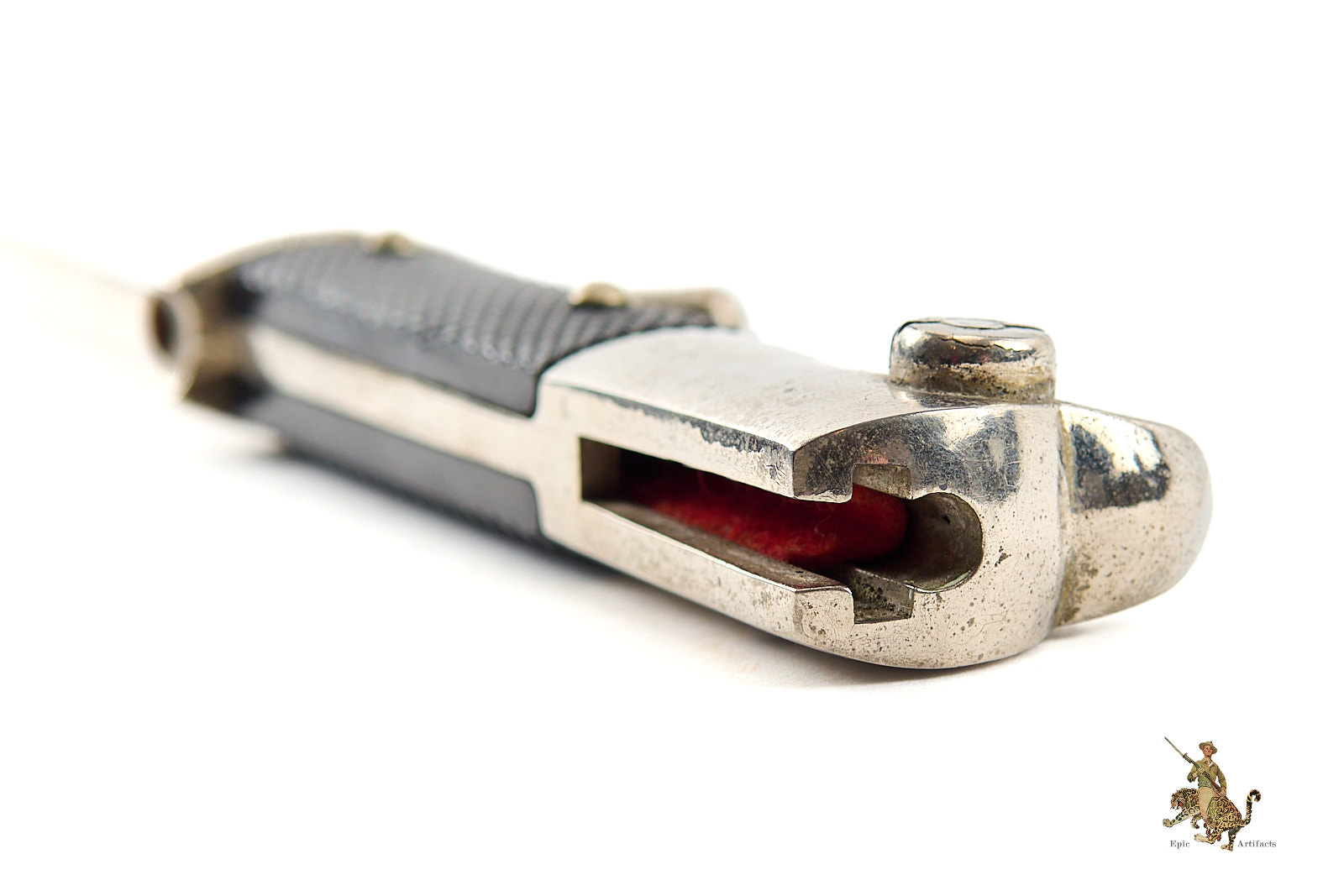
The hilt preserves the majority of its original finish, with minor areas of chrome loss and light corrosion consistent with age and handling. The leather buffer washer at the guard remains intact, while the release mechanism is presently fixed in place, with the original felt insert still housed within the attachment slot, details that underscore the bayonet’s originality and completeness.
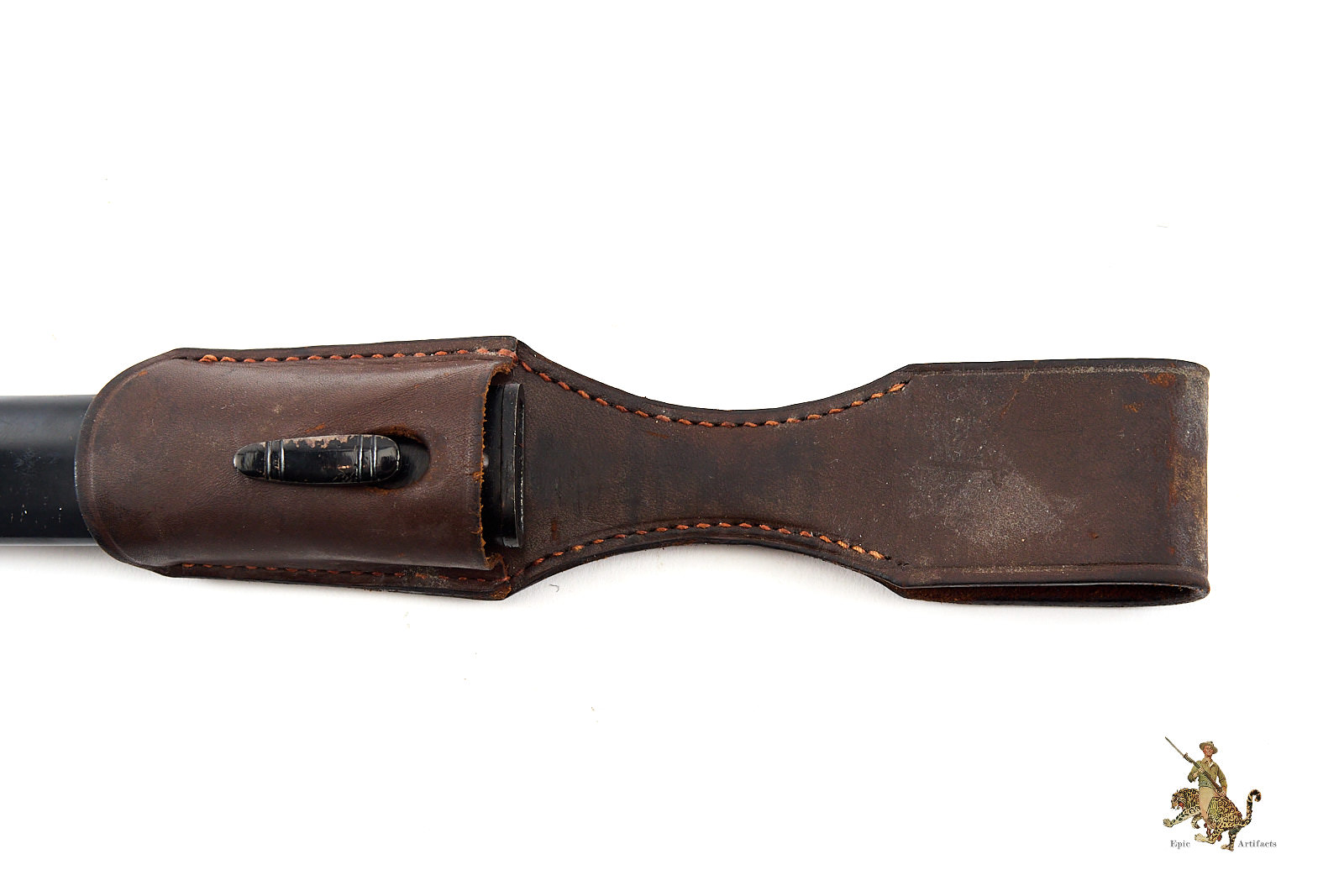
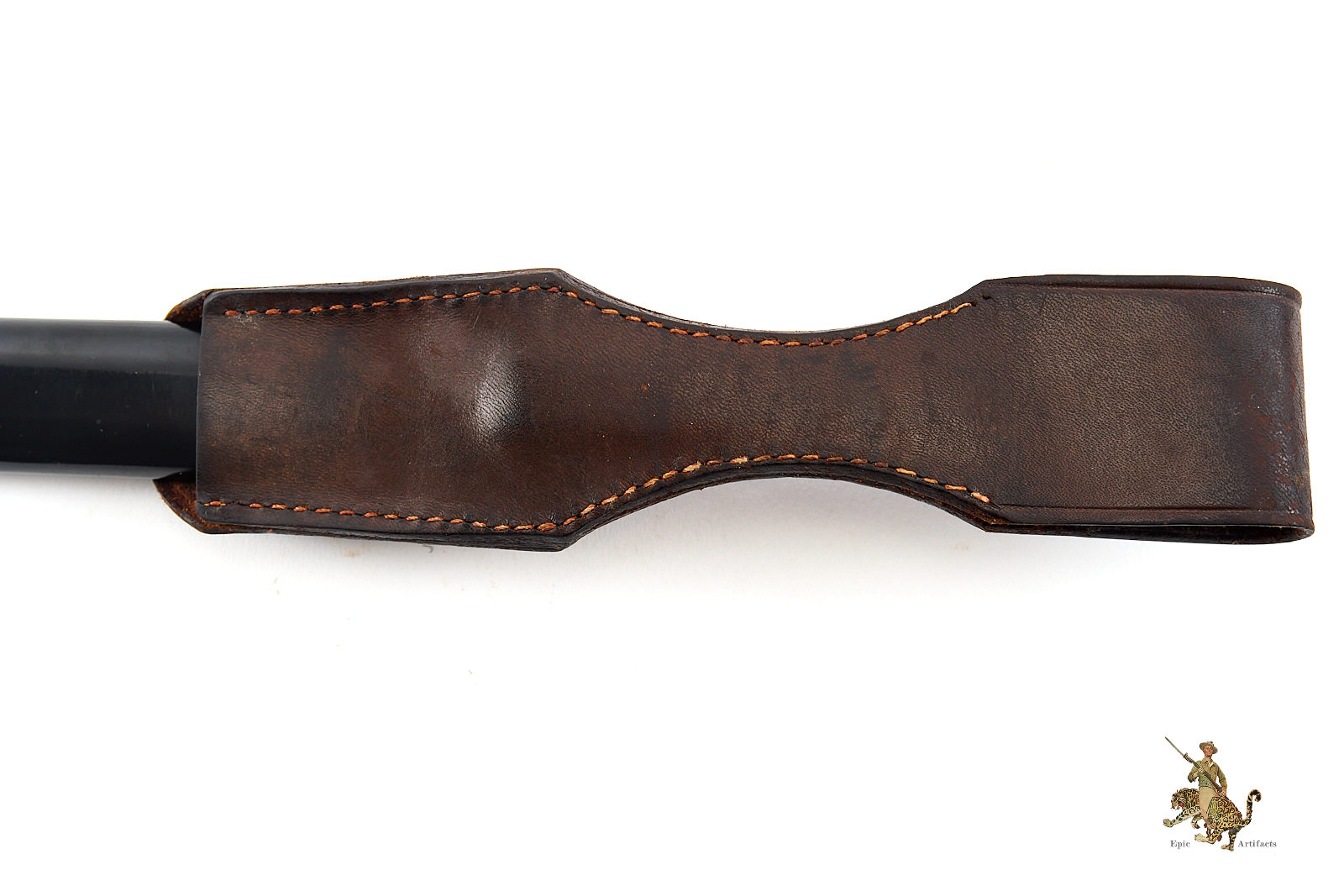
The accompanying scabbard retains most of its original black painted surface, showing expected areas of wear and finish loss from period use. It is paired with its original leather frog, which remains supple and intact, displaying only minor superficial cracking commensurate with age. The frog is unmarked, a characteristic observed on certain period examples.
Overall, this piece presents in excellent condition, offering a compelling combination of originality, condition, and visual appeal. As a representative edged weapon of the German Heer, this Heer Short Bayonet with Frog – WKC provides collectors with an increasingly scarce opportunity to acquire a complete and authentic example, valued for its craftsmanship, historical context, and strong display presence within any advanced World War II militaria collection.
Historical Description: The bayonet was an important part of the combat equipment of the German soldier in both World Wars. The first pattern of German combat bayonet was the Mauser model 1898 which had a long, slender blade. As a result of experiences in combat use in WWI, it was soon decided to shorten the blades on these weapons. This 1898 pattern bayonet was used early in WWI alongside the 1898/05 and the S84/98 bayonets, which were initially shorter, and stronger, than the unmodified 1898 type. Both of these types were made with and without a saw-backed blade. Due to the challenges faced by German industry and the shortages of raw materials, a variety of “Ersatz” (replacement) types were introduced during WWI. After the war, the S84/98 bayonet became standard issue in the Reichswehr and later, in the Wehrmacht, for troops armed with the K98 rifle (the standard WWII German infantry weapon). The bayonets made for issue with the K98 rifle initially had wooden grips. Later, some bayonets were made with Bakelite grips. The bayonets were worn on the belt by means of a leather frog, of which there were a number of prewar and wartime variations including a short bayonet frog for use with the folding shovel, and a webbing frog for tropical use. In 1942, a new model of bayonet was introduced, knows as the SG42. This was a very modernized bayonet, with a comfortable Bakelite grip, and a relatively short blade that made it ideal for use either as a bayonet or a fighting knife. Within the grip was a removable multi-tool insert with a folding knife/bottle opener, awl and screwdriver. Although the SG42 was proposed as a replacement for the S84/98, few were manufactured. German combat bayonets were made in countless variations and all are very collectible today, with some rare variants being very avidly sought-after.
We are the leading team of military antique specialists. We have specialized in military antiques for over 25 years.
Epic Artifacts offers free evaluations and the highest prices available for your collectibles.
We purchase single items, entire collections, or family estates.
Click the link here to learn more: Free Evaluation or Inquiries
or feel free to email us directly: info@epicartifacts.com