
$885.00
Condition: Excellent
Maker: Edmonston & Dick
In stock
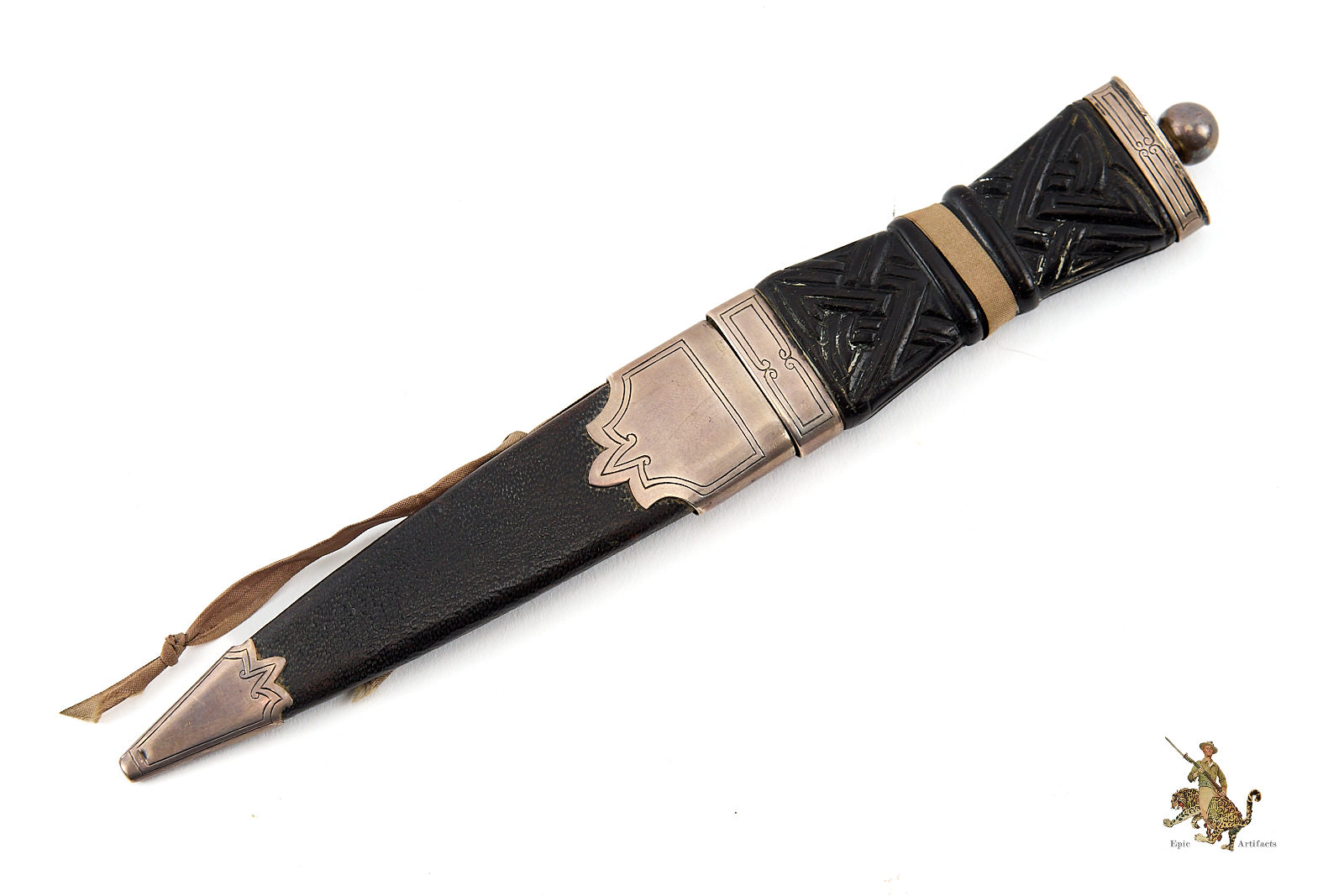
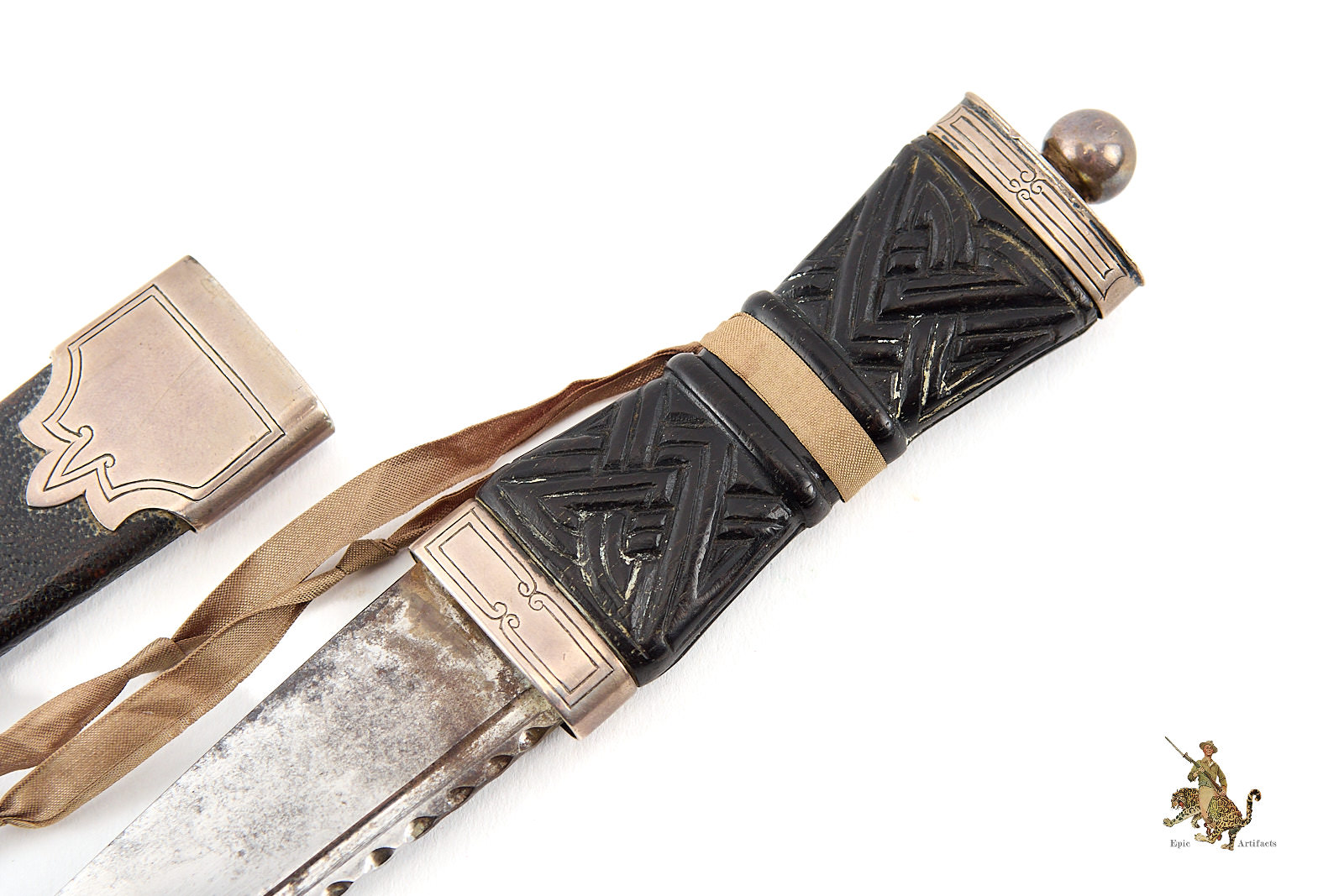
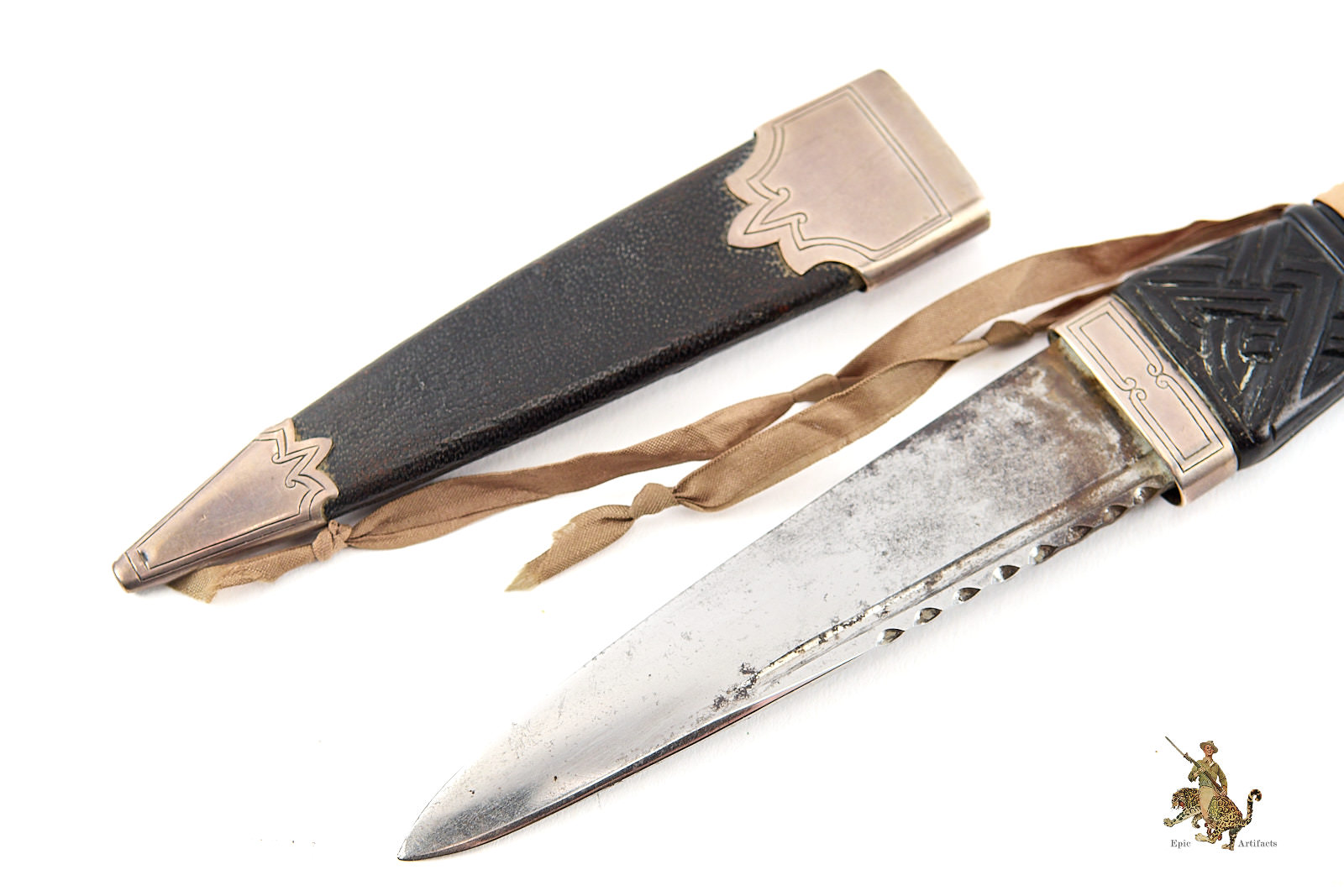
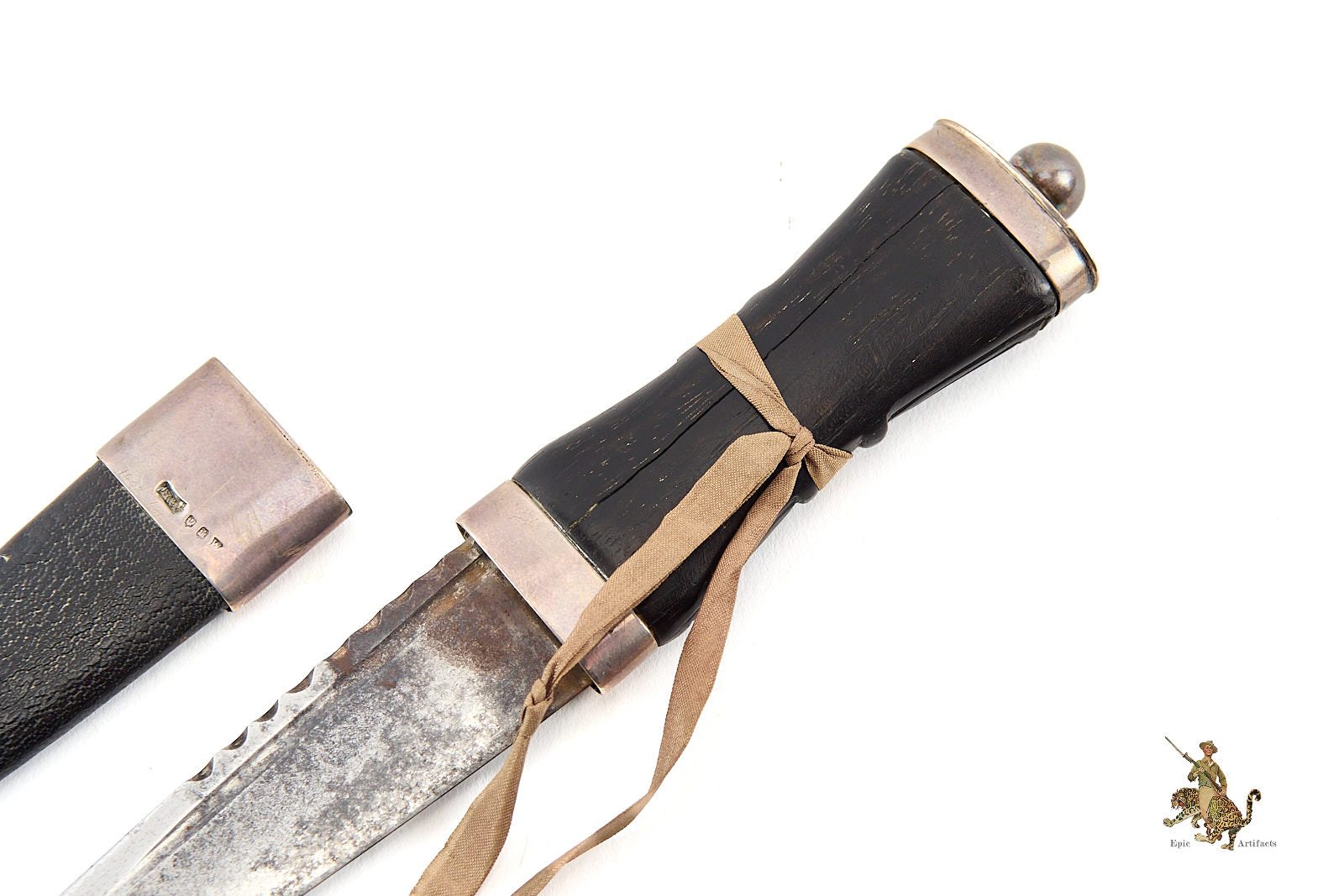
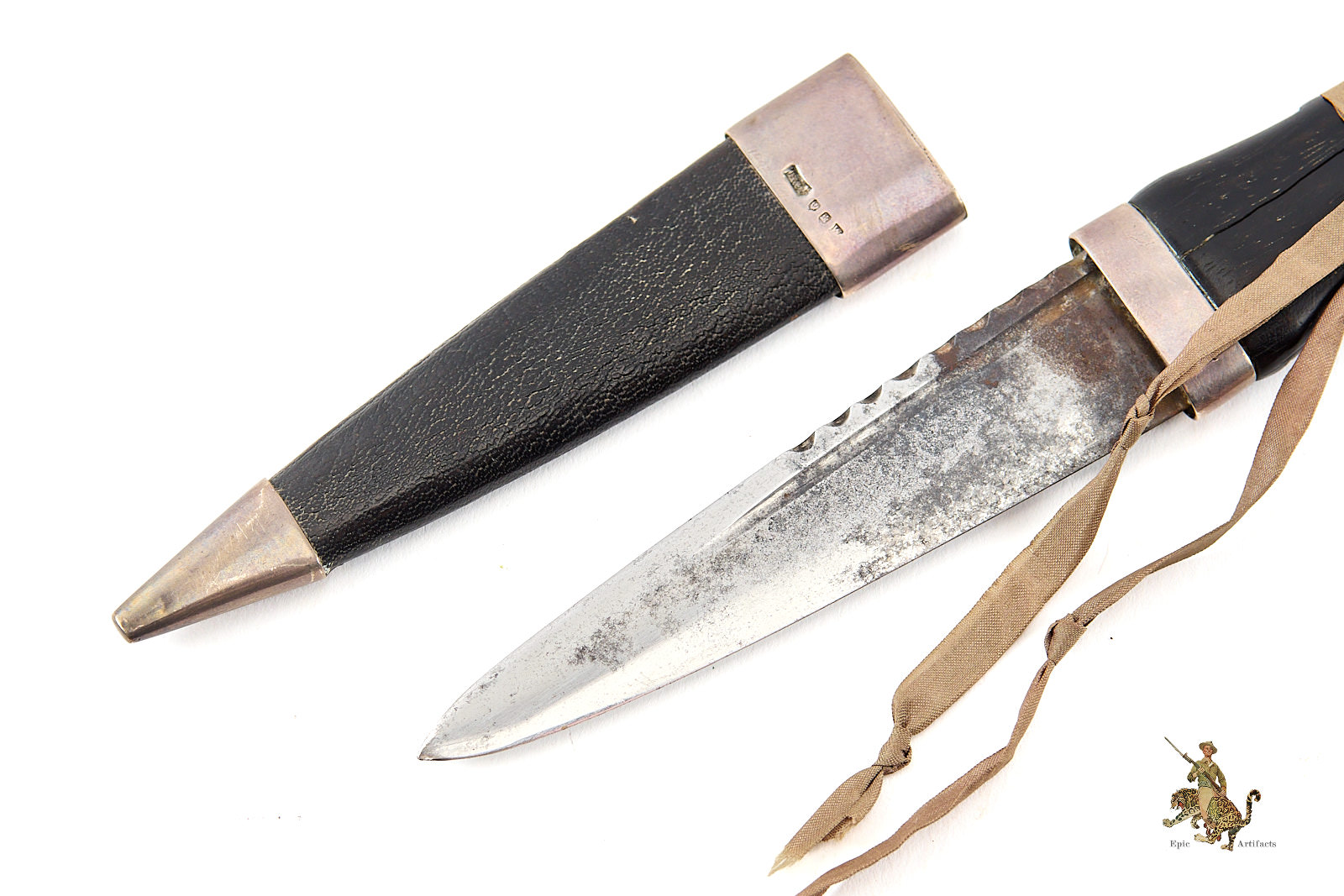
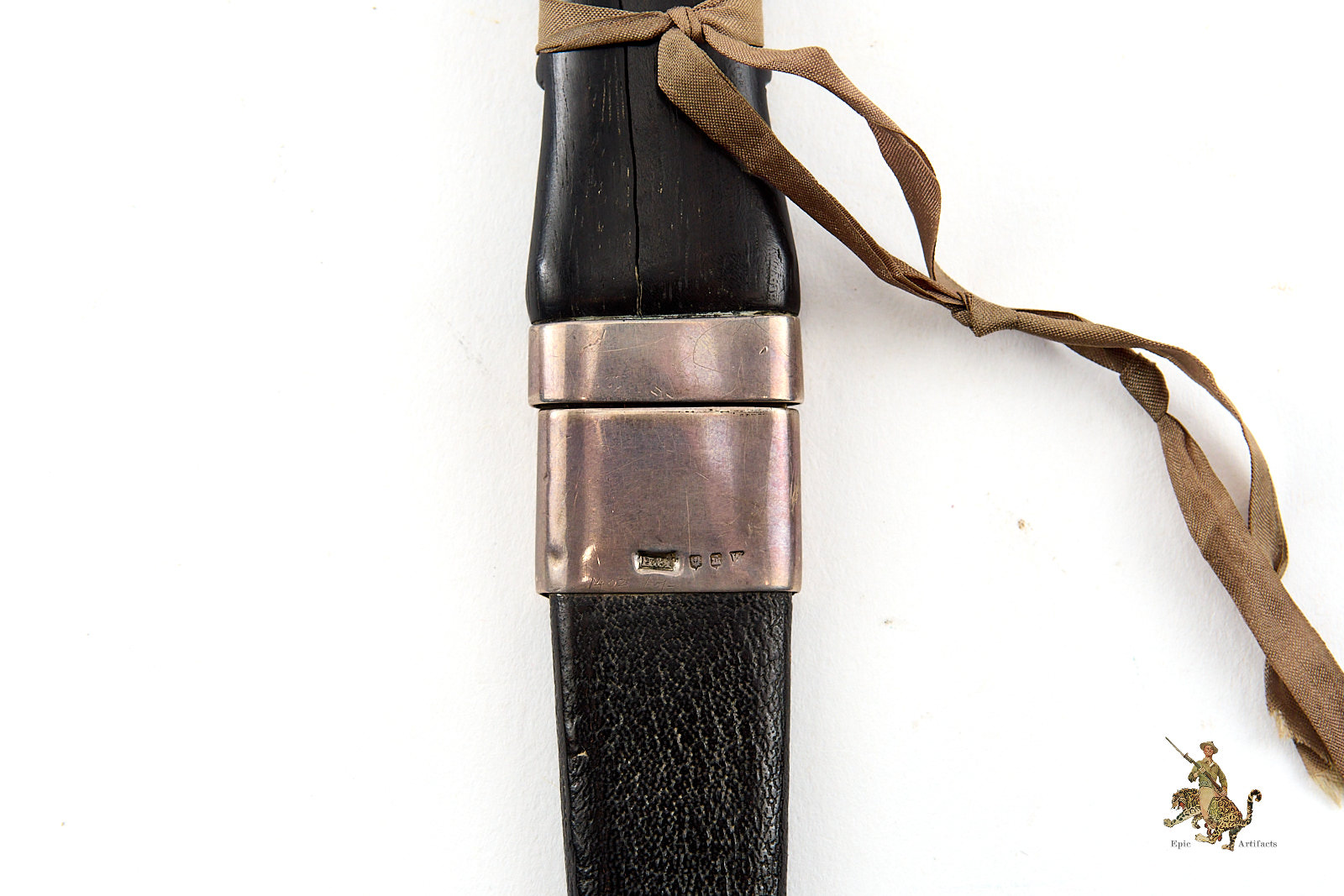
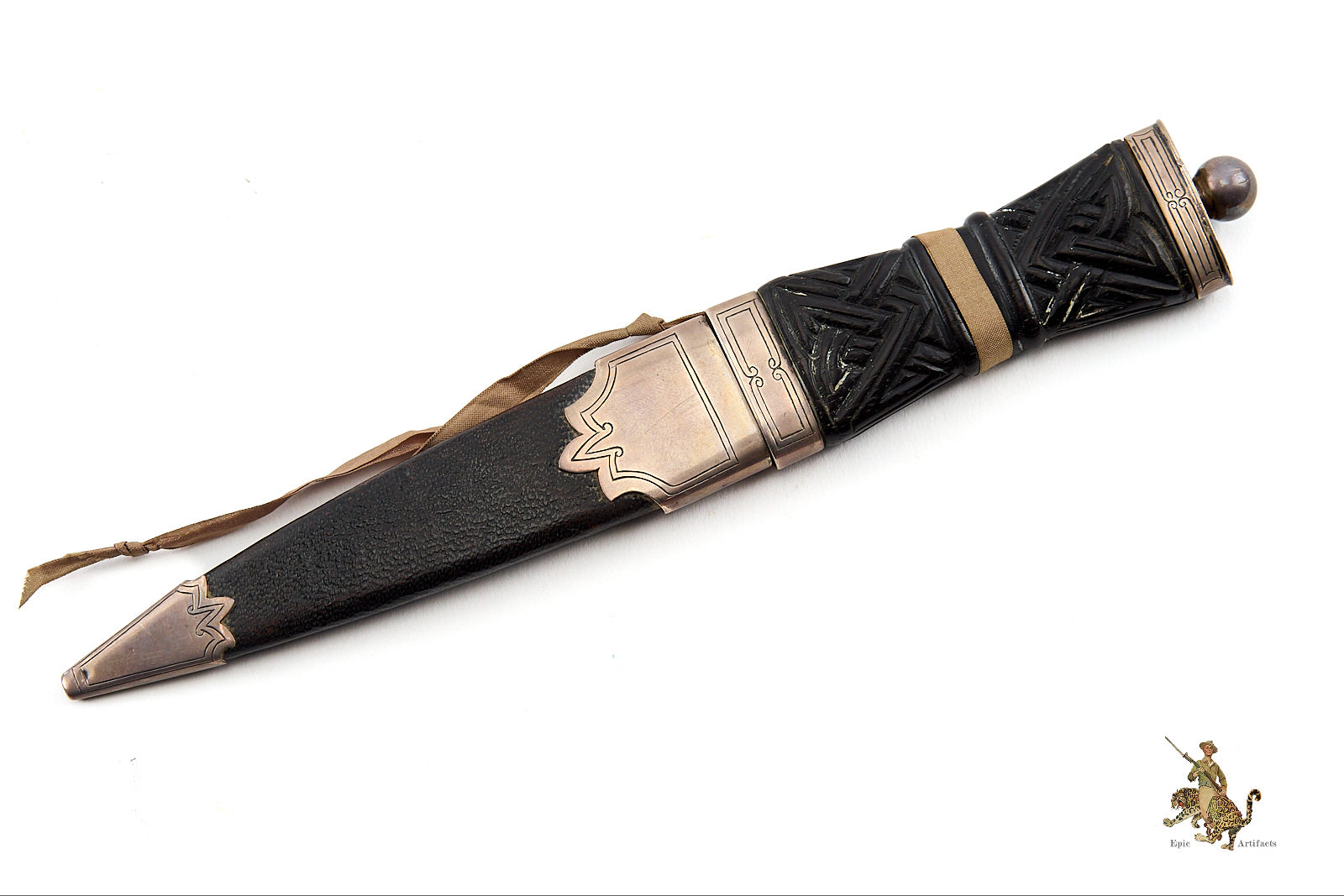
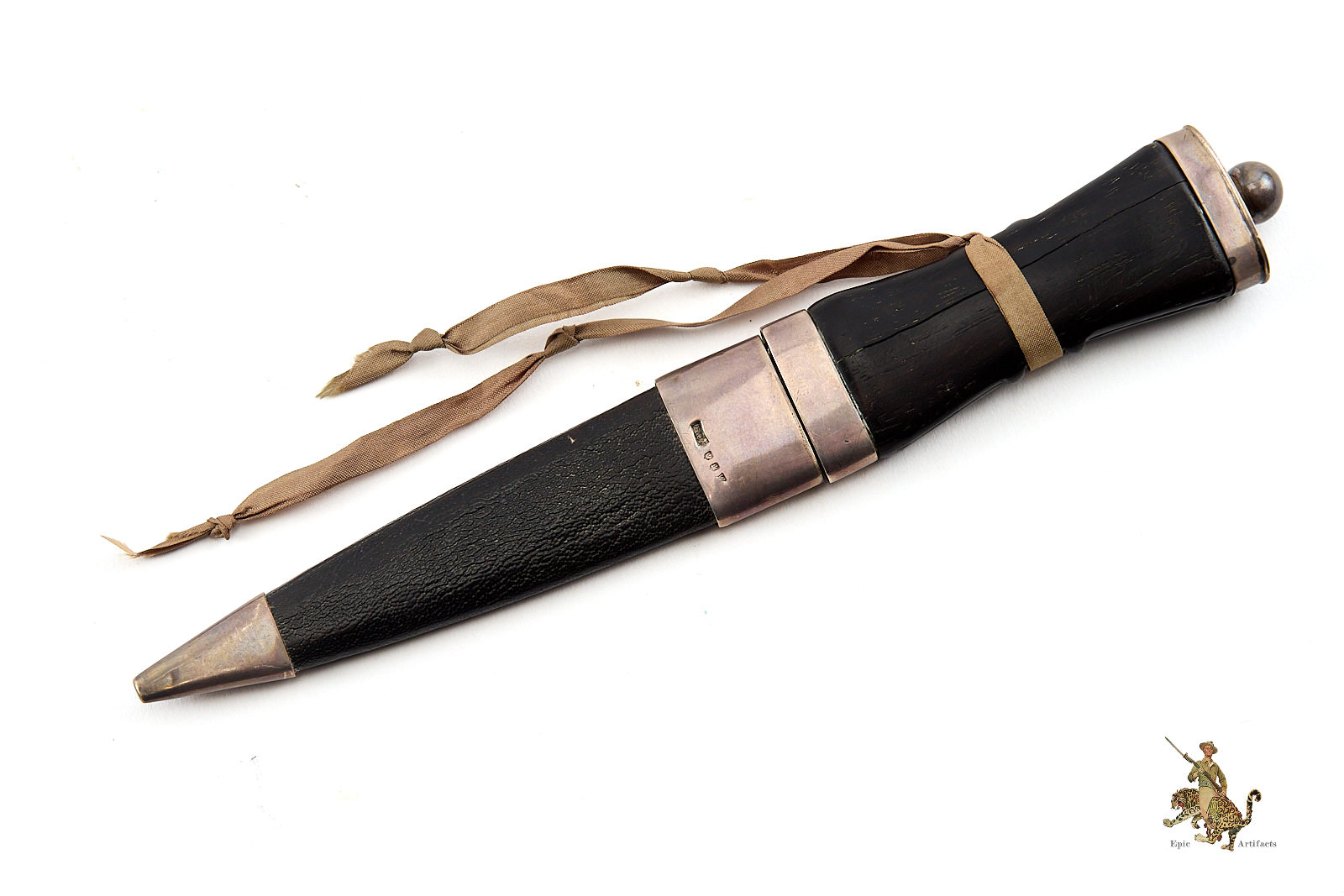
Product Description: A Scottish Sgian-Dubh Sock Knife, bearing marks attributed to E&D (Edmonston & Dick), accompanied by traditional assay symbols including the thistle for .925 sterling silver, the castle for Edinburgh, and a date letter “W,” suggestive of manufacture within the 19th-century assay cycles.
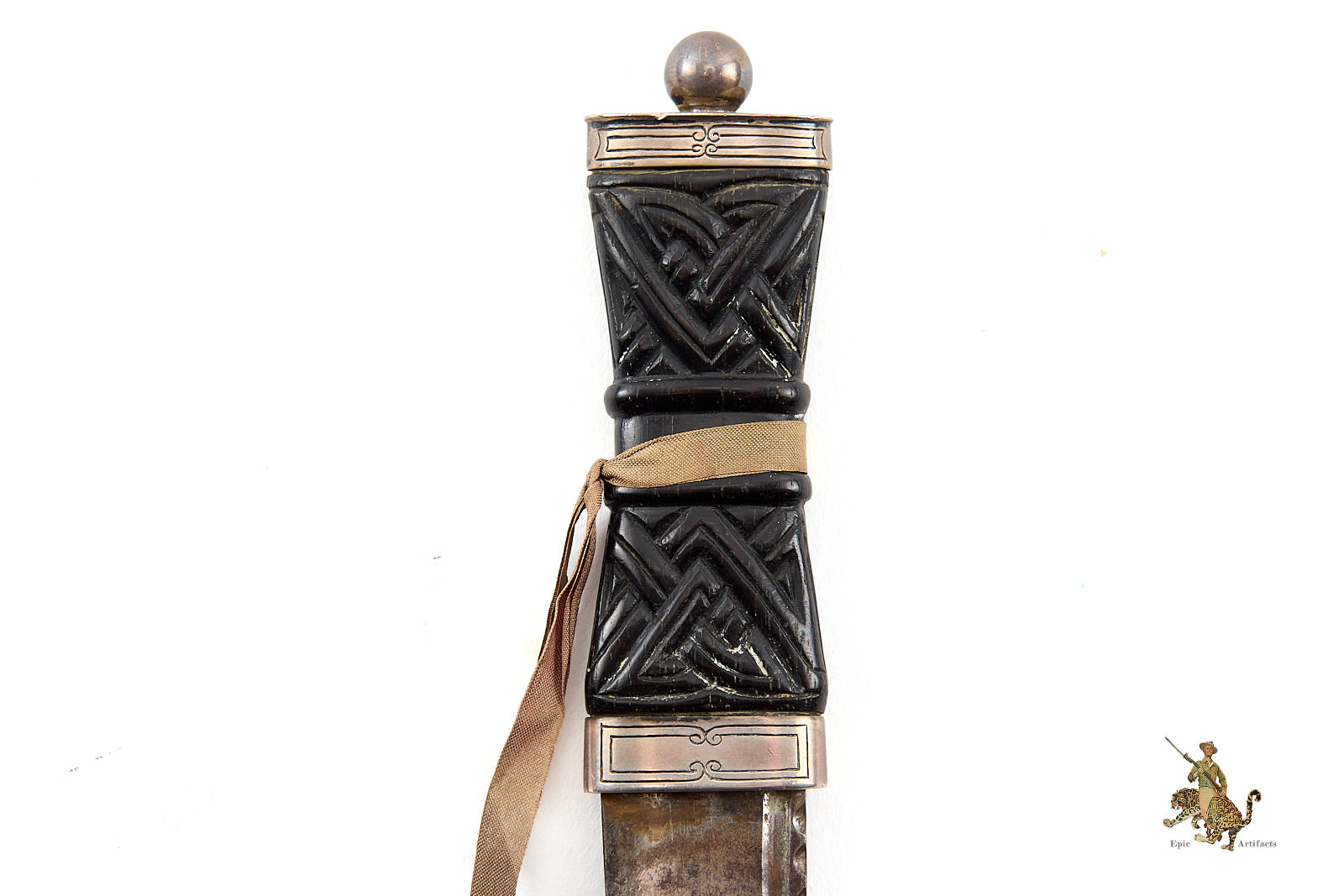
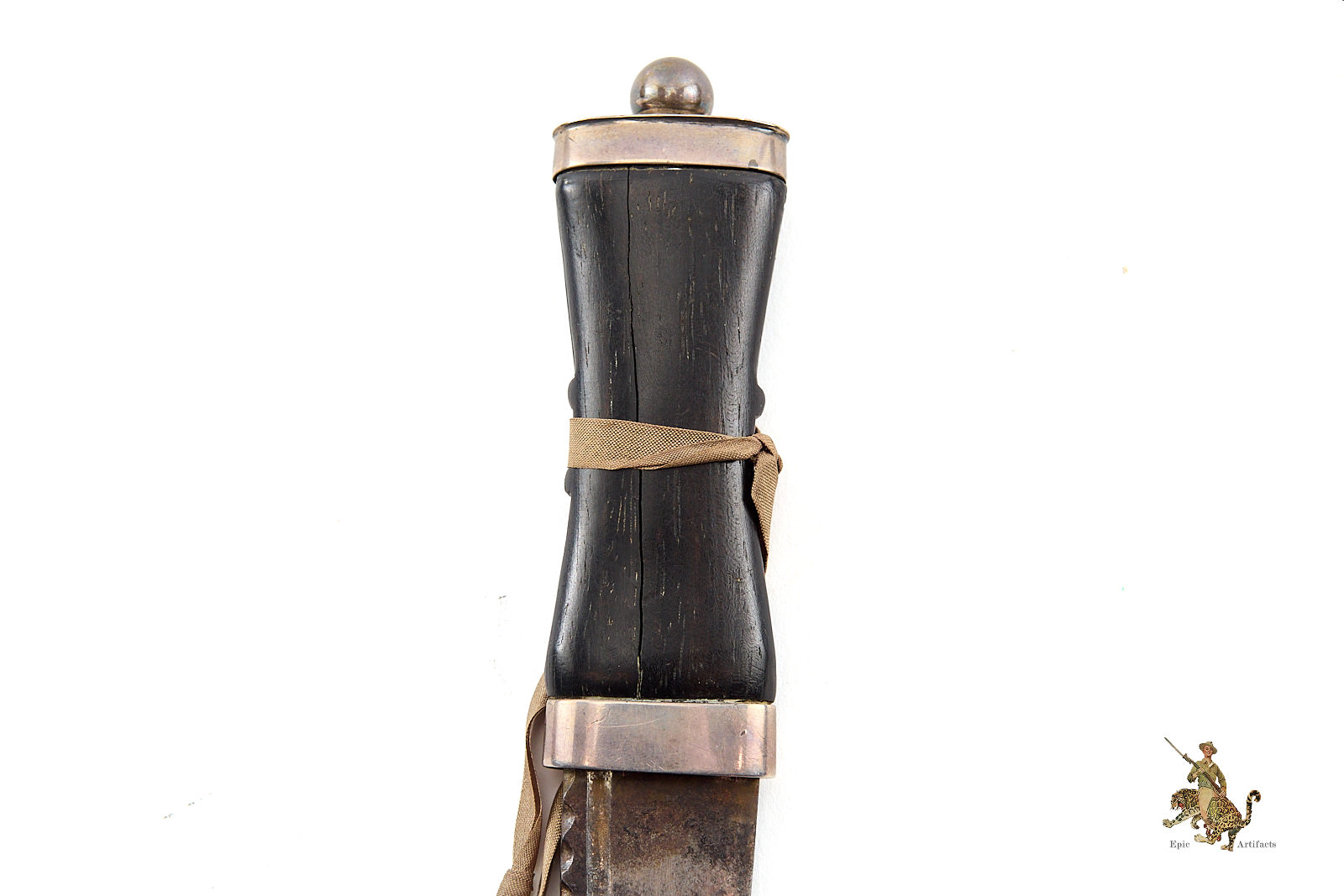
The finely carved ebony handle exhibits an appealing patina, with cracking on the reverse, and wear consistent with age and use, enhancing its character. The blade remains in good overall condition, showing areas of light corrosion near the hilt, while retaining its original form, including a subtle curvature from prolonged wear in the sock. The accompanying leather scabbard is intact and well-preserved, complementing the piece. The knife measures approximately 7″ overall with a blade length of 4″.
Displaying both craftsmanship and honest signs of period use, this Scottish Sgian-Dubh Sock Knife represents a refined and authentic example, offering strong appeal to collectors of traditional Scottish arms and edged weapons.
Historical Description: The Scottish Sgian-Dubh Sock Knife is a traditional component of Highland dress, its origins tracing back to the practical and cultural customs of the Scottish Highlands. The term “sgian-dubh” derives from the Gaelic words sgian (knife) and dubh (black), often interpreted as “black knife,” referring either to the dark handle materials—commonly ebony or bog oak—or to its discreet, concealed nature. Historically, it evolved from earlier utility knives carried by Highlanders for everyday tasks, from preparing food to personal defense. By the 18th and 19th centuries, as Highland dress became more formalized, the knife took on a symbolic role and was traditionally worn tucked into the top of the kilt hose with the hilt visible, signaling both readiness and trust in social settings.
Over time, the Scottish Sgian-Dubh Sock Knife became as much an ornamental accessory as a functional blade, often crafted with finely carved handles, cairngorm stones, and silver mounts bearing regional assay marks such as those from Edinburgh. While its practical use diminished, its cultural significance endured, representing heritage, identity, and continuity within Scottish tradition. Today, it remains an integral element of formal Highland attire, worn during ceremonial occasions, and is widely collected for its craftsmanship, historical associations, and enduring symbolism.
We are the leading team of military antique specialists. We have specialized in military antiques for over 25 years.
Epic Artifacts offers free evaluations and the highest prices available for your collectibles.
We purchase single items, entire collections, or family estates.
Click the link here to learn more: Free Evaluation or Inquiries
or feel free to email us directly: info@epicartifacts.com