
$745.00
Condition: Excellent +
In stock
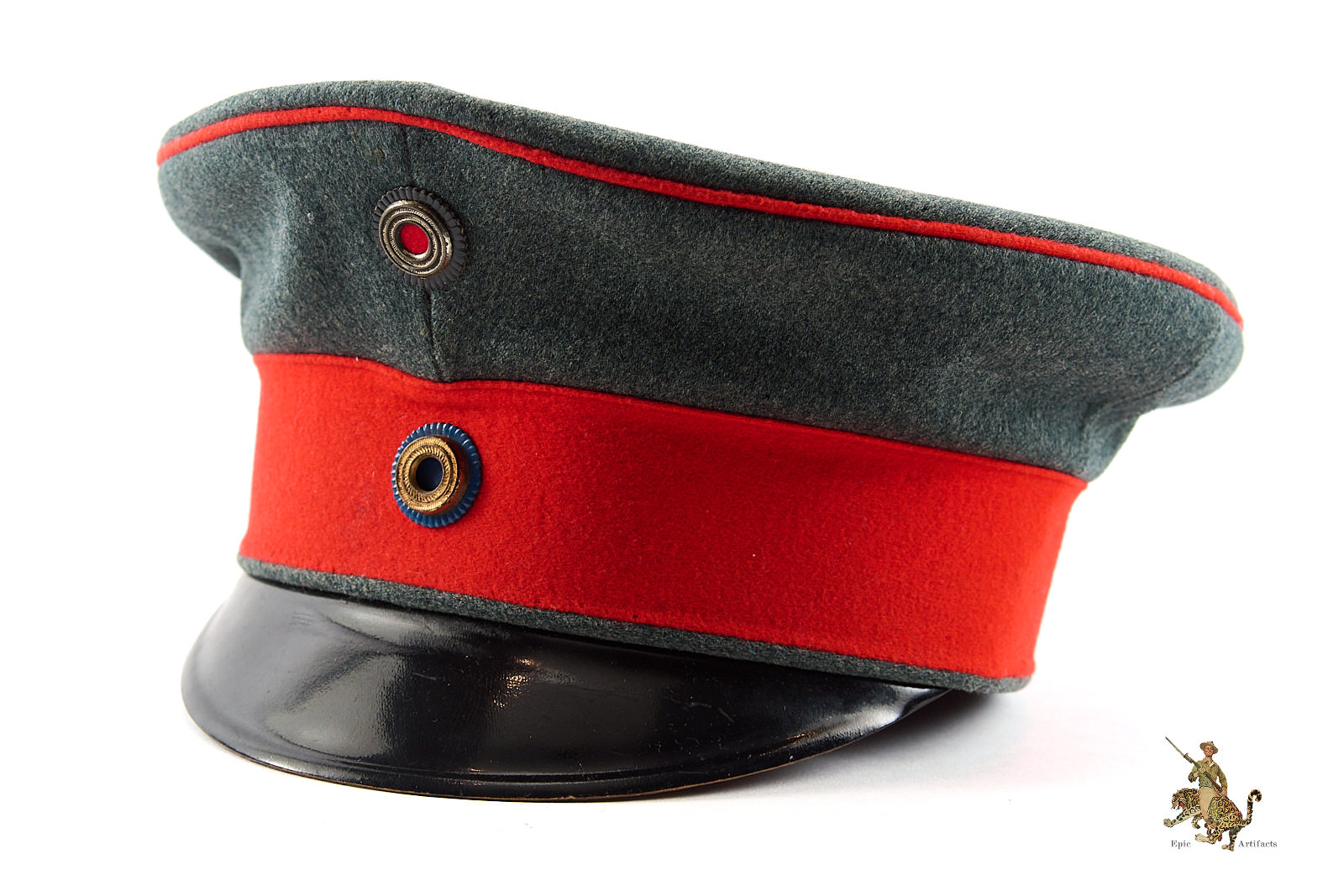
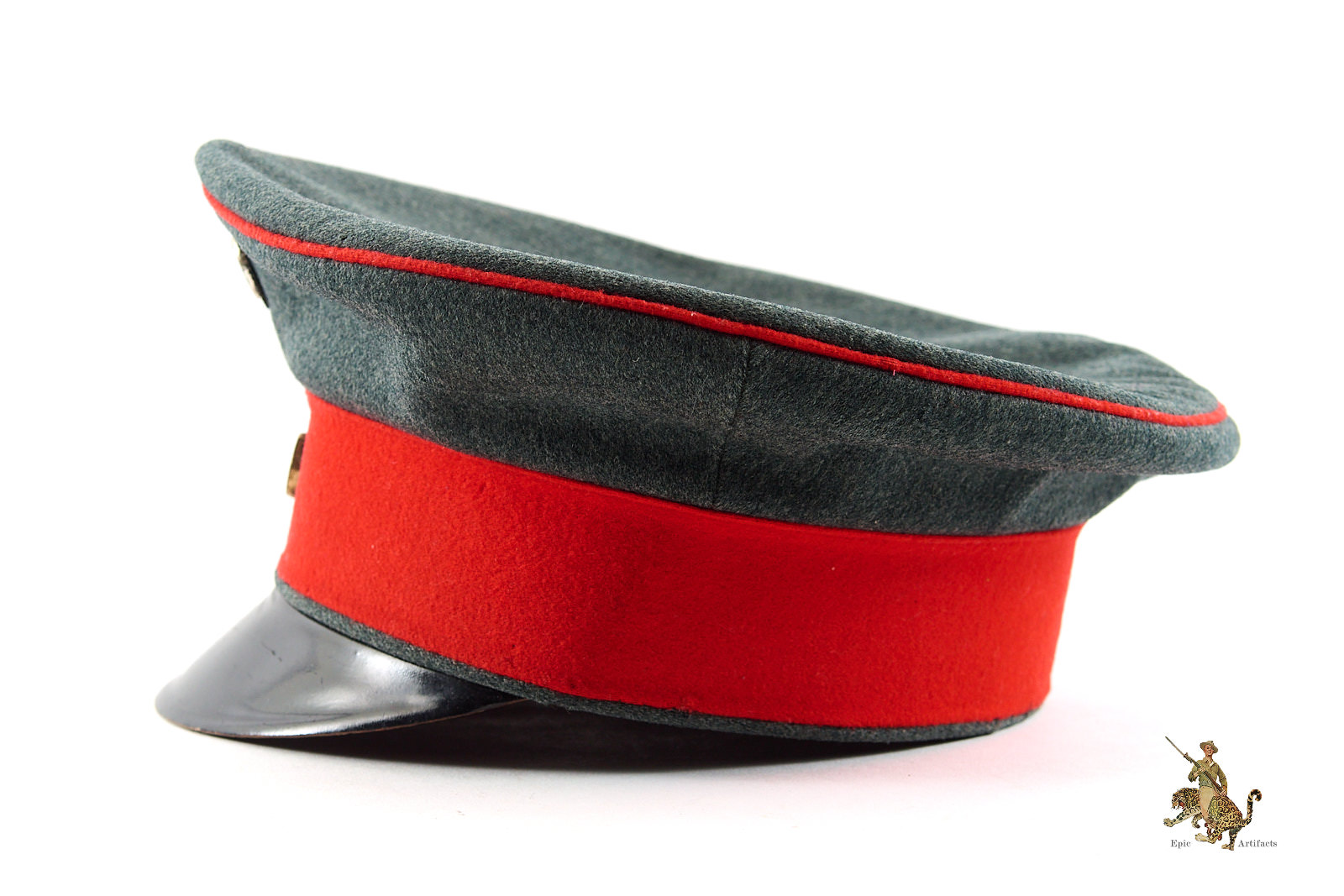
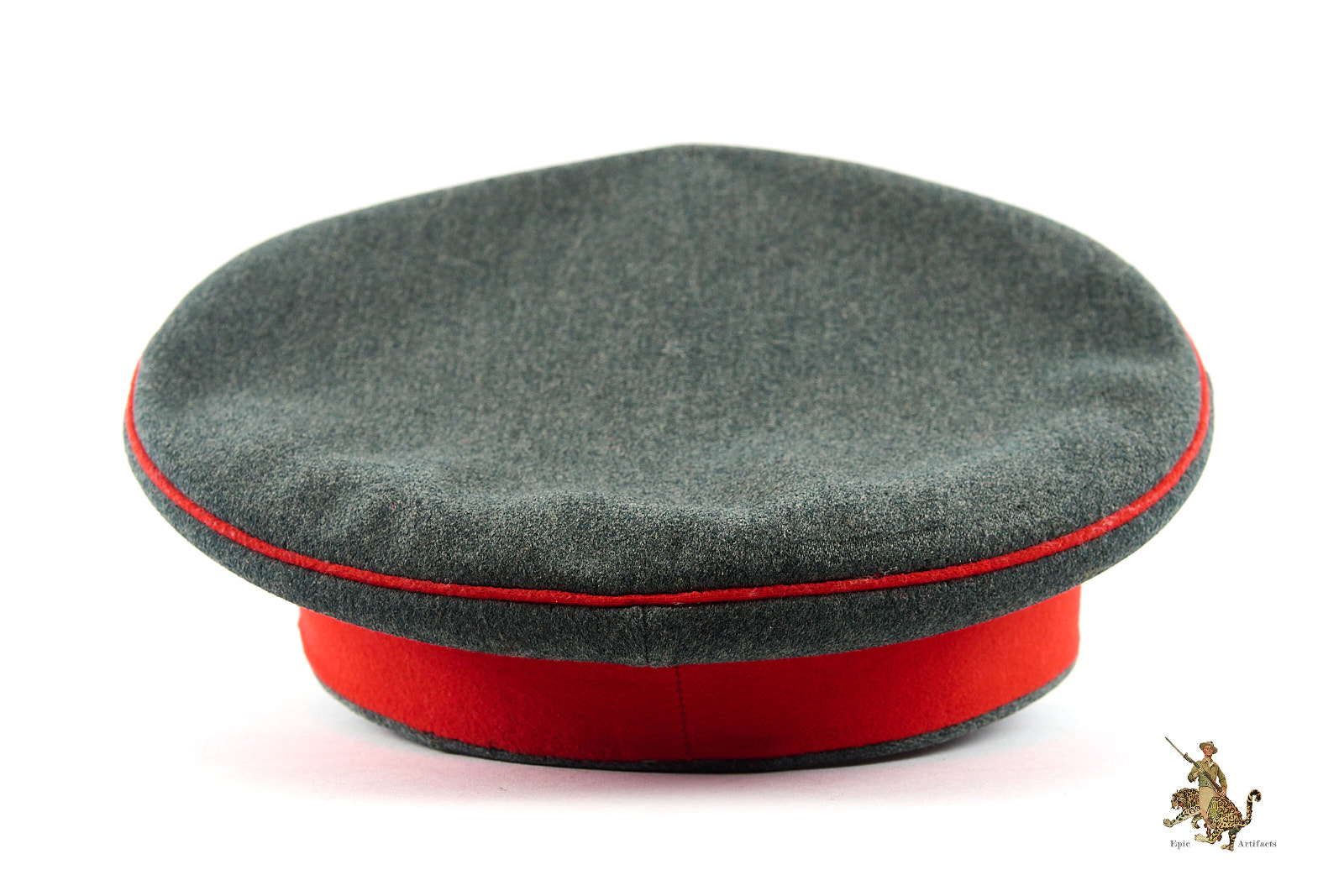
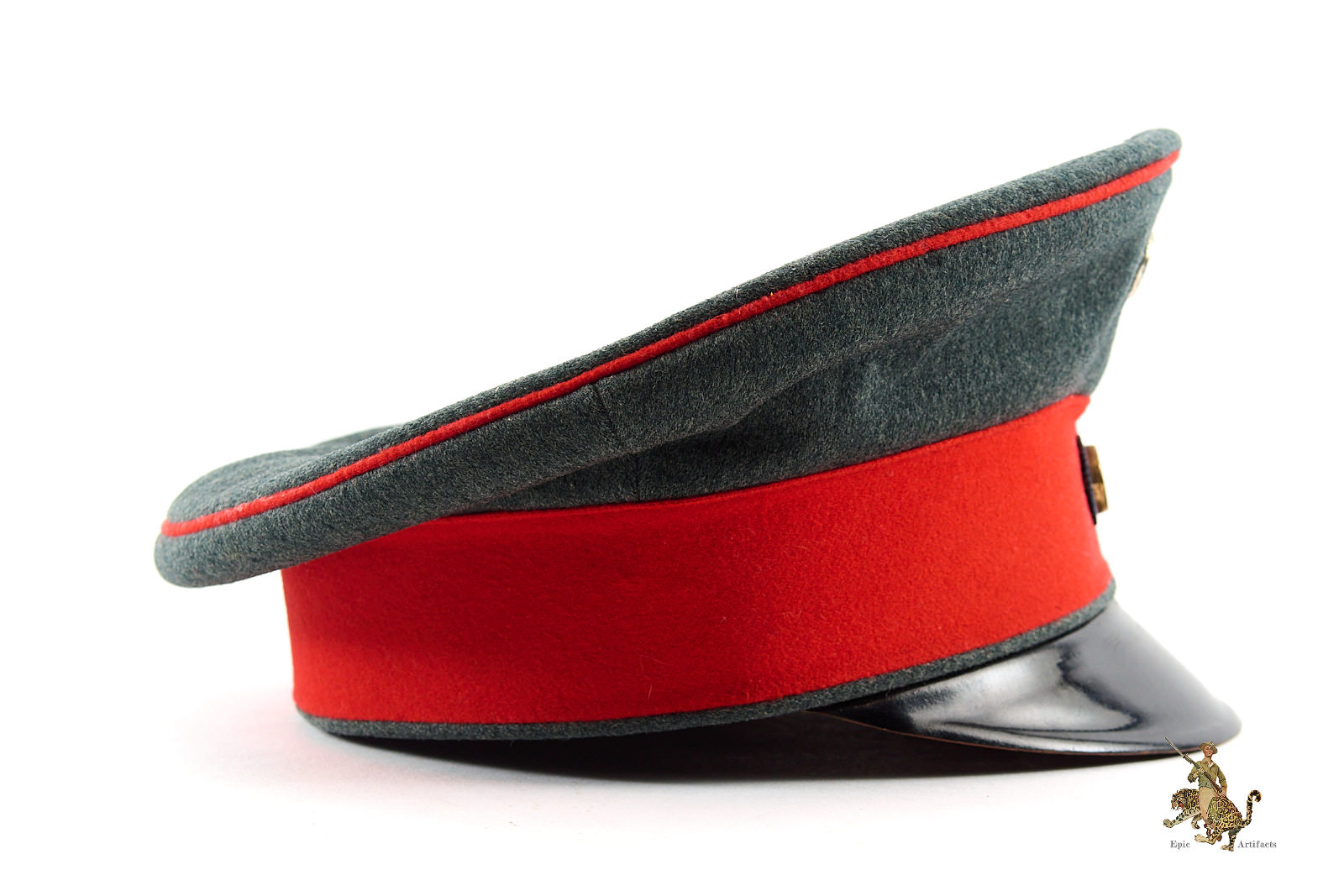
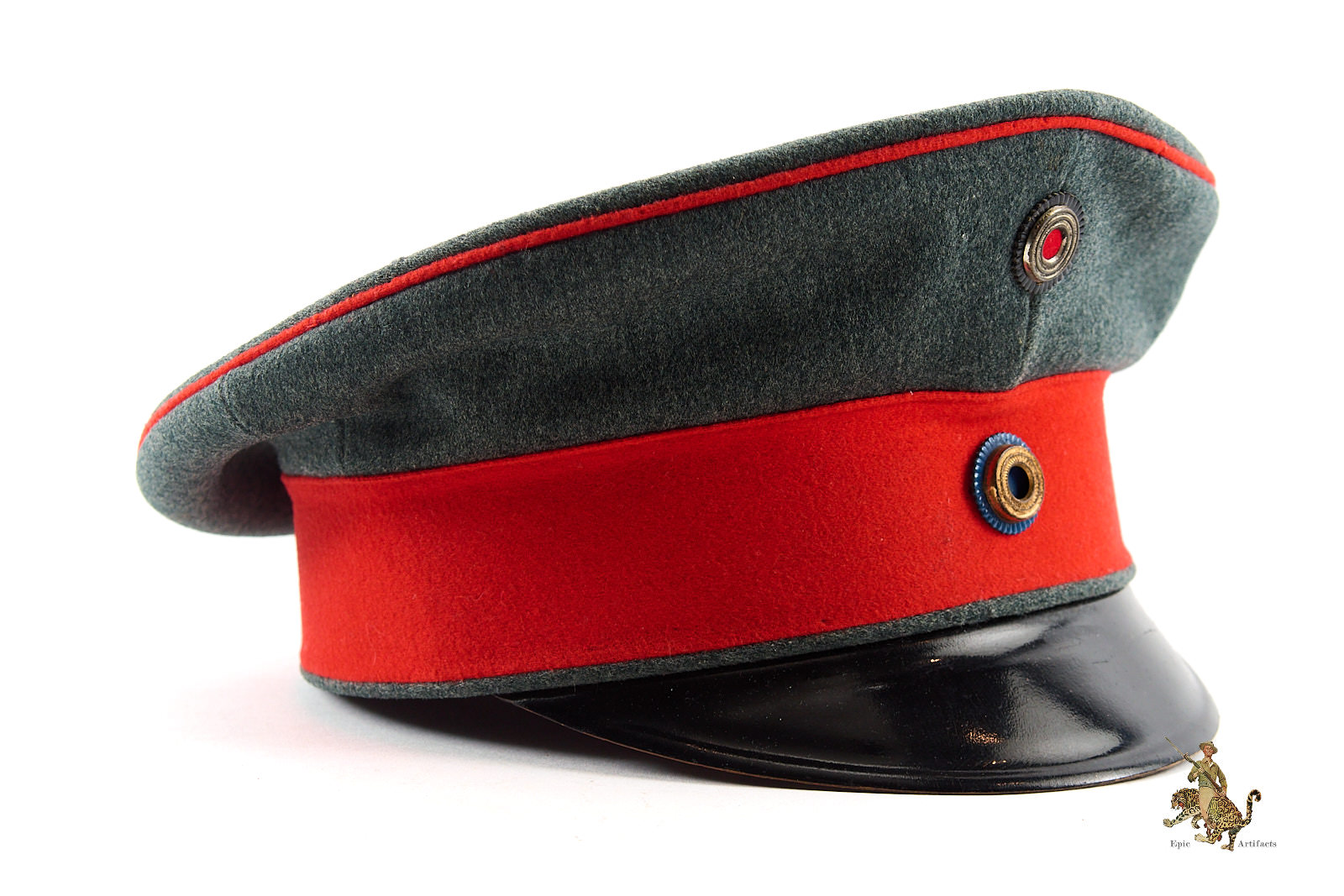
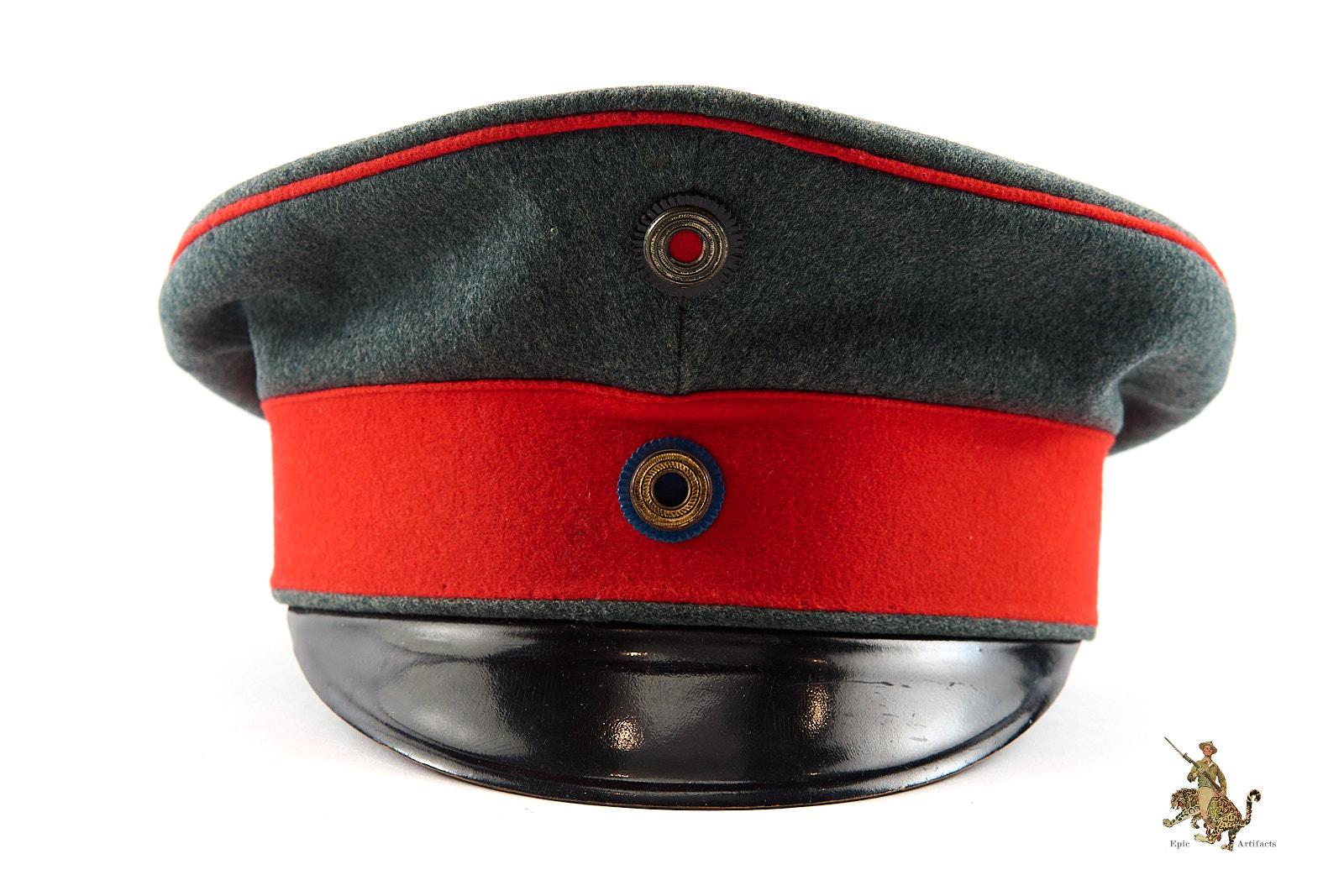
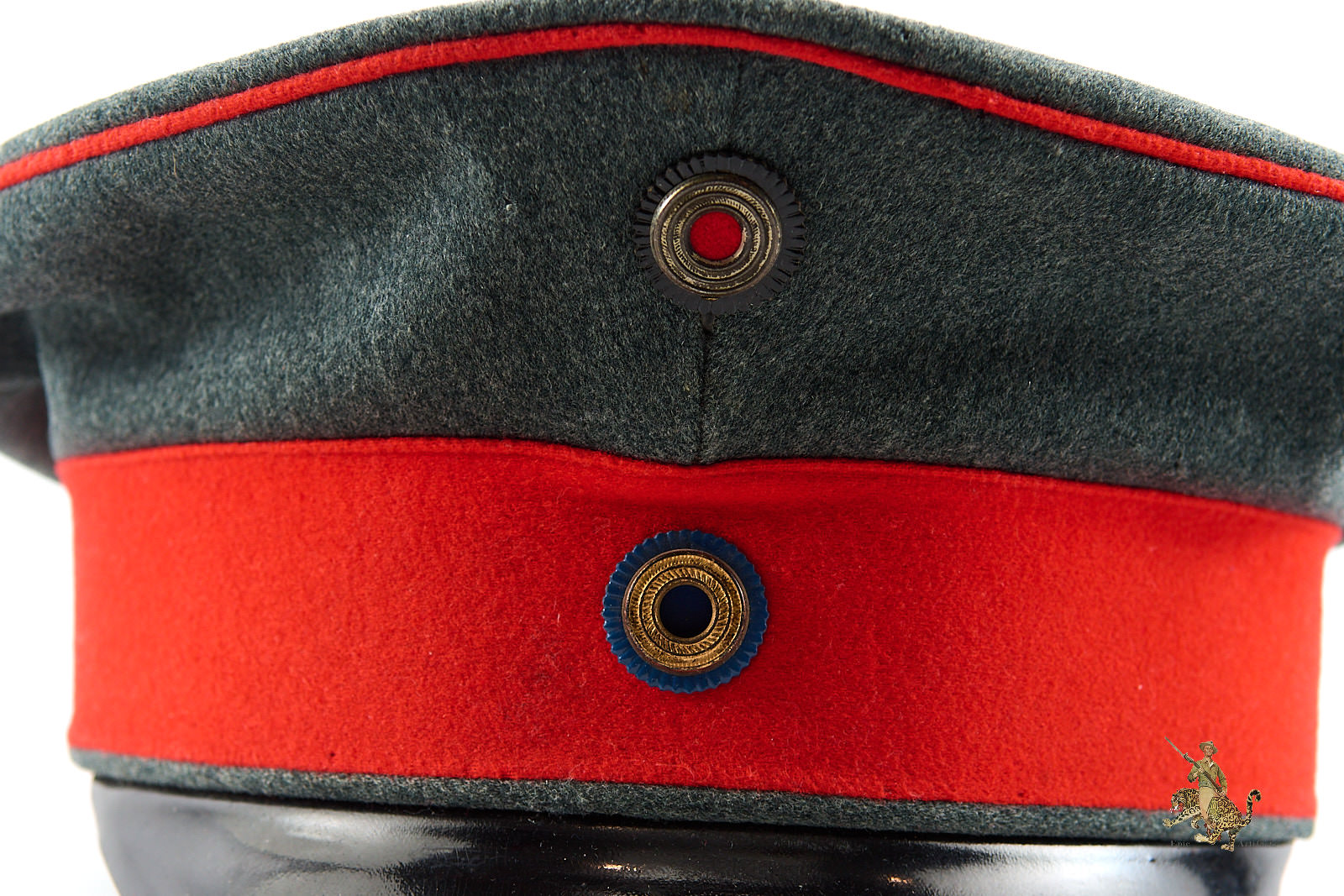
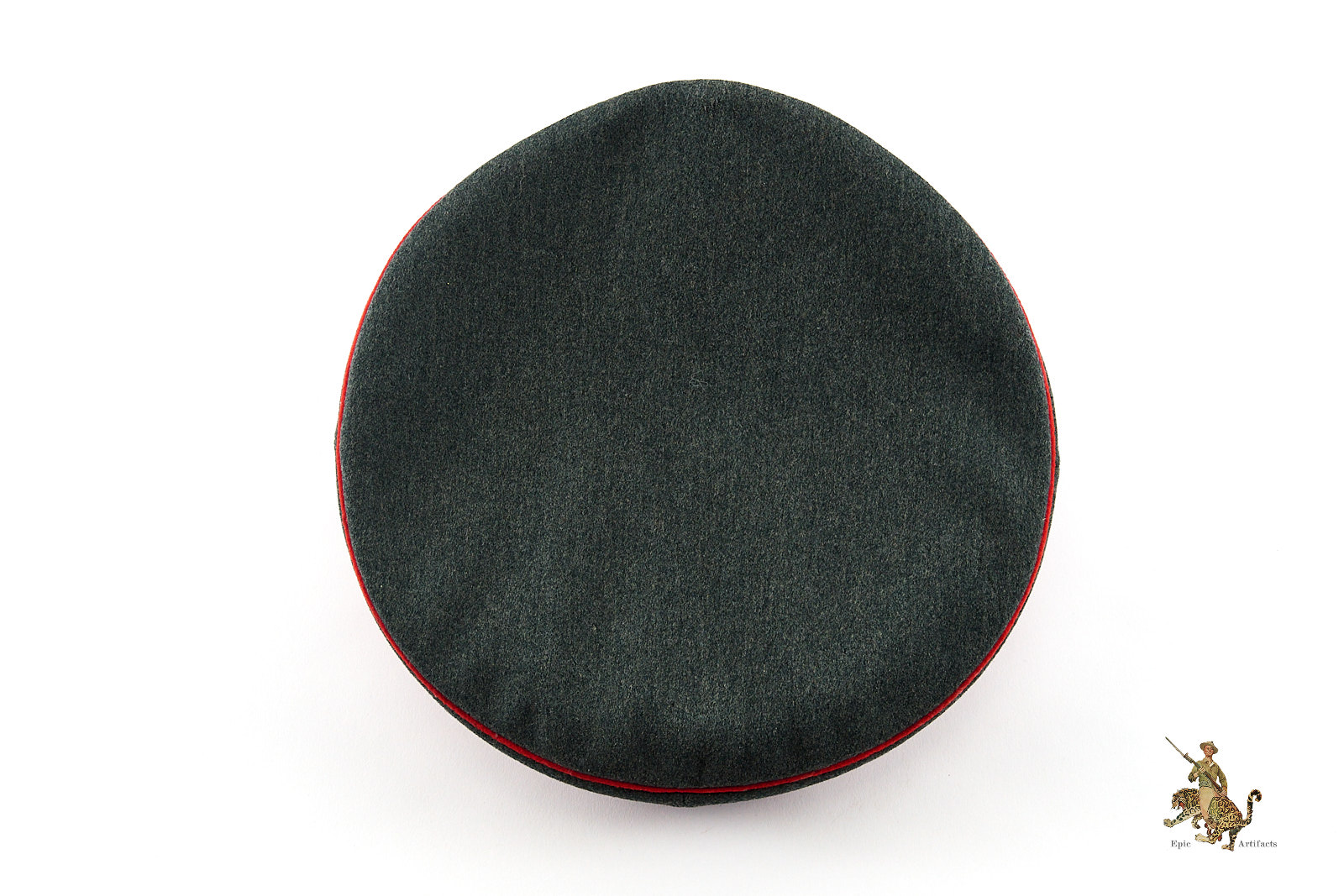
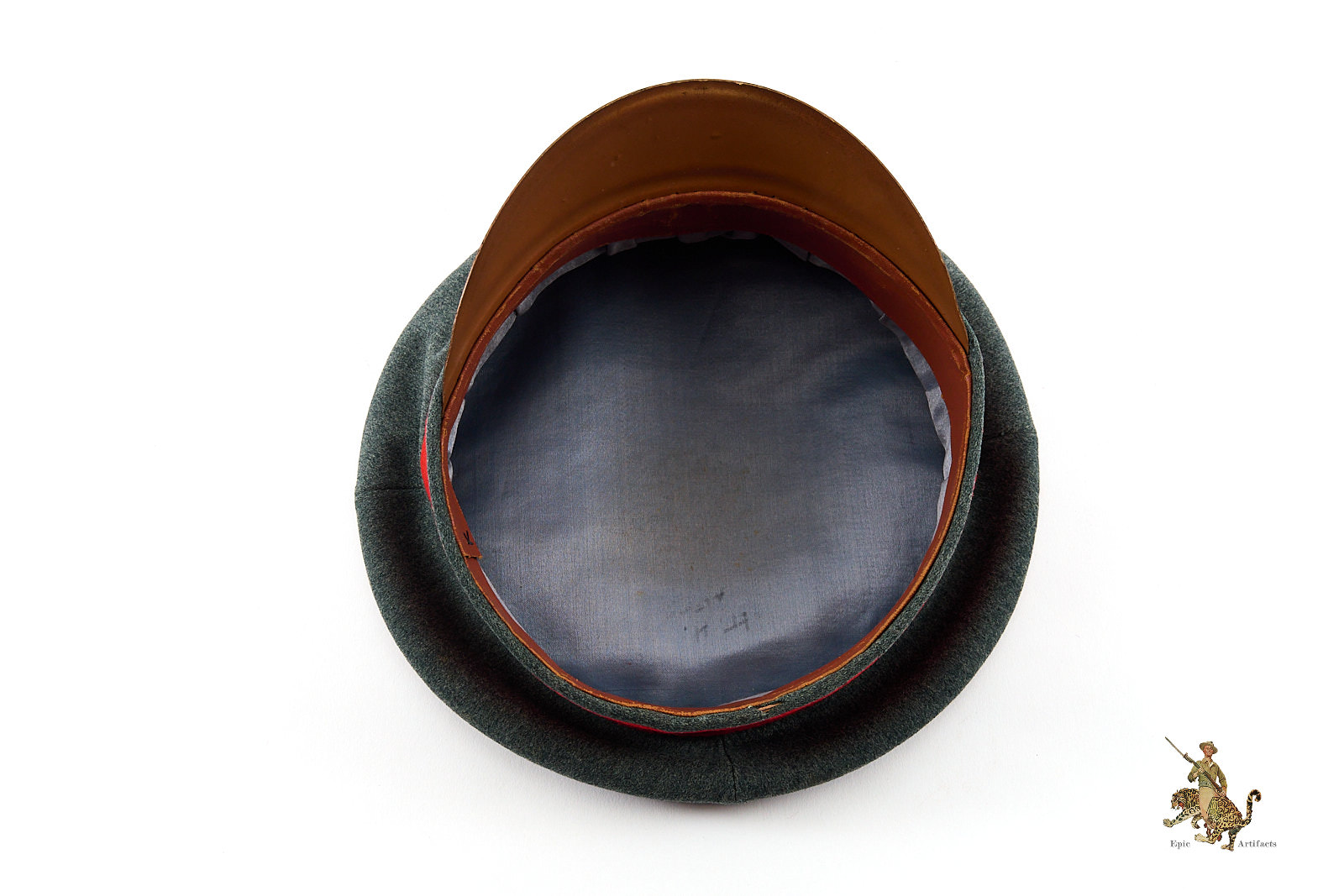
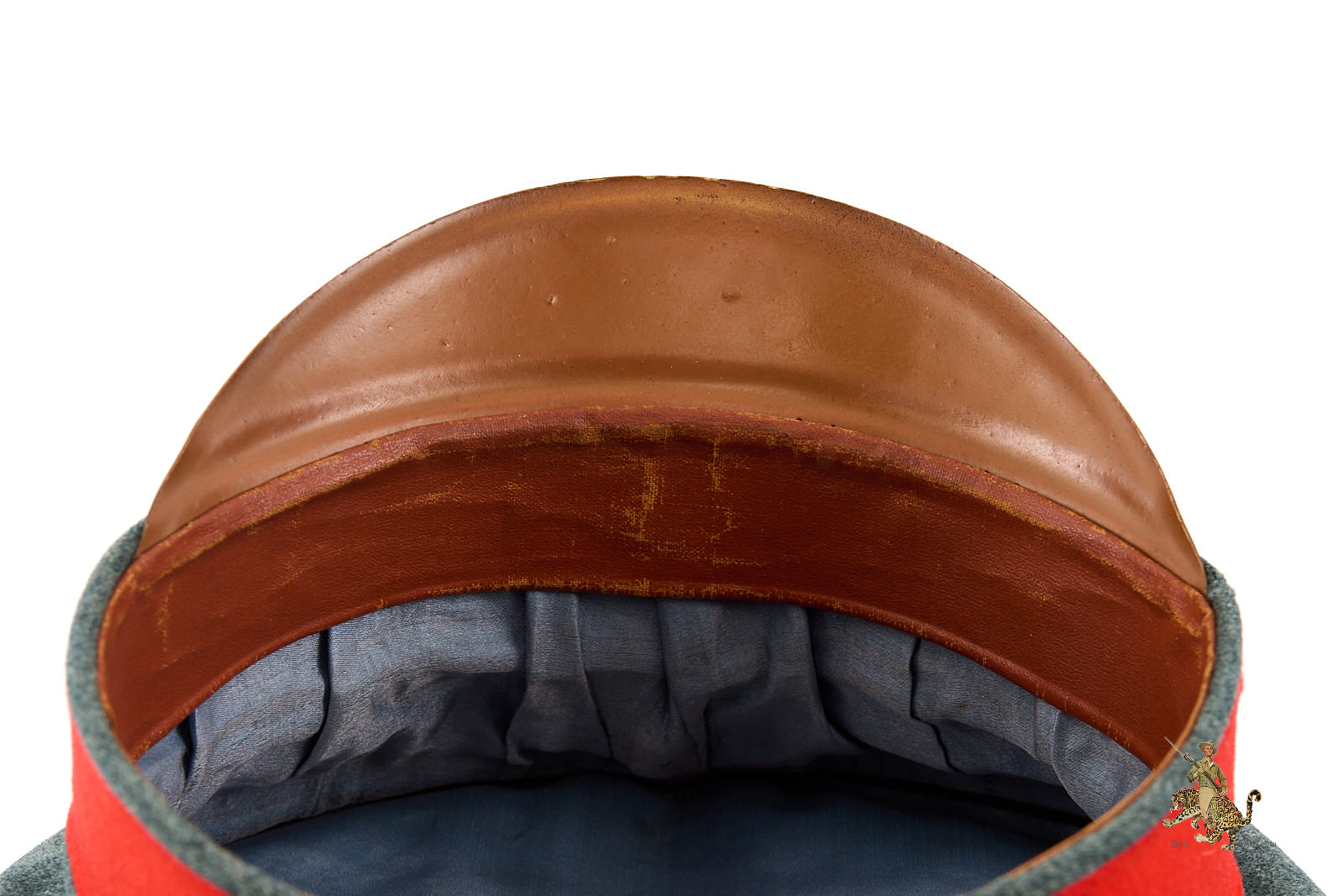
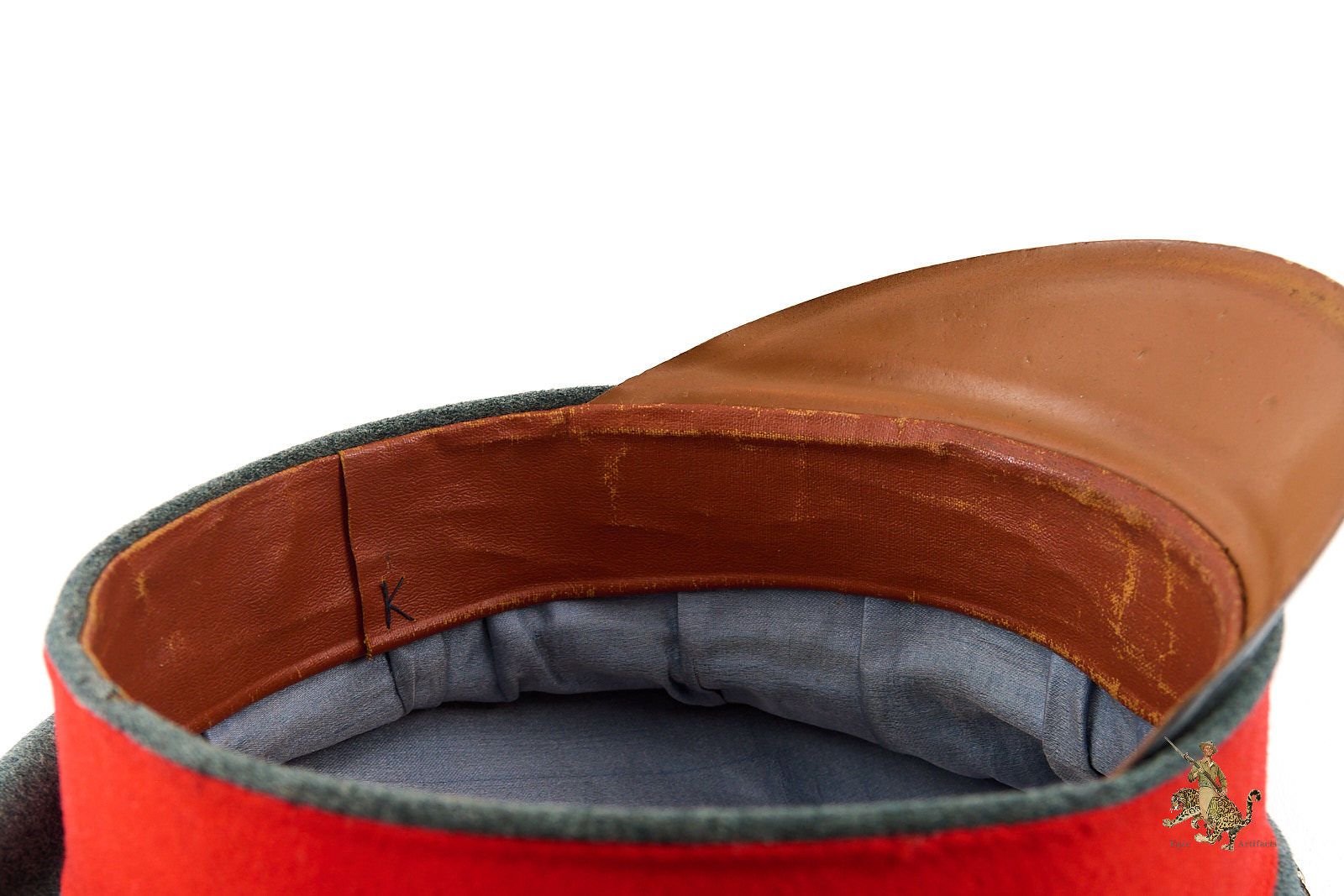
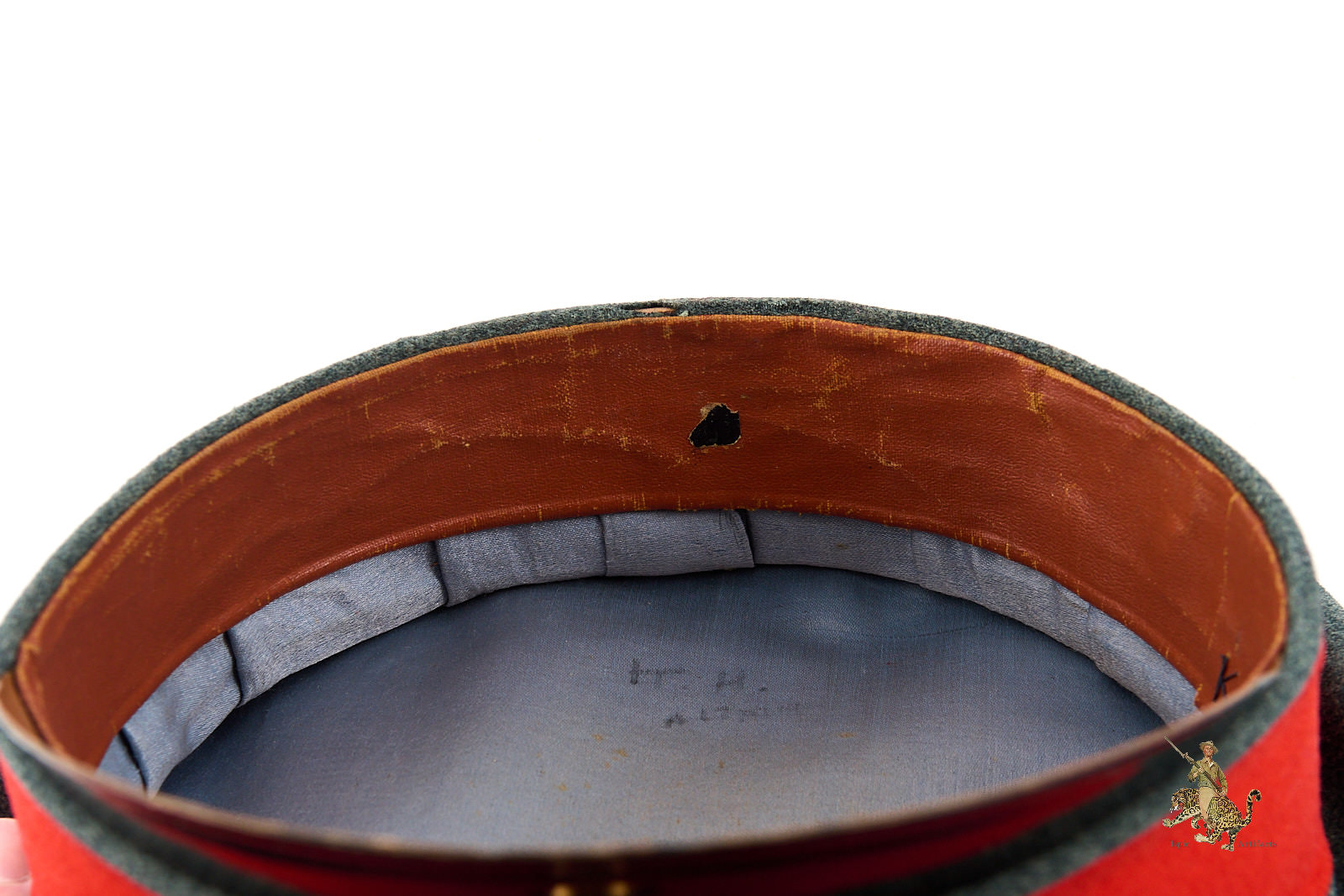
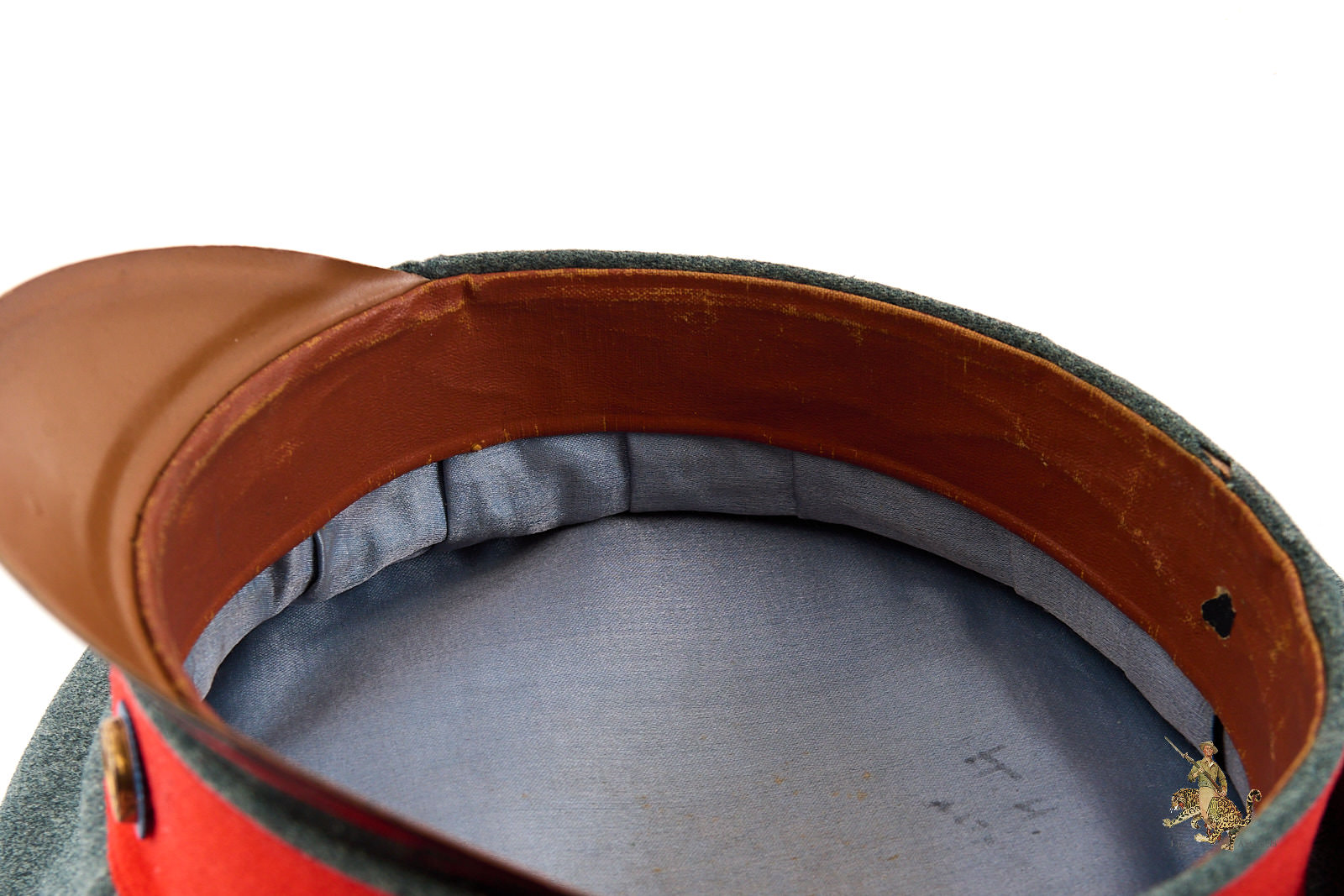
Product Description: A remarkably well-preserved M1910 Braunschweig 92nd Infantry Officer Visor, dating to the Imperial German period and now exceeding a century in age. This elegant officer’s cap retains exceptionally vibrant and fresh coloration, the field-grey body complemented by the rich red band and correct cockades, all presenting with striking visual clarity. The form remains crisp, with tight stitching throughout and a pleasingly structured profile indicative of careful preservation over decades.
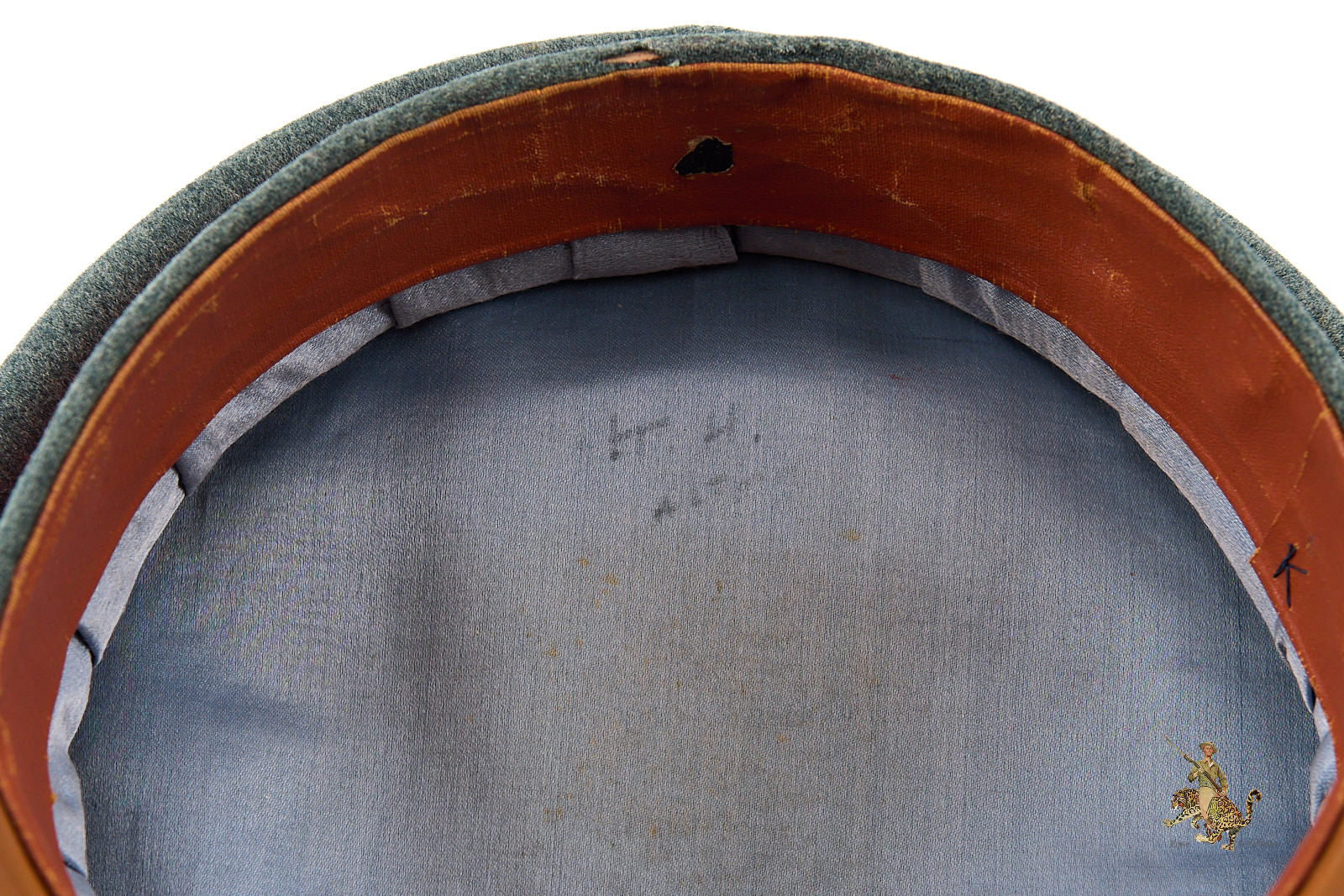
Condition is notably strong. There are approximately four small moth holes: one to the left of the upper cockade, one at the junction where the body meets the visor, one along the lower edge of the red band at the side, and the largest at the rear lower grey rim. These minor imperfections are consistent with age and do not detract from the overall presentation. The interior is particularly fine, the liner in exceptional shape with no tears, holes, or discoloration. The sweatband is complete, retaining suppleness and integrity, free from damage or staining, and without markings to the underside. Overall graded Excellent+, this M1910 Braunschweig 92nd Infantry Officer Visor represents a superb and increasingly scarce example of Imperial German officer headgear.
Historical Description: Imperial German cloth headgear, most prominently the Pickelhaube cover (Überzug) and the various forms of visor caps (Schirmmützen), formed an essential part of military identity in the German Empire (1871–1918). During the reign of Wilhelm II, the Imperial German Army developed a highly codified system of colors, cockades, piping, and bands to denote regiment, rank, and state affiliation within the federal structure of the Empire. Cloth headgear, particularly officer and enlisted visor caps, combined practicality with visual distinction, reflecting both battlefield necessity and the ceremonial traditions of the German states such as Prussia, Bavaria, Saxony, and Braunschweig.
By the early twentieth century, field-grey (feldgrau) cloth became increasingly prominent as the realities of modern warfare demanded subdued tones over the brighter pre-war colors. Nevertheless, even in wartime, distinctions of branch and regiment were preserved through colored bands and piping. Officers’ caps were typically of higher-quality wool or tricot with silk or leather liners and finely crafted cockades, while enlisted examples were more utilitarian in construction. Today, surviving examples of Imperial cloth headgear offer insight into the structure, regional diversity, and aesthetic sensibilities of the Imperial German military establishment on the eve of the First World War.
We are the leading team of military antique specialists. We have specialized in military antiques for over 25 years.
Epic Artifacts offers the highest prices available for your collectibles.
We purchase single items, entire collections, or family estates. Inquiries
Feel free to email us directly: info@epicartifacts.com